
Separate but not equal: KU professor explores university’s complicated past
November 14, 2014 | Lindsey Foat | 4 min read
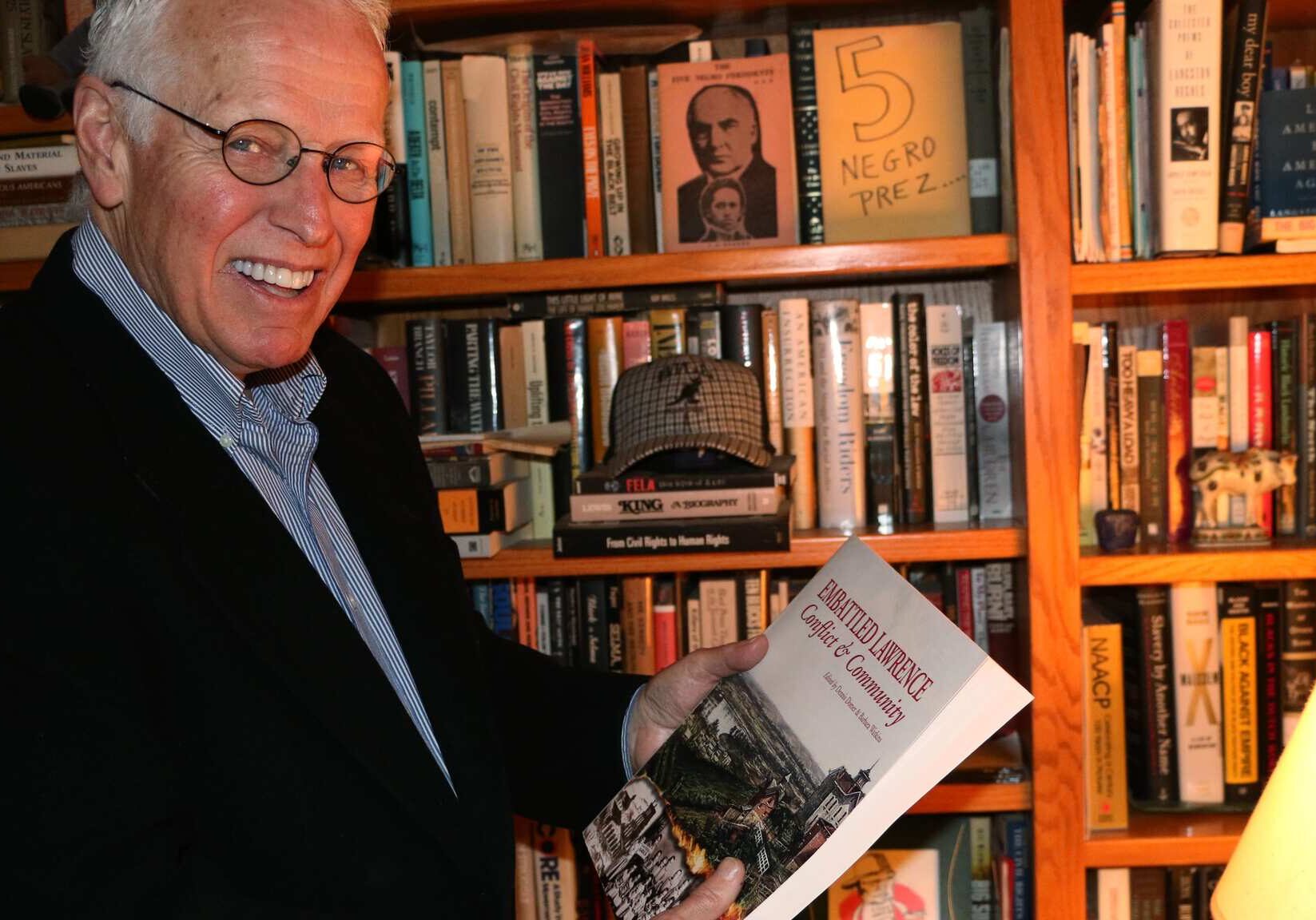
Professor Emeritus Bill Tuttle is himself part of a complicated legacy of race relations at the University of Kansas and the surrounding community.
In 1968, Tuttle taught the University’s first ever African American studies course, and has devoted much of his career to examining equality in the progressive burg of Lawrence, Kansas.
“I think there is so much self-satisfaction in Lawrence …. and it comes up all the time when we talk about ‘Bleeding Kansas’ and so on,” Tuttle said.
“I think the problem is that legacy in terms of our historical understanding is negligible because people think that this place was unlike the rest of the country, and it really wasn’t.”
Historically, Lawrence is thought of as one the centers of the abolitionist movement, in a state that entered the Union as a free state. But as Tuttle will share in his talk this Sunday, Nov. 16 at the Kansas City Public Library titled “Separate but Not Equal,” equality during KU’s nearly 150 year existence was at times more idealistic than a reality.
In the beginning
The black population in Lawrence and in the state of Kansas steadily rose from the 1850s as freed slaves migrated to the notoriously anti-slavery state.
“At one point during the turn of the 20th century, the population of Lawrence was almost 25 percent African American” Tuttle said.
Not only were black businesses and churches thriving, but many schools were integrated and KU’s first black student, a woman named Lizzie Ann Smith, was admitted in 1876.
It’s worth noting that KU was admitting black students and even had integrated sports teams long before any of the schools in surrounding states. For example, the University of Missouri did not have it’s first black students until the 1950s.
Jim Crow comes to KU
In the 1920s and 1930s, the university instituted a number of Jim Crow policies, like segregation in the Student Union.
While the university excluded blacks from living in the dormitories, the city worked to limit housing near campus to white students.
“It’s kind of hard to know why this happened,” Tuttle said. “I think one reason is that some of prominent abolitionists that had been the conscience of the community had died.”
KU also barred black students from participating in intercollegiate sports teams and other extracurricular activities like orchestra and student council.
Tuttle said that the period from the 1890s to the 1920s was a period of increased racism across the country with things like the rise of the Klu Klux Klan.
In fact, the university had a sanctioned club called the “Ku Ku Klan,” which would “perform” in klan sheets and hoods on campus.
“They handed out the programs at the football games and marched down the field at halftime,” Tuttle said. “The chancellor, Phog Allen, and the dean of men all thought it was a wonderful idea.”
The Fight for Equality
Although World War II brought motivated students to advocate for an end to the university’s discriminatory practices, much of the city remained segregated and it would not be until the civil rights activism of students in the 1960s and 1970s that progress towards equality was made.
Tuttle details much of this history, in a chapter of a forthcoming book of essays, “Toward the Blue,” which will celebrate KU’s sesquicentennial.
In July of 1970, much of the unrest between community members and students came to a breaking point when a 19-year-old, black movement activist named Rick “Tiger” Dowdell was shot in the back of the head while running from police.
After Dowdell’s death, several days of unrest and violence followed, which resulted in the death of Nick Rice, a white KU Freshman who was fleeing police tear gas on campus.
Tuttle said that these events share some similarities with what happened in Ferguson, Missouri earlier this year.
“In both places the relationship with people and community was really terrible,” Tuttle said.
Although Tuttle is not sure what exactly drew him to teach African-American studies initially,
“It’s too much of a cliche to say that people who don’t know their history are doomed to repeat it, but there’s some truth in it as well.”
Reading these stories is free, but telling them is not. Start your monthly gift now to support Flatland’s community-focused reporting.

Related Stories
Kansas City Helping Renters Avoid Eviction
On any given Thursday, a small hallway in the Jackson County Courthouse crowds with tenants, landlords, and attorneys arriving for their scheduled hearings and trials. The scene unfolds on Floor 7M, which is half the height of the building’s other levels, and is where Associate Circuit Judge Mary Weir recently worked through 55 eviction cases…
Catholic schism with local ties raises question about religious factionalism
Religious splits are as old as Adam and Eve, but does it really have to be that way?

Nick’s Picks | Costco, Homicides, Rain and More …
Is Missouri's congressional map saga over? It seems so, but who knows if there will be another twist or turn. That story and more ...