
How One Wyandot Artist Hopes to Bring His Native Language Back From Extinction
Recordings dating as far as back as the early 1900s are helping Oklahoman Richard Zane Smith develop a standardized writing system
November 5, 2026 | Ilana Arougheti | 7 min read
Richard Zane Smith’s mother grew up in Kansas City, Kansas, on land historically allotted to the Wyandot Nation.
But by the time he was growing up near St. Louis in the 1950s, the Wyandot language had virtually vanished from his household. The only word he remembers hearing was “ane,” meaning aunt or mother.
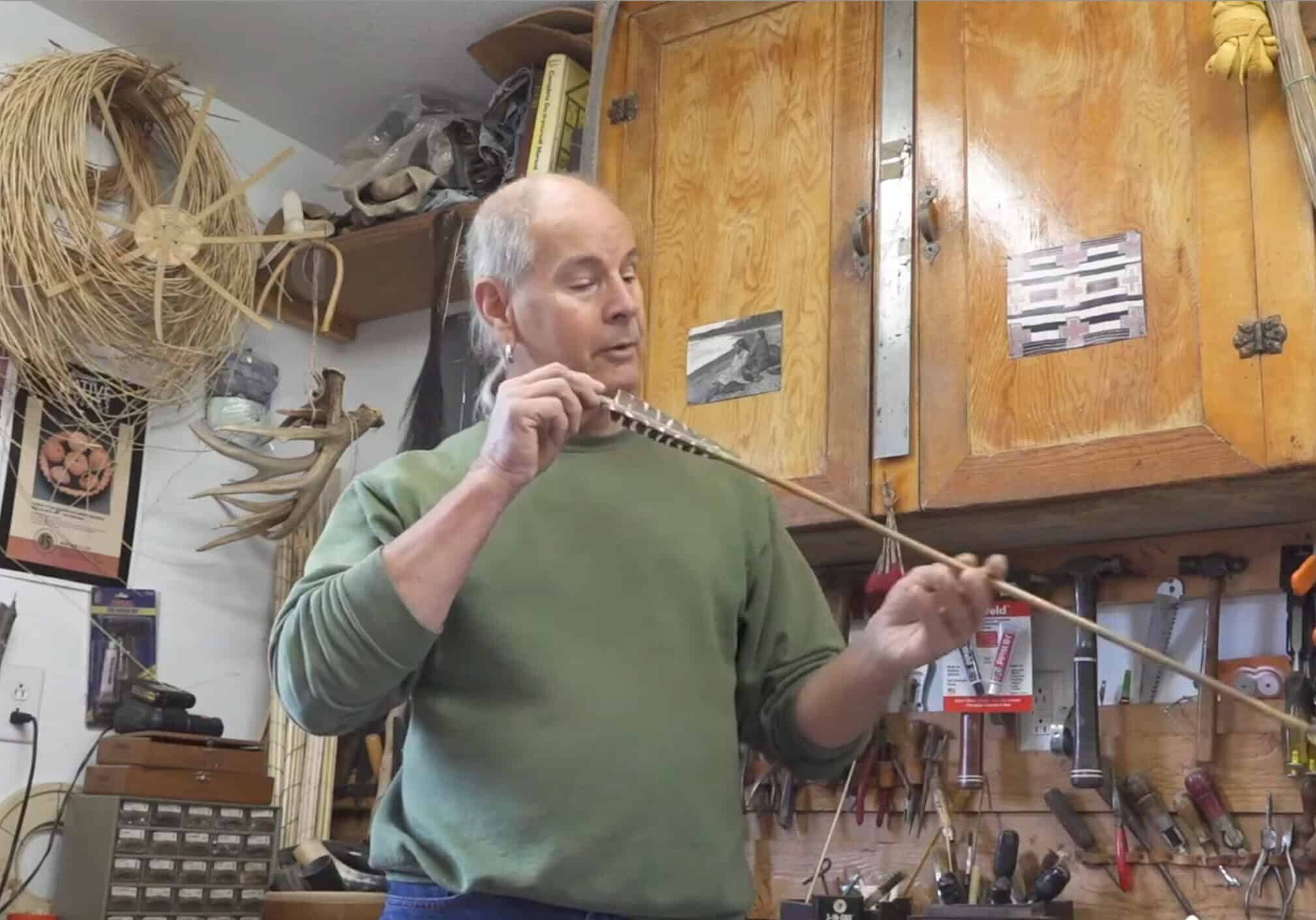
That young man has grown up to become a celebrated craftsman of traditional Wyandot pottery and ritual objects such as bows, arrows, water drums and rattles. He is a graduate of the Kansas City Art Institute.
Yet in a nod to the lost language of his youth, Zane Smith is now working in a totally different medium: he’s building an archive of his people’s language. And to make matters even more challenging, Zane Smith has no documented written tradition to rely on.
Zane Smith, who now lives in Oklahoma, describes himself as a cultural revivalist.
“You’re that living link between who is coming and who is in the past,” Zane Smith said. “There’s kind of a guardian aspect there, but you have to be open to innovation too.”
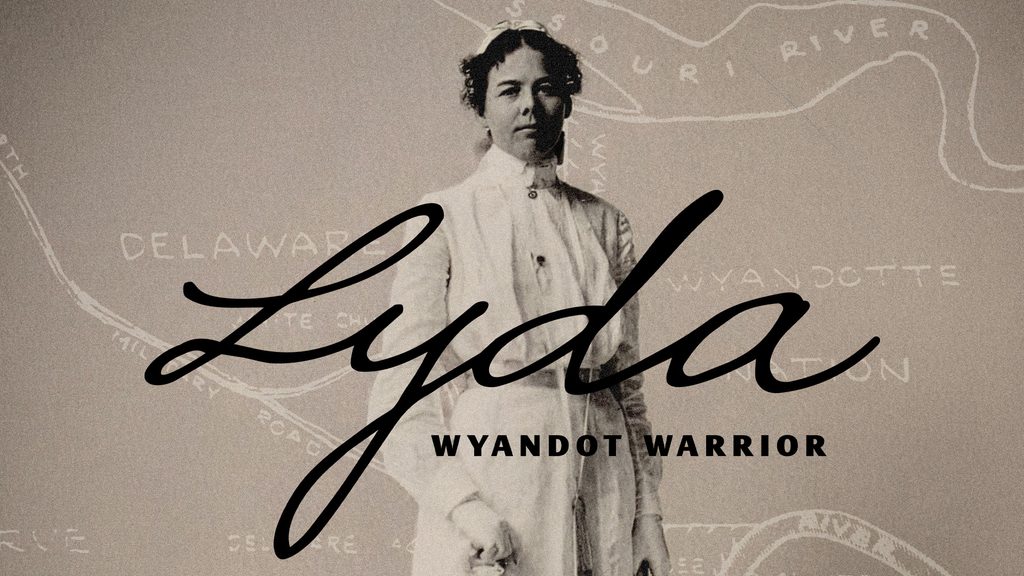
Related Content: KCPBS Premieres “Lyda: Wyandot Warrior” Nov. 5 at 7 p.m.
Tracing Wyandot Roots
The Wyandot Nation — sometimes written as Wyandotte, Wendat, or Wandat — originated near Montreal. War with the Iroquois in the 18th century forced the tribe south, where it settled in Upper Sandusky, Ohio.
By the 1840s, the Wyandot Nation was on the move again — the last tribe to be forcibly removed from the state under the Indian Removal Act of 1830.
The Wyandot Nation purchased land from the Delaware tribe, centered in what is now Kansas City’s West Bottoms.
The tribe later splintered.
Some families relocated to Shawnee territory in Oklahoma rather than become U.S. citizens, but not before designating the Huron Indian Cemetery as a protected tribal burial ground. The cemetery, located in downtown Kansas City, Kansas, is now known as the Wyandot National Burying Ground.
Today, the Wyandotte Nation is headquartered in Wyandotte, Oklahoma, with about 7,350 enrolled citizens. The tribe is further split into 12 clans
Zane Smith is a member of the Bear Clan. His Wyandot name is Sohahiyoh, meaning “he has a good path.”
Finding Wyandot Words
The Wyandot language shares roots with North Iroquoian dialects still spoken by the Mohawk, Oneida, Seneca, Cayuga, Onondaga, and Tuscarora tribes. Researchers have classified all the North Iroquoian languages, including Wyandot, lost or extinct since the mid-1970s.
Though he had been studying other aspects of Wyandot culture for years, Zane Smith started his lexicon project with a blank slate. The Wyandot language uses unique sounds but has no surviving records of consistent written characters.
Zane Smith began with short lists of words sent by tribal elders in Oklahoma.
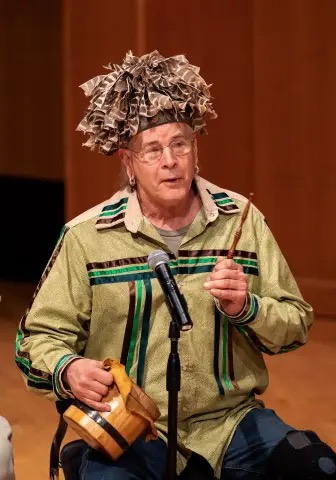
Then, he worked with recordings, some captured on wax cylinders in the 1910s. The longest recording Zane Smith has found is a 20-minute clip from the 1960s.
He also consulted the Kinsey family, which was among the last fluent Wyandot speakers in Oklahoma, and used work by linguist Marius Barbeau.
Barbeau produced more than 300 recordings ranging from 2-5 minutes, including several songs, after listening to Wyandot elders tell a story. He created symbols for linguistic traits.
Zane Smith has mastered the speeches he gives at cultural ceremonies, but he still struggles to learn new words. Translating from audio requires a different skill set.
North Iroquoian languages bear a resemblance to English, but they are known for their “grammatical intricacy.”
To describe individual concepts, speakers add prefixes, suffixes, and other clauses to build long words that stand in for complex phrases. For instance, Zane Smith said, the Wyandot word for “blackberry” is actually a phrase that roughly translates to “they all have little black eyes.”
“To speak the language, you’re actually creating the language as you go,” Zane Smith said. “We’re trying to come up with a kind of standardized writing system, and even that has its challenges.”
Zane Smith now records words for 30 to 60 minutes most nights. He has recorded thousands of words.
He’s also developed a pronunciation guide for new speakers, indicating how vowels sound in different words.
For Wyandot words, the written letter “ę” with an accent mark under it, for instance, is pronounced like the “e” in the word “tent”, while the written letter “e” without an accent mark is pronounced as in the word “whey”.
From Myth to Moral Code
Zane Smith is intrigued by Wyandot words and concepts without a direct English equivalent.
One example is that Wyandot doesn’t have a descriptor that aligns with the concept of pride. The closest word would be better translated as arrogance.
So, Zane Smith said, his ancestors would not necessarily have said they were “proud” to be Wyandot.
“They would have more said things like, ‘I’m grateful. I’m thankful. It gives me joy to be Wyandot,’ or ‘I don’t know of any other way to be other than who I am.’”
Wyandot people also do not have a linguistic concept of absolute right and wrong.
For instance, the Wyandot creation myth describes a “boy of fire” and a “boy of flint,” who represent positive and negative forces but ultimately cancel each other out.
“Missionaries often didn’t quite get the story,” Zane Smith said. “They would translate it as good twin, evil twin.”
“It’s a judgment, but it doesn’t make sense in our cultural way. You can say they’re out of balance or they’re sick, there’s something wrong with that person. But to say that somebody’s evil at all is just a foreign idea.”
As he studies and records, Zane Smith is passing his knowledge to younger generations. He and his wife spent seven years teaching winter classes in the Wyandot language at the public elementary school in Wyandotte, Oklahoma.
One effective technique was embedding words in songs. The method worked particularly well for units on animals and emotions.
Many of the children Zane Smith taught were affiliated with other Iroquoian tribes. But for children of Wyandot descent, his classes were often the best hope for a formal language education.
He is amazed that adults sometimes come up to him at a ceremony and sing the song he taught them in grade school.
“So it made a good impact,” Zane Smith said, and I realized that music does have a way of helping get kids involved.”
Archiving a Future
Digitization has been invaluable, as docents and archivists from around the country have learned about his project.
Zane Smith often practices Wyandot words out loud when in his art studio.
As with the Wyandot language, records about tribal pottery styles are limited.
Zane Smith works with a technique based on a traditional Wyandot dance. He starts with an existing “grandmother pot” and adds a new layer of clay and wood ash around the base, then builds upward.
“It helps people get back to the earth,” Zane Smith said. “To that respect of the earth itself, as our mother, our provider…ideally, we want everybody to know how to do it.”
Zane Smith conducts workshops where students sculpt their own pottery and then cook a traditional Wyandot meal featuring corn, venison, beans, and milkweed leaves.
At his age, that work can be tiring.
But he plans to continue practicing, archiving, and sharing Wyandot language and traditions for as long as he can.
Zane Smith also gathers with members of the Wyandot nation every Thursday night to practice traditional call-and-response “social dances.” Some songs have been reconstructed from recordings dating as far back as the 1880s, forming around the beat of a ritual drum.
The more he learns about aspects of Wyandot life that were once considered lost, the more Zane Smith hopes the Wyandot language can unite others who are embracing their Native heritage for the first time.
“So many people are adrift,” Zane Smith said. “They just don’t know who they are. They’re tumbleweeds.”
“Now they finally have a place where they can sing their songs, they can dance and be proud of their ancestors, no matter what they look like.”
Reading these stories is free, but telling them is not. Start your monthly gift now to support Flatland’s community-focused reporting.
Related Stories

Nick’s Picks | Vance, Buddy, Houdini and More …
The U.S. vice president visits Topeka, a unicorn costume is a Halloween favorite, and a famous musician gets recognized in Kansas City.

Nick’s Picks | Rally, Debate, Data Center and More …
Election season is in full swing, with the U.S. Senate race in Kansas taking center stage, including President Donald Trump holding a rally in Wichita.
Kansas City Cooks as Site for National Anti-ICE Dinner Series
Celebrated chefs from throughout the metro collaborated for three nights on dinners that raised money for a local immigrant-rights nonprofit.