
How can gigabit internet be used in healthcare?
August 22, 2014 | | 3 min read
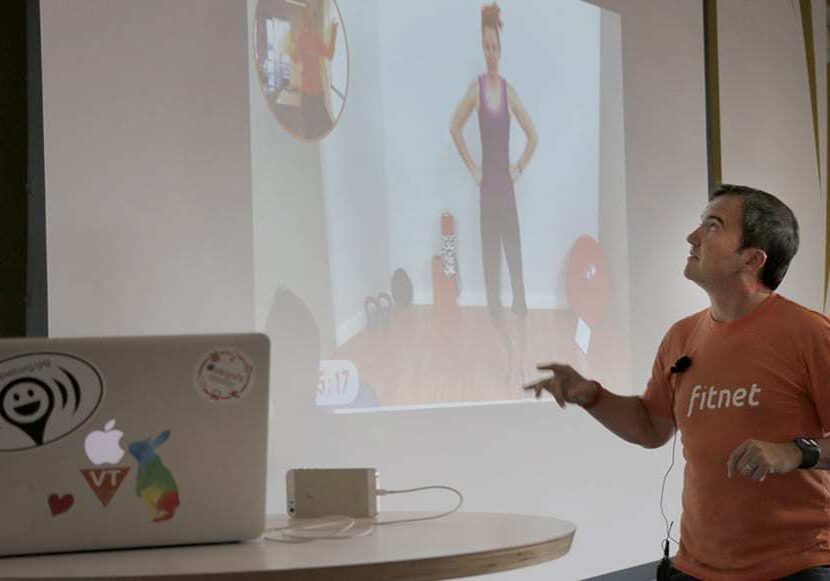
When Bob Summers found himself in a new city, without his regular trainer or workout buddies, he wondered how technology could help him stick to his exercise and health routine. That’s why he developed Fitnet, an interactive app that connects people with fitness trainers through on-demand video. He demonstrated how the user can follow along with an exercise video on the screen, earning points that can later be tracked by a trainer.
Summers presented his app at the first digital health innovation forum, held at the Sprint Accelerator space in Kansas City, Missouri, Wednesday.
Aaron Deacon is the managing director of KC Digital Drive, a group that grew out of the Mayors’ Bistate Innovation Team and organized the forum. The idea for the digital health forums, he said, started with a question.
“What are we going to do with gigabit?” he asked. “There are all these healthcare institutions that are going to be getting fiber connection, and some of them have gigabit in other capacities. So how do we use that?”
The goal, he said, is to connect innovators with people in the healthcare industry.
“The bigger picture is to make the connections between the people who have innovative ideas — entrepreneurs, people who are starting companies or even people within an organization — and really give them the tools to implement changes,” he said.
Along with Summers, representatives from Children’s Mercy Hospital, University of Kansas Medical Center and Blue Cross Blue Shield of Kansas City presented their ideas for how gigabit technology can be used in health industries to a group of about 35 people.
Morgan Waller from Children’s Mercy Hospital explained how the hospital is using a tool called SightDeck, which is basically a super-charged teleconferencing system that can be used to connect doctors and patients over distance. Similarly, a telepresence pilot program is being built at KU Medical Center to monitor dementia patients in their homes.
Kevin Sparks is the chief strategy officer for Blue Cross and Blue Shield in Kansas City. He said the sheer amount of medical knowledge being built up every day gives the healthcare industry a variety of new challenges. Challenges, he suggested, that can be potentially solved with new technologies. “But we still don’t have all the answers,” he said.
The digital health innovation forums will be held every few months. Deacon said he hopes they will provide an opportunity to generate ideas on how the healthcare industry can use gigabit internet.
“Sometimes people who are doing healthcare innovation — they need a place to go do it, or they need a partner or they need a first client, so we’re connecting the community,” he said.
Reading these stories is free, but telling them is not. Start your monthly gift now to support Flatland’s community-focused reporting.

Related Stories

Kansas City Cooks as Site for National Anti-ICE Dinner Series
Celebrated chefs from throughout the metro collaborated for three nights on dinners that raised money for a local immigrant-rights nonprofit.

Nick’s Picks | Top Cop, Mission Mall, Lucas’ Travels and More …
Nick Haines also has the lowdown on information for the upcoming election, the arrival of fall and Kansas City's Day of the Dead celebration.

Nick’s Picks | I-70, Tax Break, School Petition, and More …
An Interstate 70 closure, a tax rebate for Jackson County property owners, a school closure petition, and more ...