
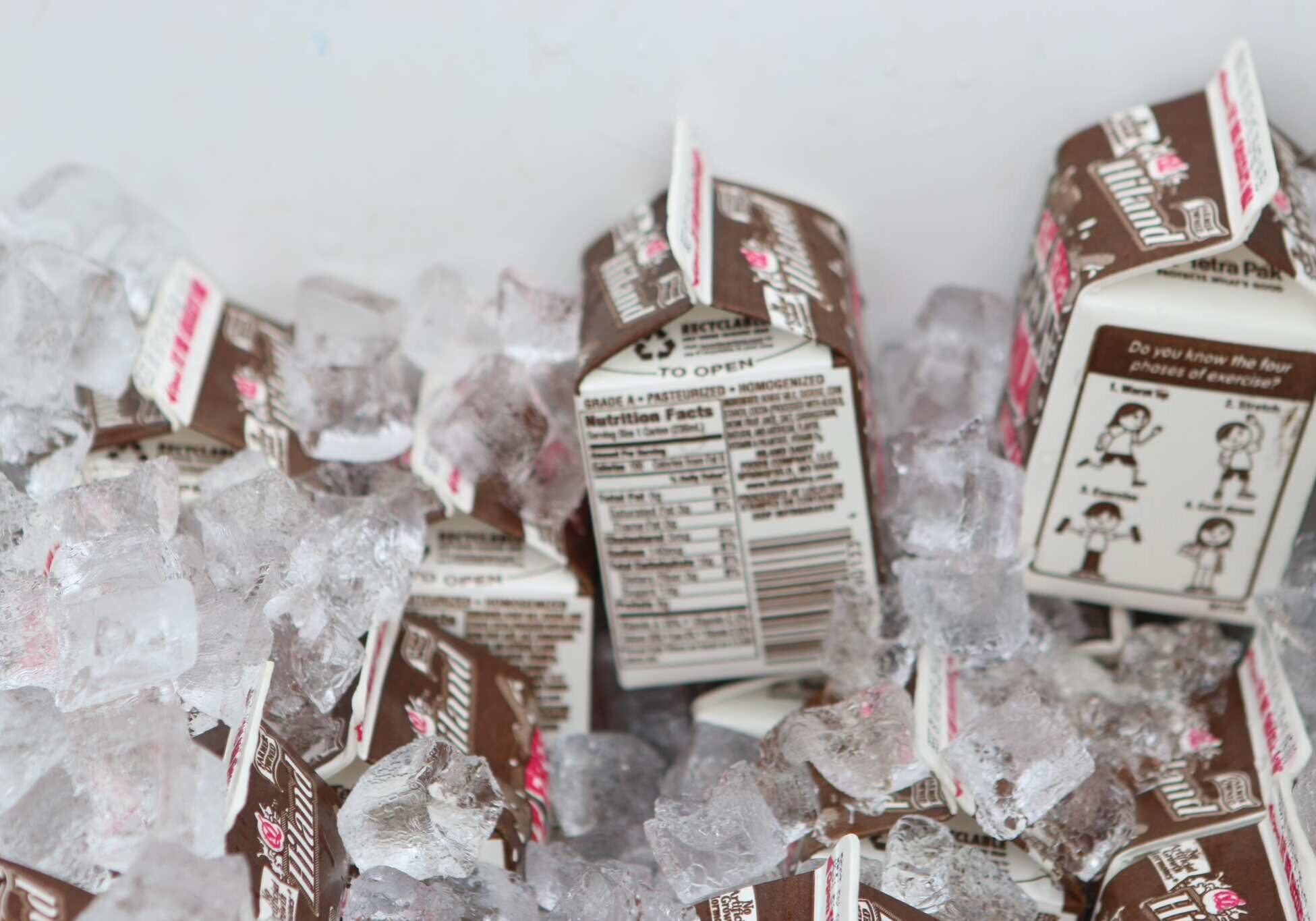
Who says no one gets a free lunch? USDA program brings exactly that to KC kids.
August 14, 2015 | Tammy Worth | 4 min read
On a recent scorching July afternoon in front of the De Soto Aquatic Center, a young boy is shouting out his lunch choice, as his parents look on in amusement.
“I want the jammy sammy!”
Of course he is choosing the PB&J over the more sophisticated fruit and cheese plates also on offer at this free summer food program. His father fumbles a bit with his wallet, awkwardly offering money for the sack lunch, but it’s kindly denied by the women serving the food.
The lunch is part of the U.S. Department of Agriculture-sponsored Summer Food Service Program, allowing children across the Kansas City metropolitan area to eat healthy breakfasts and lunches for free at area schools and nearby venues.
Through the program, the is USDA is attempting to debunk the old saying that no one gets a free lunch. The programs are administered locally through schools in areas with high concentrations of children who are eligible for free and reduced-cost lunches. Any child under the age of 18 can come to the site and receive lunch at no cost.
De Soto, which averages about 16 percent of children eligible for the food program, has one school, Starside Elementary, with 57 percent in the program. The program offers lunch at that school, as well as the district’s middle and high schools.
Amy Droegemeier, director of nutrition services for the De Soto School District, a few years ago decided to expand their reach to include the pool, in an effort to provide for children who swim there and hang out at the adjacent community center. The program also set up shop at a nearby subdivision called Clearview Village, former housing for army ammunition plant workers later converted to sliding-scale apartments.
“We are trying to meet the needs of the community,” Droegemeier said. “We can never reach enough kids.”
[FLEX-CONTENT]
The program can only distribute lunches in areas of high need. But Droegemeier says she aims to reach a wider range of families needing help.
“What we are trying to catch is gap families that don’t qualify for assistance, but are just trying to make it,” she said. “In this community, there are a lot of families that fall in the gap and are doing everything they can to get by.”
Even for those families living on the edge, school food service can be a relief. During the school year, De Soto elementary students are served breakfast for $1.10 and lunches for $2.35 a day. Reduced price meals are only $.30 for breakfast and $.40 for lunch.
Over the summer, families can’t rely on these inexpensive meals. For those with three or four children, the cost can add up.
“We want to make sure we are helping them out,” Droegemeier said.
Offering food in a community setting like a pool helps reduce the stigma of families needing help, she said.
After swimming lessons, the young lifeguards queue up for their sacked lunches. Kids walk through the line and a parent sits in her car, comfortable in air conditioning with her toddler, while her two older boys get lunches for them all. She gets four meals for $3.75 that day (the cost of her adult meal).
“In this community, there are a lot of families that fall in the gap and are doing everything they can to get by.”
Droegemeier knows most of the children on a first-name basis. She says the baseball coach at her son’s school makes the players eat lunch there during practice. This shows the kids it’s not just for “needy” families, but food that everyone can enjoy.
Droegemeier says the program also helps moms who chose to stay home and raise their children, but the choice keeps them counting pennies. The free lunches get them time out of the house and among adults during the long summer days.
Similarly, for Droegemeier, the program is all about community. Not only is she feeding people, she says, but she purchases food from local vendors and employs her staff to cook and serve the food.
“These are federal funds earmarked for this program and if we don’t use them, another community will,” she said. “This money goes right back into the community in ways people don’t even see.”
KCPT and the Hale Center for Journalism present “Getting By,” a series of stories and discussions examining the impact of inequality in KC, at kcpt.org/gettingby. How do you ‘get by’ in KC? You can join our discussion, here.
Reading these stories is free, but telling them is not. Start your monthly gift now to support Flatland’s community-focused reporting.
Related Stories
Nick’s Picks | Heat, Elections, Rodeo and More …
The heat is the big news story in Kansas City this week along with a lot of economic development news and the upcoming election on both sides of the state line

KCK steps up work on school buildings promised with $180 million bond package
The Kansas City, Kansas, school district provides an update on several school construction projects.

Nick’s Picks | Ballots, Bribery, Baby and More …
The World Cup has left town, some some of the biggest headlines are a man stuck in the toilet of a Porta Potty, upcoming elections, and an alleged scandal in Jackson County.