
Exhibit on History of LGBTQ Rights Removed from Missouri Capitol
September 2, 2021 | Jason Hancock, Missouri Independent | 2 min read
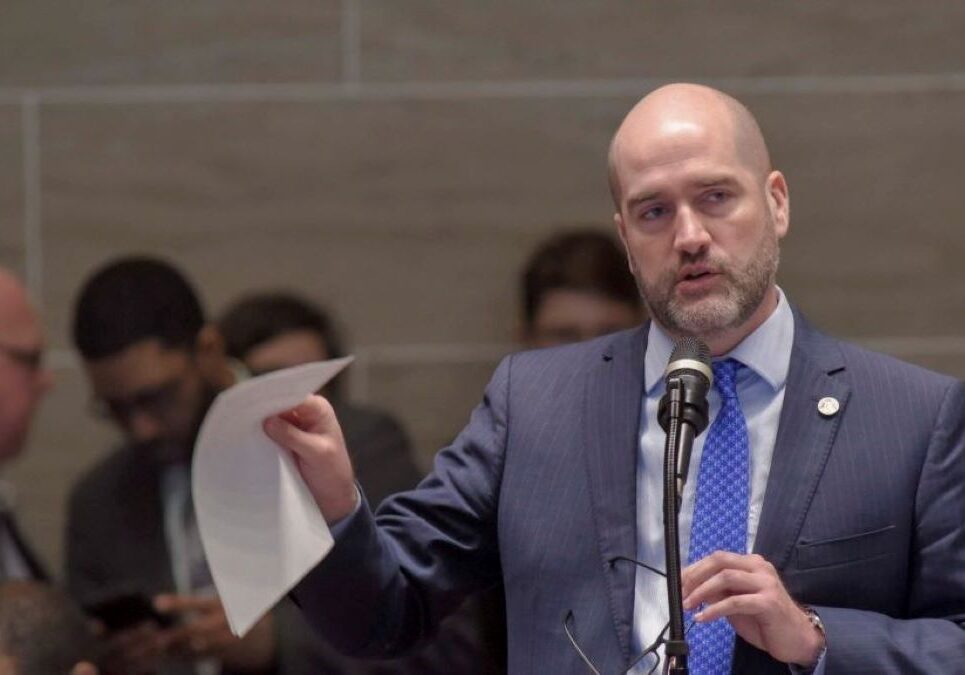
A state senator from Kansas City is demanding answers about why an exhibit on the LGBTQ-rights movement was removed from the Missouri Capitol after only a few days on display.
Sen. Greg Razer, D-Kansas City, released a statement Thursday decrying the move, saying he was “disappointed and angry that Missouri State Parks would bend to pressure from those who want to see people like me stripped of our rights and our dignity as American citizens.”
A spokeswoman for the Department of Natural Resources, which oversees Missouri State Parks, did not respond to a request for comment.
Word of the removal spread on Facebook following a post by Uriah Stark, legislative aide for state Rep. Mitch Boggs, R-La Russell. He celebrated the decision to remove the exhibit, giving credit to Republican Reps. Ann Kelley of Lamar and Brian Seitz of Branson.
“Thanks to the efforts of several of our great elected officials, the exhibit has been removed from the Missouri State Museum! To God be the glory!” Stark posted.
Neither Kelley nor Seitz could be immediately reached for comment.
The exhibit was part of the Missouri State Museum in the state Capitol, which includes numerous exhibits on state history.
Razer, the only openly gay member of the Missouri Senate, said the state owes the LGBTQ community answers “as to why they put this exhibit back in the closet.”
“There is nothing controversial about an exhibit that explains how members of the LGBT community fought to end persecution and demand rights as citizens,” Razer said. “This is nothing but ‘cancel culture’ coming from those who want the LGBT community to simply disappear into the shadows again.”
The exhibit, built by students in the University of Missouri-Kansas City’s public history program, explores the activism of gays and lesbians in the decades before Stonewall, including “Kansas City’s surprisingly pivotal role in helping to launch America’s gay rights movement. Focusing on ordinary people who accomplished extraordinary things, the exhibit explores how history is made.”
Jason Hancock is the editor of the Missouri Independent, a nonpartisan, nonprofit news organization covering state government, politics and policy.
Reading these stories is free, but telling them is not. Start your monthly gift now to support Flatland’s community-focused reporting.

Related Stories

Nick’s Picks | I-70, Tax Break, School Petition, and More …
An Interstate 70 closure, a tax rebate for Jackson County property owners, a school closure petition, and more ...

Kansas City Helping Renters Avoid Eviction
On any given Thursday, a small hallway in the Jackson County Courthouse crowds with tenants, landlords, and attorneys arriving for their scheduled hearings and trials. The scene unfolds on Floor 7M, which is half the height of the building’s other levels, and is where Associate Circuit Judge Mary Weir recently worked through 55 eviction cases…
Catholic schism with local ties raises question about religious factionalism
Religious splits are as old as Adam and Eve, but does it really have to be that way?