
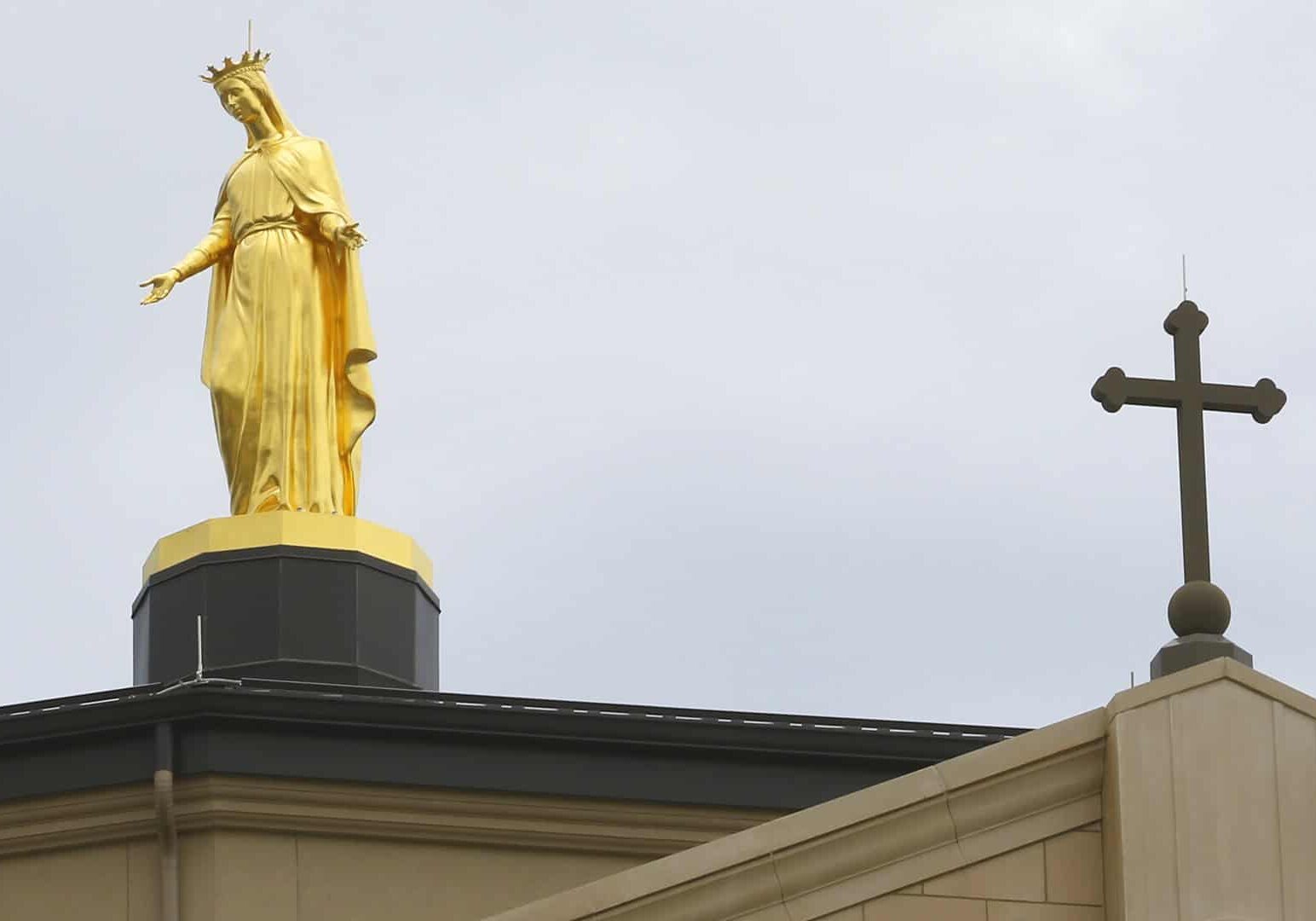
Catholic schism with local ties raises question about religious factionalism
The Catholic Church excommunicated the Society of St. Pius X, which has major office in Platte City
September 30, 2026 | Bill Tammeus | 7 min read
The recent excommunication of the Society of St. Pius X (SSPX) from the Catholic Church is another example of the disagreements and divisions that often happen in institutional religion.
Such splits can be — and often are — disheartening, but they’ve been part of history since God excommunicated Adam and Eve from the very first congregation in the Garden of Eden for breaking religious rules (at least as that story is told in Genesis).
Have there been efforts to restore unity within faith traditions? Yes.
For instance, this Christian History Magazine article cheers the World Council of Churches’ founding in August 1948 “to glorify Christ by restoring Christian unity.” But it sees that ecumenical effort as a response to how “Montanists, Donatists, Nestorians, Waldensians, Hussites and others withdrew from (Christian) fellowship or were ousted.”
So why can’t religions avoid such discord? What makes followers of this or that theology so certain they’re right and others are, well, not just wrong but maybe even damned?
The SSPX has a major office in Platte City, which is just north of Kansas City International Airport, so this example of religious divisiveness has obvious local implications. The specifics are detailed elsewhere, but for me, the schism is most useful to understand in the broader context of religion’s history of fragmentation.

As for the frequency of disruptive divisions within religion, Jacob Randolph, a church historian who teaches at the St. Paul School of Theology, cites an old joke that if you have two Baptists in a room, you’ll have three opinions.
But it’s deeper than that: “In the modern world,” he says, “religion functions quite differently than it did in the premodern world. Religion has become much more private, much more linked to individual identity as opposed to group identity. . .So if I don’t like what’s happening at First Presbyterian, I’ll just move over to Second Presbyterian.”
Yes, but divisions in faith traditions seem to happen for countless reasons.
For instance, what became Christianity eventually split from First Century Judaism once it was clear that not all Jews believed Jesus of Nazareth was the long-expected messiah. And Judaism, already much divided in Jesus’ time, still is split today into various branches.
And once Christians separated from Judaism, they just kept splitting internally, including in the Great Schism of 1054 that divided the Orthodox from the Catholics. Then, in the early 1500s, the Protestant Reformation split what was left of the Catholic Church.
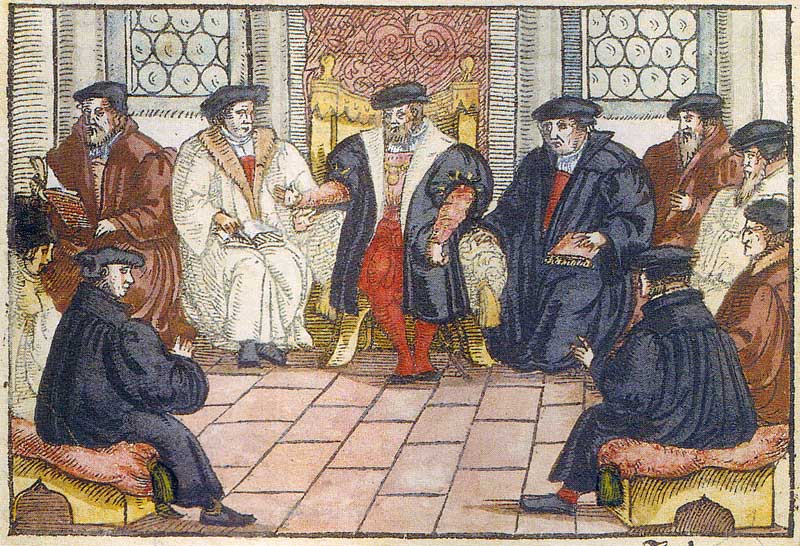
In 1529, a dozen years into the Reformation, a group of reformers, including Martin Luther and Huldrych Zwingli, met in Germany to find common Protestant ground.
They agreed on 14 of 15 points but disagreed about what happens to the bread and wine in Holy Communion. Luther finally threw up his hands and swore (versions differ slightly about his words) that he’d rather “drink pure blood with the papists than mere wine” with Zwingli’s followers. Something like that division remains today.
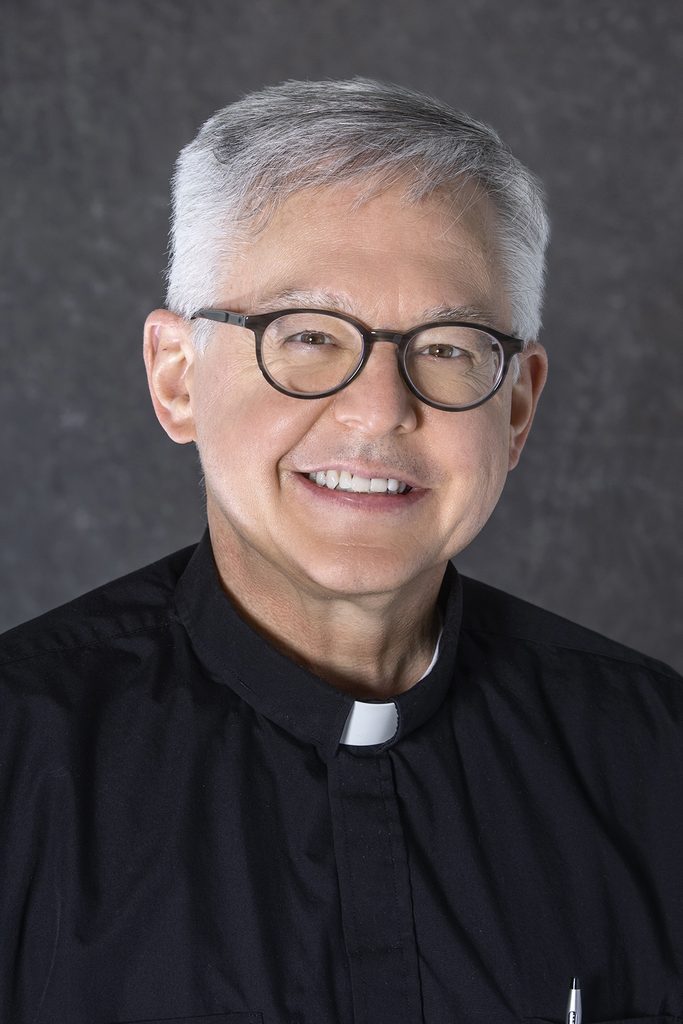
Still, all this division can have a good purpose, says Msgr. Stuart Swetland, president of Donnelly College in Kansas City, Kansas: “From a Catholic Church perspective, excommunication is always medicinal. It’s meant to point out to a person or group that their activities or choices are so serious that they break communion with the rest of the community.”
Beyond that, he says, excommunication sometimes “wakes the person up,” moving people to repent and return to full communion.
“If you look at the history of the Catholic Church,” Swetland says, “there are lots of groups that broke away but eventually came back.”
True, but such a reunion didn’t happen for most of the Protestants who left the Catholic Church in the 1500s, though there’s evidence that some core issues behind the Reformation have been settled.
For instance, in 1999, the Lutheran World Federation and the Catholic Church signed “A Joint Declaration on the Doctrine of Justification.” (“Justification” refers to ideas about how people are “saved” for eternity.)
The document affirmed that both Lutherans and Catholics now believe humans are saved by grace through faith and not by their own good works. In other words, humans can’t earn their way to eternal life by doing good deeds.
And yet that document said the agreement requires “further clarification in order to reach full church communion.” Almost three decades later that hasn’t happened.
Swetland grew up a (Missouri Synod) Lutheran in Pennsylvania, but as a teenager left the church until, that is, he studied at Oxford University in England in a time plagued by social divisions over such matters as the Vietnam War. That caused him to investigate Catholicism, and it convinced him that the best answers to difficult social questions are found “in the Catholic tradition,” he says.
But he says he also learned that when it comes to religion — and almost anything else — it’s vital to “emphasize what we share rather than what divides us” because “we share a lot more than what divides us.”
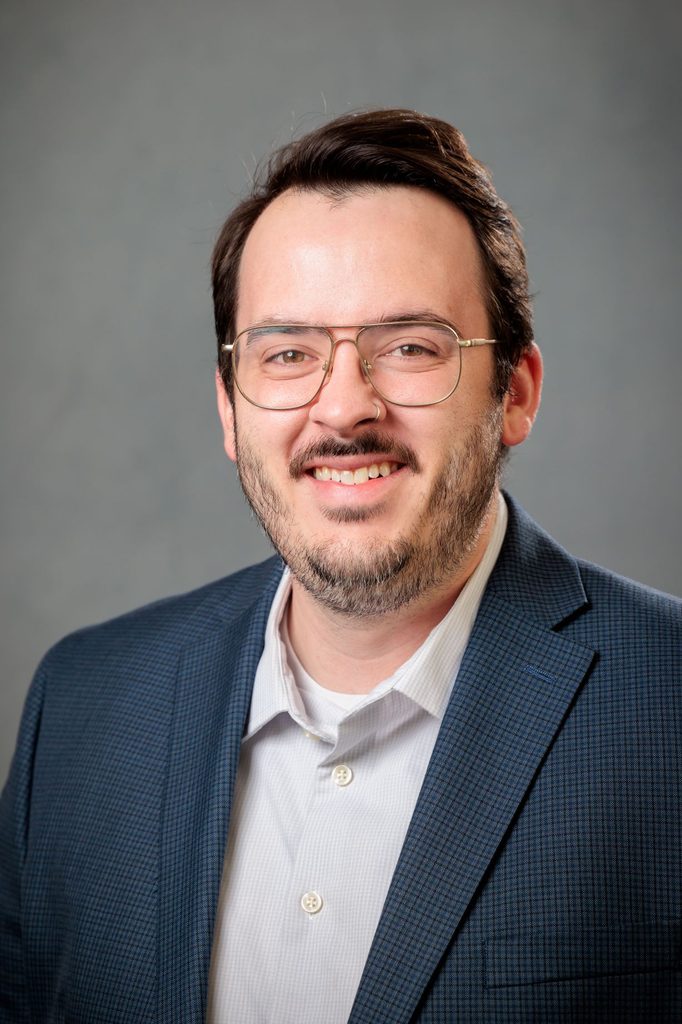
Similarly, Randolph has learned that “the moment you’re able to stop demonizing your religious opponents and you begin to see them as fellow human beings, then you find ground to cooperate on — even if you don’t believe the same things about God or the Bible or heaven or hell. That has been encouraging to see.”
And yet nearly all religions are divided. Muslims are Sunni, Shi’a and Sufi. Jews are Orthodox, Conservative or Reform (among other branches). Buddhism has several categories, too.
All of that has led in modern times to some interfaith dialogue and cooperation, and Kansas City, through its Interfaith Council, has been something of a model for the rest of the nation.
Swetland says ecumenical and interfaith discussions have “illuminated that we share a lot more than what divides us.”
And Randolph says he talks to students “all the time about the notion of history as a constant upward trajectory. That’s a false notion. But we also are capable of incredibly beautiful things. The constant call that we share is to work together to alleviate suffering and to work toward a better, more whole community.”
So, there’s more to all this than just the bleak news of another excommunication or of violence led by religious terrorists who imagine God wants them to destroy infidels.
Jesus once prayed that all his followers would “be one.”
Two thousand years later that goal isn’t close to reality. But if the best we can hope for is not killing each other over religious differences, let’s start there. In fact, from where I sit, I can see a vision of mutual respect on the far horizon, and the thought of it gladdens my heart, however prematurely.
Bill Tammeus, an award-winning columnist formerly with The Kansas City Star, writes the “Faith Matters” blog for The Star’s website, book reviews for The National Catholic Reporter and The Presbyterian Outlook. His latest book is Love, Loss and Endurance: A 9/11 Story of Resilience and Hope in an Age of Anxiety. Email him at wtammeus@gmail.com.
Reading these stories is free, but telling them is not. Start your monthly gift now to support Flatland’s community-focused reporting.

Related Stories
25 Years Later, Still Trying to Make Sense of 9/11
Flatland columnist Bill Tammeus reflects on the "misguided, ugly and wildly destructive version of Islam" that drove the 9/11 hijackers.

The Checkered History of Bruce R. Watkins Drive
East Side residents have long complained that this stretch of U.S Highway 71 cleaved Black neighborhoods. The road is also considered unsafe for pedestrians and drivers.
Restoration of Black church in Parkville inspires rainbow coalition
The community has rallied around the restoration of Parkville, Missouri's, Washington Chapel. Built in 1907, the chapel has been a haven for a Black population that has not always been welcome in town.