
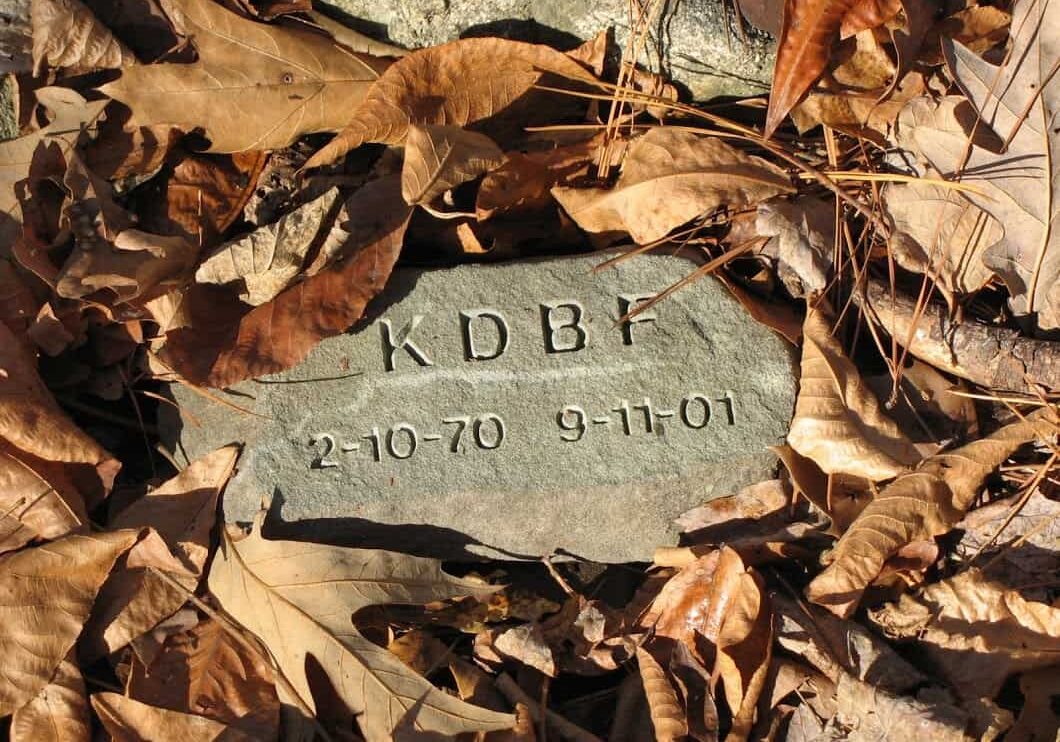
25 Years Later, Still Trying to Make Sense of 9/11
How could warped ideologues besmirch Islam and kill my nephew?
August 26, 2026 | Bill Tammeus | 6 min read
On that malevolent Sept. 11 morning almost 25 years ago, I arrived at my Kansas City Star editorial page desk about 7:15, as usual, and prepared to write another “Starbeams” column of satiric/comedic one-liners.
But not long after I turned on the small black-and-white TV in my cubicle, it was clear that some kind of big news was happening, so I flipped over to CNN and discovered the terrorist attacks that soon the whole world would know about.
Before long, Star editors decided to publish the first extra edition of the paper since I had arrived there 31 years earlier. And I was asked to write the lead commentary piece for it. Which meant I had about an hour and a half to come up with some 800 words that would try to make sense of this calamity.
I was about halfway through that column when my wife called to ask if I’d read my sister’s distressing email. I hadn’t.
So, using The Star’s outdated technology, I fought my way over to my email and found Barbara’s note with this subject line: “Very Bad News.” It was. She told us that she and her husband Jim believed their son, my remarkable nephew Karleton Fyfe, was on the first plane to smash into the World Trade Center.
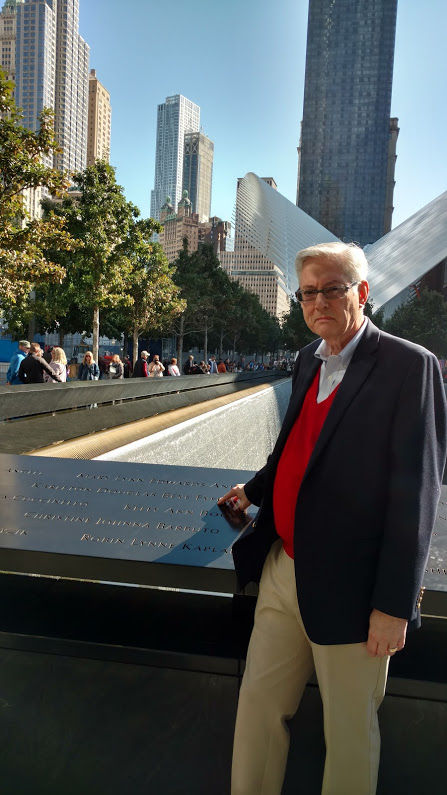
They were right. Which meant this brilliant 31-year-old bond analyst for John Hancock in Boston was murdered into a million fragments, leaving behind a 19-month-old son and a pregnant wife. The whole extended family was dumbfounded by this unspeakable crime, a malicious result of religion gone terribly fetid.
Ideas about vile religion have stayed with me until this day.
And it was my job to help explain to readers how the distortion of one break-off branch of the laudable Abrahamic faiths had brought unspeakable misery and anguish to the families of nearly 3,000 murdered people that day. The deaths of the terrorists, of course, also brought anguish to their own families, as Karleton’s mother noted at his memorial service.
So I began the task that first morning by mentioning Karleton in my 9/11 commentary for the extra edition. In later days, I reacquainted myself with the Islam I first had learned about when I spent two years of my boyhood in India, living near a small Muslim village.
Then, less than a year after 9/11, I traveled with other opinion journalists to Saudi Arabia (from which most of the hijackers had come), Egypt and Uzbekistan. Our job was to talk with government and religious leaders there to try to understand how a radical and violent figure like Osama bin Laden could convince young Muslim men to throw away their lives to try to teach the Great Satan, the U.S., a lesson.
What I confirmed on that trip was what I already had started to understand even before 9/11, which is that Islam was (and still is) in an internal battle for its very soul. It is far from the only divided faith tradition on the globe, of course, nor is it the only one that has descended into violence in its history (think of Christianity’s Crusades and of American churches that used the Bible to justify slavery).
But it was a misguided, ugly and wildly destructive version of Islam that ripped the heart out of our nation and my family 25 years ago.
As I mentioned in a column I wrote last year, I felt a special burden to write about all of this, including in my latest book, because, as far as I know, my Star colleague Mike Casey and I were the only two professional journalists who lost close family members on 9/11. In Mike’s case, it was his cousin, Terrence M. Lynch, who died when one of the planes smashed into the Pentagon.
So here’s now the question for Americans: What did we and our leaders learn from the violence inflicted upon us?
Not nearly enough.
Instead of trying to understand Middle Eastern history’s connections to us, we soon attacked Afghanistan and, like the Soviets before us, fought an indecisive, deadly and expensive war there for years. When that wasn’t enough, we attacked Iraq, killed its murderous leader and began another Forever War. Since then, we’ve attacked Venezuela and now Iran.
Our national leaders continue to view war as a legitimate first or second response to some insult or event and have invested our children’s and grandchildren’s resources in the military — not just to try to defend our homeland but to attack the homeland of others, sometimes for no just reason. And the lives of many of our Heartland neighbors have been cut short or drastically changed because of that.
I wish each of our leaders had the kind of heart found in Karleton and his parents, Jim and Barbara Fyfe (Barbara died in March). They were peace seekers and peacekeepers.
Indeed, they were among the early members of September Eleventh Families for Peaceful Tomorrows, to which 9/11 family members belong as they promote peaceful solutions to conflict instead of war.
That organization plans an event on Sept. 10 in New York City that will wind up at the 9/11 Memorial and Museum, and I plan to be there.
I’m aware that my own Christian Protestant tradition also has violence in its history — violence that never solved any of the issues over which battles were fought. But that tradition also teaches the importance of not devaluing other humans, not using violence to settle disputes, not forgetting that we are disciples of one called the Prince of Peace.
So 25 years later, I still have wonderful memories of the tall, funny, whip-smart Karleton. But what I don’t have is a full explanation of why the world’s great religions sometimes abandon their own theology and promote — or even participate in — violence.
I know only that I feel called to speak up about this failure, to demand better and to hope that maybe someday someone else’s nephew won’t be gruesomely murdered to make a political or religious statement. So that’s what I do.
Bill Tammeus, an award-winning columnist formerly with The Kansas City Star, writes the “Faith Matters” blog for The Star’s website. His latest book is Love, Loss and Endurance: A 9/11 Story of Resilience and Hope in an Age of Anxiety. Email him at wtammeus@gmail.com.
Reading these stories is free, but telling them is not. Start your monthly gift now to support Flatland’s community-focused reporting.

Related Stories
Kansas City Helping Renters Avoid Eviction
On any given Thursday, a small hallway in the Jackson County Courthouse crowds with tenants, landlords, and attorneys arriving for their scheduled hearings and trials. The scene unfolds on Floor 7M, which is half the height of the building’s other levels, and is where Associate Circuit Judge Mary Weir recently worked through 55 eviction cases…
Catholic schism with local ties raises question about religious factionalism
Religious splits are as old as Adam and Eve, but does it really have to be that way?

Nick’s Picks | Costco, Homicides, Rain and More …
Is Missouri's congressional map saga over? It seems so, but who knows if there will be another twist or turn. That story and more ...