
Nearly four years after Google Fiber announced service to the Kansas City area, some key questions remain largely unanswered — particularly questions about how the city will use gigabit-speed internet to grow and thrive.
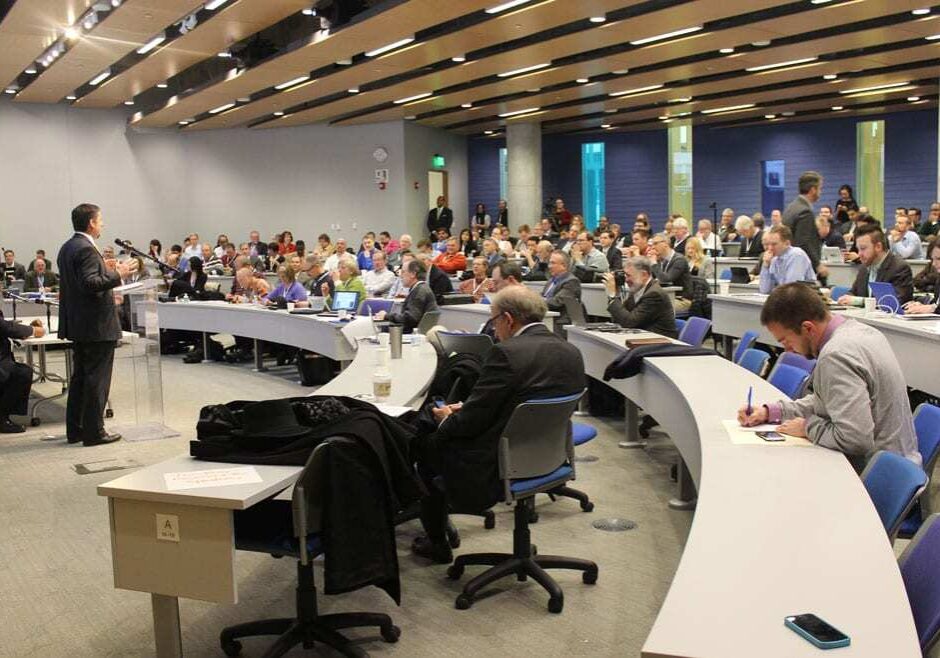
This week in Kansas City, the Gigabit City Summit, organized largely by KC Digital Drive, is assembling representatives from Kansas City and other cities across the country to tackle one basic question: “How do you build the gigabit city?” or a city that utilizes super-fast internet.
Aaron Deacon, managing director at KC Digital Drive, said that gigabit internet did not come to Kansas City with an instruction manual. In other words, it’s up to the city to figure out how it will utilize super-fast internet speeds in our communities.
Deacon said there are so many potential ways to use gigabit that it can be a challenge to focus into specific applications.
“One of the most interesting challenges is the fact that gigabit applications are a hard thing for people to wrap their heads around,” he said.
A key to figuring out the gigabit future, he said, is to focus on ways that gigabit applications improve quality of life for everyone, including the underserved.
Deacon asked summit participants to consider the social benefits of potential gigabit applications. He said there’s huge potential in healthcare, public safety and education, but the key to making that happen is access. In fact, the problem of bridging the digital divide was one of the major themes of the summit.
Kansas City, Kansas, Mayor Mark Holland also stressed the importance of bringing internet access to low-income and underserved communities.
“We have an opportunity to take people who have no access to jobs, education and government services and give them access,” he said.
Holland said the demographics of his community of Kansas City, Kansas, make it essential to improve not only internet access, but also digital literacy. He said some people don’t have even the most basic computer skills, such as turning on a computer or opening a browser, and community leaders need to focus on educating that population.

Mayors Sly James and Mark Holland spoke at the Gigabit City Summit. (Photo by Bridgit Bowden/ Flatland)
Mayor Holland said he thinks that gigabit-speed internet has the potential to help bridge the digital gap. But, he stressed the idea that companies that provide broadband should focus on the greater good instead of just profits.
“We’re much more interested in community partners than robber barons,” he said.
The Gigabit City Summit runs from January 13–15.
Reading these stories is free, but telling them is not. Start your monthly gift now to support Flatland’s community-focused reporting.
Related Stories
Kansas City Helping Renters Avoid Eviction
On any given Thursday, a small hallway in the Jackson County Courthouse crowds with tenants, landlords, and attorneys arriving for their scheduled hearings and trials. The scene unfolds on Floor 7M, which is half the height of the building’s other levels, and is where Associate Circuit Judge Mary Weir recently worked through 55 eviction cases…
Nick’s Picks | Costco, Homicides, Rain and More …
Is Missouri's congressional map saga over? It seems so, but who knows if there will be another twist or turn. That story and more ...

Nick’s Picks | Obama Visits KC, Debates and Fall’s Arrival
Obama in KC With Election Day just six weeks away, some of the nation’s top political names are now rolling through Kansas City. Last week, Vice President JD Vance was in town. This week, it’s Barack Obama. The former president takes the stage Saturday at the Overland Park Convention Center for a leadership event hosted…