
United in Opposition: The Bipartisan Response to Data Centers
The controversies activate political novices.
September 2, 2026 | Maggie LeBeau | 8 min read
Editor’s note: Independence, Missouri, voters ousted City Councilman John Perkins in a recall election Tuesday, spurred by his support of tax incentives for a data center being built in the city. In unofficial results, nearly 70% of voters favored the recall. Two other councilmembers who supported the incentives have lost electoral bids since the vote.
Troy Harp moved to rural Osawatomie, Kansas, in 2002 for a quiet life with his wife and sons. He wasn’t involved in local civics and didn’t use social media. At the front of his 8-acre land stand two “private property” signs. Harp recently added a more politically focused sign. In bold letters, it reads “No Data Center.”
The once private resident has become the face of a local movement similar to others sprouting across the country: opposition to data centers. A Gallup poll found that 7 out of 10 Americans oppose data centers being built near where they live.
In a time dominated by national politics, data centers have encouraged many Americans of differing ideologies to become more civically engaged, especially on the local level.
According to Pew Research Center, there are over 3,000 data centers in the U.S. and around 1,500 more are on their way. Two-thirds of them will be built in rural areas.
Data centers have been around for decades with the growth of cloud-based services. Hyperscale data centers are much larger, built to meet the increasing demand of AI. The facilities can occupy hundreds of acres.
Featured Video
Only a few months ago, Harp was on his tractor when his neighbor waved him down to tell him about a hyperscale data center possibly being built just 75 yards from his property.
That didn’t sit well with Harp.
He and his wife plan to stay put for good. They want their grown-up children to be able to visit at any time.
Stability is important to Harp, who had lived in 13 states by the time he was 14.
“I’m not just in this fight for myself,” he said. It’s for all of these folks [who are] going to be affected by this.”
Financial benefits
This spring, Osawatomie entered into a predevelopment agreement with Alcove Development to build a 500 mega-watt data center. The data center could help the town financially.
The city currently brings in $3.1 million in property taxes. By the time the data center would be fully operational, it would pay nearly $22 million in property taxes strictly to Osawatomie. That would alleviate the tax burden for the town’s roughly 4,000 residents, according to Osawatomie Mayor Nick Hampson.
“Our tax base now is 80% residential tax burden in Osawatomie, and that’s obviously one-sided, not in a good way for our residents,” Hampson said. “So, I believe this could flip that to at least 80% commercial or industrial tax burden versus the residential.”
Hampson said the extra funding could help with projects like repairing infrastructure and building a pedestrian bridge over train tracks.
Data Center Opposition Leaders


Kansas recognizes the financial benefits, too, and wants to attract more developers. In April 2025, the state passed legislation providing a 20-year tax exemption to data center developers for construction, equipment, and maintenance if they invest at least $250 million within five years and create 20 new jobs.
The Osawatomie data center, however, would be built near homes and a state mental hospital. A 2026 study found that many data centers often approach or exceed the outdoor noise limit recommended by the U.S. Environmental Protection Agency and that long-term noise pollution can cause heart disease and hearing loss.
Daniel Moorehead has experienced this firsthand.
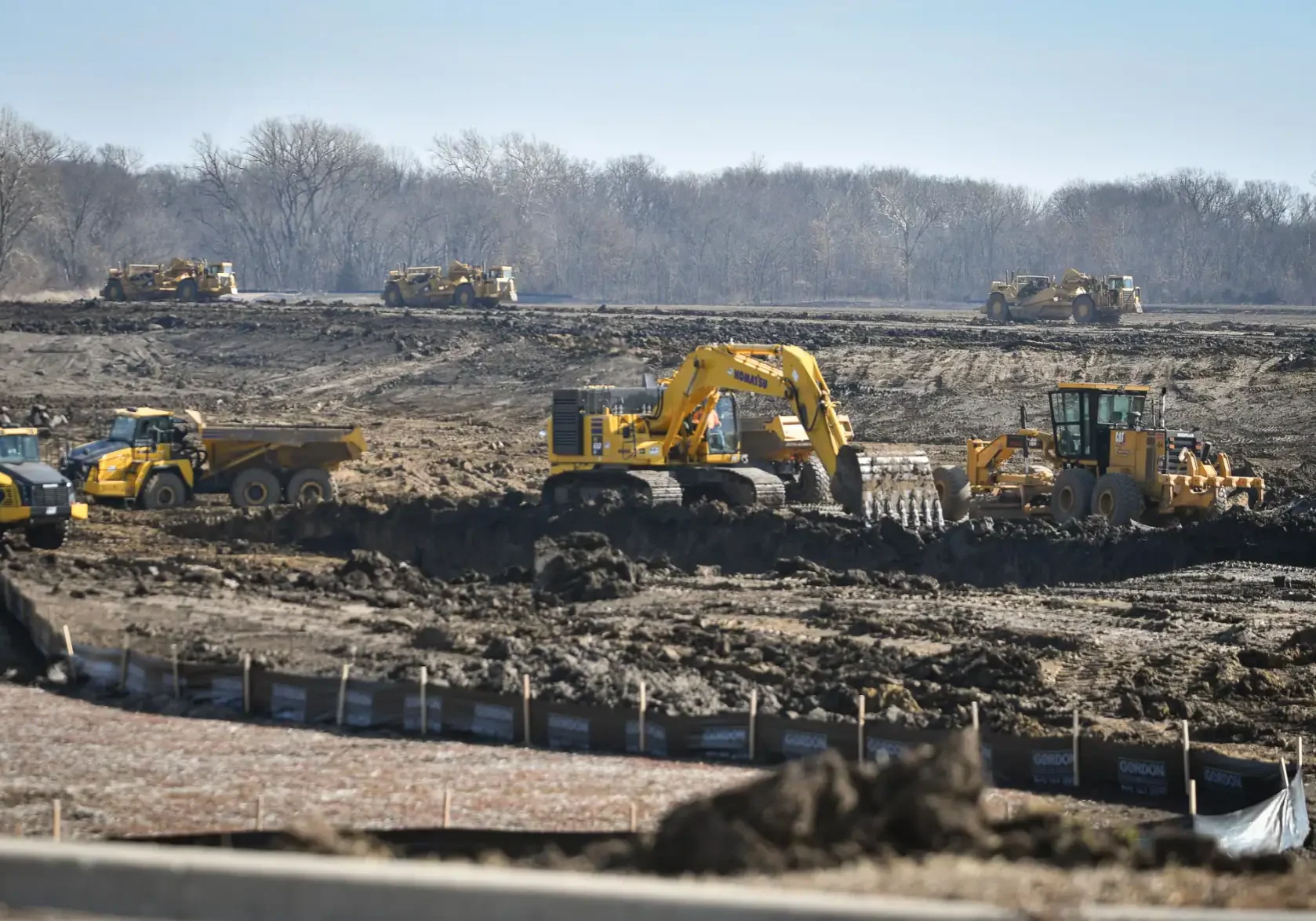
He moved to Independence, Missouri, for solitude and to be within walking distance of his church. The construction of a 400-acre data center right down the street is threatening that lifestyle.
Construction workers are at the site every day from sunrise to sunset.
Moorehead said the construction noise is especially bad in the winter when there is less foliage to absorb the sound. But this is the quietest it’ll be, according to Moorehead. Once the data center is fully finished and operational, the cooling units will cause nonstop noise.
Moorehead and his wife stumbled upon the data center in November when they saw construction trucks while on a training run for a 5-kilometer race. They attended an open house to hear more about the project.
“This is not by choice I’m here, but it came to my front door.”
daniel Moorehead, independence, missouri
“That was the first time we really got an idea of the scope and size and magnitude of this massive complex they’re putting in, and that was probably the first time I also had questions that weren’t being answered,” Moorehead said.
For many residents, concerns about data center development have become a catalyst for civic engagement. Many are first-time advocates.
Moorehead, an IT manager, formed the Independence GUARD Alliance, a neighborhood group trying to improve transparency and communication between the local government and Independence residents.
“This is not by choice I’m here, but it came to my front door,” Moorehead said. “I felt like I had to get involved somehow.”
He said zoning is a “huge problem that the city council has left open.”
In Osawatomie, Harp spoke out using a Facebook Marketplace account he and his son had established. “People started reaching out to me, and we started kind of a little group,” he said.
Harp speaks regularly at meetings and posts on social media to keep the community informed.
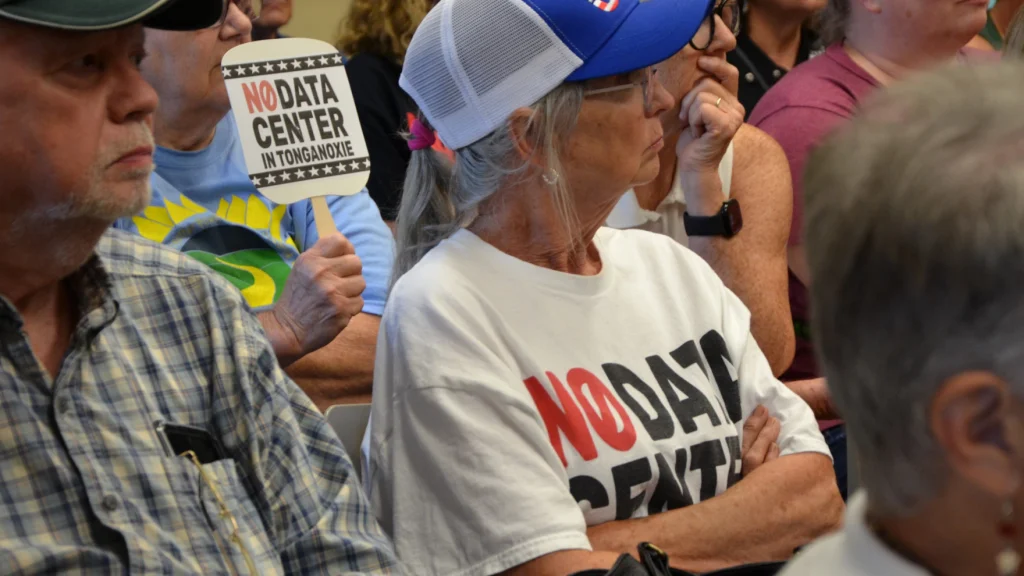
Harp was one of 50 people at his first-ever city council meeting two months ago. More than 200 people are now consistently attending to speak out. The city council has moved its meetings to a school gym to accommodate the audience.
“The issue before us is not whether technology is good or bad; the issue is if Osawatomie should gamble its future on promises instead of proven experience, established regulation, and a transparent public process,” Harp said to city council members and Alcove representatives at a packed three-hour town hall meeting in June.
Similar concerns are emerging in communities across the region.
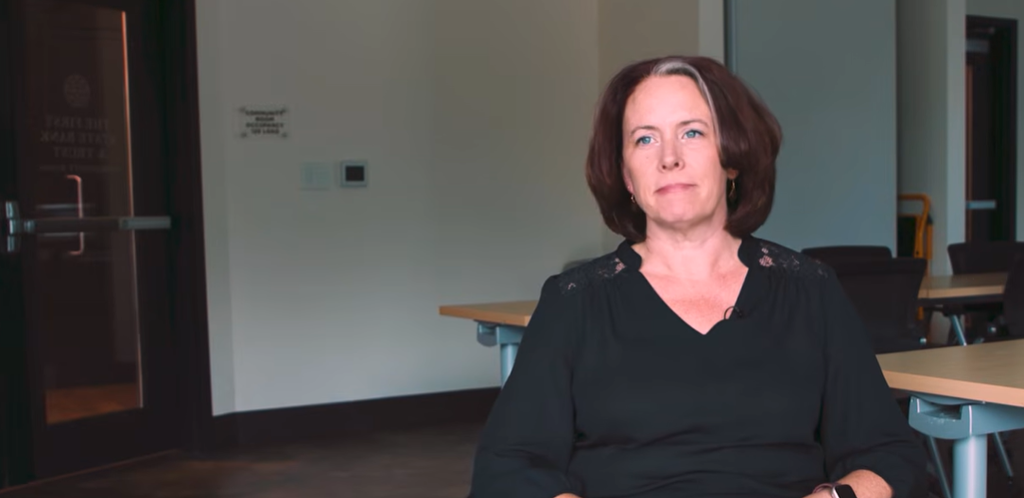
In Tonganoxie, Kansas, Rebecca Davis is a leader of Citizens against Bluestem, a group trying to stop Project Bluestem, a 1,000-acre data center near the community.
Davis found out about the center when a county commissioner offhandedly mentioned the project during a town hall. “I had a very visceral reaction to that,” she said. “It was like, ‘Oh no, no, no.’ So immediately I was pretty hooked and felt the call.”
Davis knows more about local politics than ever before. A nurse by day, she now even dreams about data centers in her sleep.
This issue is so important to Davis that she switched her party affiliation from Democrat to Republican to vote in the GOP primaries in August. The governor’s race was one of her chief concerns, where several Republicans had called for a statewide moratorium on data centers.
As it turned out, Senate President Ty Masterson, an Andover Republican, won the primary, even as his opponents attacked him for supporting the data center tax-exemption legislation.
Before the construction started in Independence, Moorehead didn’t follow local politics very closely. Through his experience, he realized the importance of paying attention.
“Politics has always been the thing you did by making sure you voted on Election Day,” Moorehead said.
But by then, he said, “you’ve already missed out on probably 100 opportunities to actually sway an outcome.”
Bipartisan support
In an era marked by political division, debates over data center development are forging alliances among people from different backgrounds and ideologies. Neighbors from across the political spectrum have coalesced around shared concerns about the future of their communities.
Leavenworth and Miami counties, home to Tonganoxie and Osawatomie, respectively, lean red. Independence is located in Jackson County, which leans blue.
Tonganoxie activists come from all different backgrounds and political beliefs, but according to Davis, their politics don’t come up. She said the group abides by the old rule of thumb that you don’t talk about politics, religion, or money.
Moorehead said the Independence residents in his group — most of whom he likely never would have encountered otherwise — have varying reasons for opposing a data center near them, but they all want the same outcome.
“Some people are very environmentally focused, some people are worried about national security, other people are worried about their jobs,” he said. “People don’t want it near their homes.”
For Moorehead, working with people outside of his background and beliefs has made him more open to understanding differing perspectives.
Harp said the common cause against big tech has made it easy to bring Osawatomie residents together even at a time when common ground is hard to establish. He said big companies prey on small communities, believing they can push around residents with limited resources.
“But they’re wrong about that,” Harp said, “because people can pull together, which is what we’re doing here.”
Reading these stories is free, but telling them is not. Start your monthly gift now to support Flatland’s community-focused reporting.
Related Stories
Nick’s Picks | Top Cop, Mission Mall, Lucas’ Travels and More …
Nick Haines also has the lowdown on information for the upcoming election, the arrival of fall and Kansas City's Day of the Dead celebration.
Nick’s Picks | I-70, Tax Break, School Petition, and More …
An Interstate 70 closure, a tax rebate for Jackson County property owners, a school closure petition, and more ...
Kansas City Helping Renters Avoid Eviction
On any given Thursday, a small hallway in the Jackson County Courthouse crowds with tenants, landlords, and attorneys arriving for their scheduled hearings and trials. The scene unfolds on Floor 7M, which is half the height of the building’s other levels, and is where Associate Circuit Judge Mary Weir recently worked through 55 eviction cases…