

When it took effect five years ago, the Kansas Indoor Clean Air Act had some restaurant and business owners concerned.
But their worries about the state law prohibiting smoking in most public places — including workplaces, public buildings, bars, and restaurants — have largely gone unrealized.
The law had its start in cities such as Salina, where in 2002 city commissioners began debating an ordinance to ban smoking in restaurants, with an exception for late-night hours.
“It generated more response from the community than any other issue that I ever had to deal with while I was on the commission — and I was on the commission for six years,” says Debbie Divine, a former Salina city commissioner and mayor.
Many restaurant owners were worried that they’d lose customers who smoked, Divine says.
Those Salina restaurant owners included Tom Dick, who has operated Tom’s Appletree Restaurant for 30 years.
“We had a lot of customers from Lindsborg and McPherson,” he says. “We still do. We had some of them that flat told me, ‘We won’t be eating in Salina anymore because of the smoking ban.’ And they didn’t. They stopped coming in.”
But overall, Dick says his business didn’t suffer. In fact, he didn’t see any difference at all.
Soon, other cities followed suit with smoking bans of their own: Lyons, Lawrence and Hutchinson had smoking bans within two years after enforcement started in Salina. By the end of 2009, more than three dozen Kansas cities, towns and counties had enacted smoking bans.
Reagan Cussimanio, government relations director in Kansas for the American Cancer Society Cancer Action Network, credits that grassroots movement for passage of the statewide law.
“The state itself saw that communities, and residents in those communities, wanted clean indoor air,” Cussimanio says.
Public support
In December 2013, Cussimanio’s organization commissioned a survey of 500 likely Kansas voters that found 86 percent approved of the smoke-free law, while only 12 percent disliked it.
While the public may like restrictions on smoking in public places, the Kansas Restaurant and Hospitality Association long argued against government enacting such policies.
The association told the Salina City Commission in 2002 that such decisions should be left up to owners of the affected businesses. The association’s president and CEO, Adam Mills, declined to comment on the indoor smoking ban’s five-year anniversary.
Larry Conover has a different view of the government regulation. His family has operated the Town & Country Restaurant in Wichita since 1957.
“I was a little nervous, because we had such a strong group of people that smoked here,” Conover says. “The whole building was smoking. We didn’t even have a non-smoking section.”
On the other hand, Conover knew he was losing business from families who didn’t want to breathe secondhand smoke. Wichita officials took the decision out of his hands by passing smoking restrictions in 2008.
“We were back-sliding, and if they hadn’t helped us, it would have been hard for me to make the decision on my own to just go non-smoking, because I had all these other customers I was already loyal to,” he says.
“But once the city helped us, it was citywide, so it was fair, and nobody could get mad at anybody. Most of them, at some point, said, ‘I’m going to go somewhere else,’ but there was nowhere else to go. So it actually helped, I think.”
Health improvements
But the Indoor Clean Air Act, at its core, isn’t about business. It’s about improving Kansans’ health.
Statistics from the Kansas Department of Health and Environment show decreases since 2009 in Kansas hospital discharge rates for patients with lung diseases like asthma and chronic obstructive pulmonary disease. Discharge rates for heart attacks also declined, but not as much.
Those improvements can’t be directly linked to the smoking ban because other possible causes can’t be ruled out, says Kimber Richter, tobacco treatment researcher at the University of Kansas Medical Center.
“We can’t prove that we can attribute them to the Clean Indoor Air Act, but all of the studies published that have looked at health effects would suggest that the ban contributed to those reductions,” she says.
Richter says the next step is to protect people from secondhand smoke at outdoor venues, like college campuses and outdoor youth sports facilities. That would provide health benefits and prevent children from becoming smokers, she says.
Bryan Thompson is a reporter for KHI News Service in Topeka, a partner in the Heartland Health Monitor team.
Reading these stories is free, but telling them is not. Start your monthly gift now to support Flatland’s community-focused reporting.

Related Stories
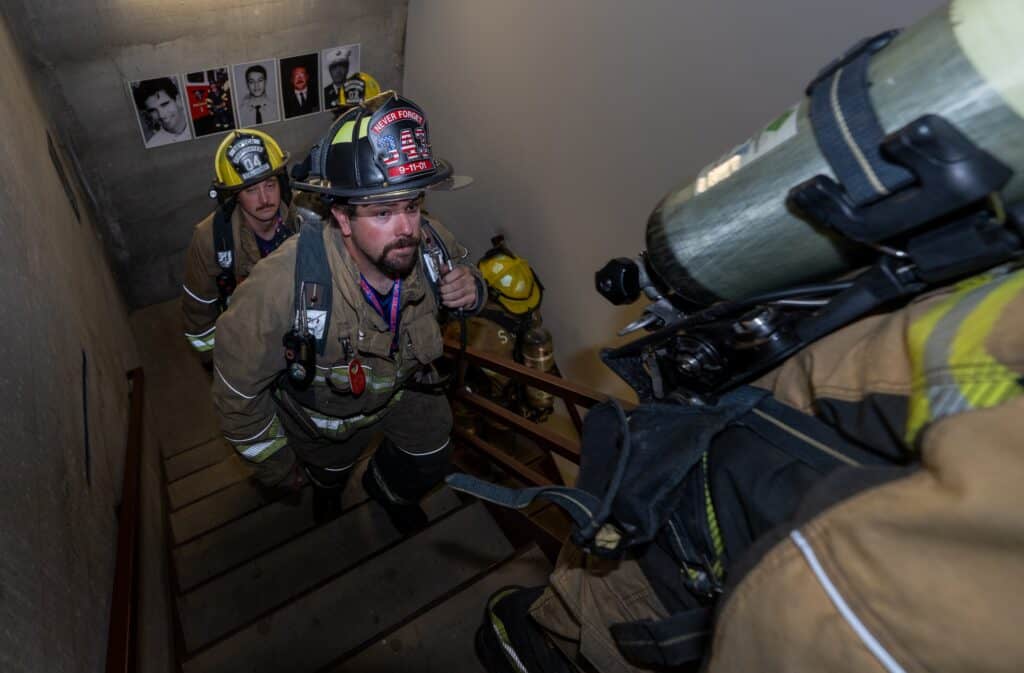
The Fight Against Forgetting 9/11
Schools, nonprofits, and firefighters work to ensure Kansas Citians remember the victims of the Sept. 11, 2001, terrorist attacks as the nation marks the 25th anniversary of the tragedy.

United in Opposition: The Bipartisan Response to Data Centers
From Independence, Missouri, to Osawatomie, Kansas, data centers are angering residents and spurring bipartisan opposition.
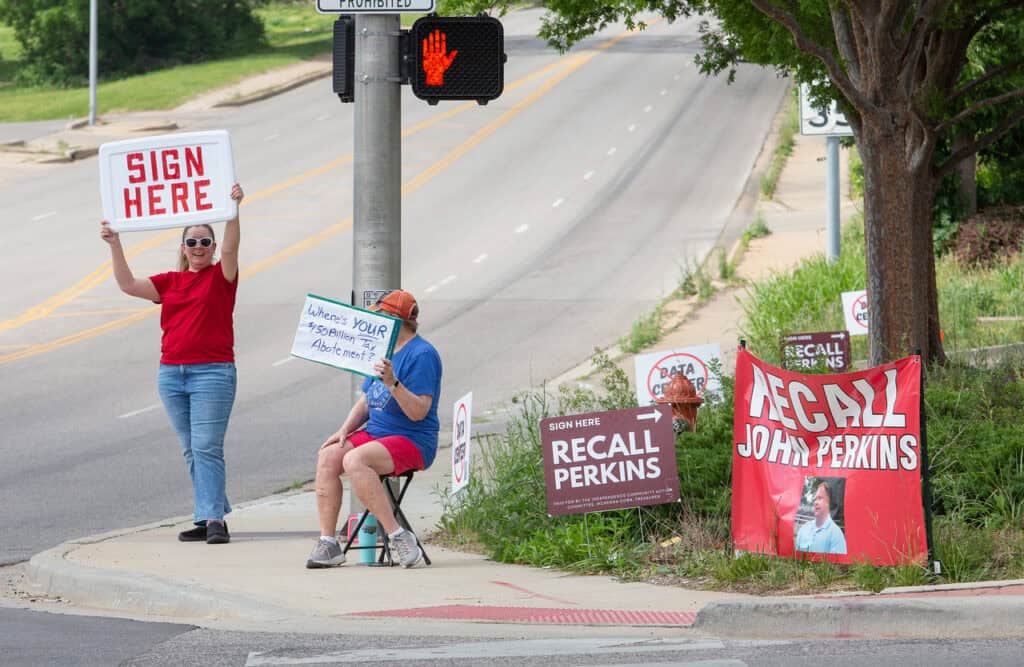
Nick’s Picks | Map, Recall, Trial and More …
The Missouri Supreme Court takes up a question about a local congressional district, an Independence councilman fights to keep his seat, and a long-delayed murder trial is set to get underway.