
Fifty years ago, American Neil Armstrong became the first person to walk on the moon. He took his “one small step for man” on July 20, 1969. PBS is using that historic event as a hopping off point — so to speak — for its “Summer of Space,” which begins tonight.
While astronauts have hurtled skyward, meteorites have plunged the other way. The Meteoritical Society, an international scholarly organization, has plotted tens of thousands of impact sites on Earth.
In conjunction with the “Summer of Space,” Flatland used the Meteoritical Society data to plot known meteorite strikes in Missouri and Kansas. (See the interactive map below.)
The Big One
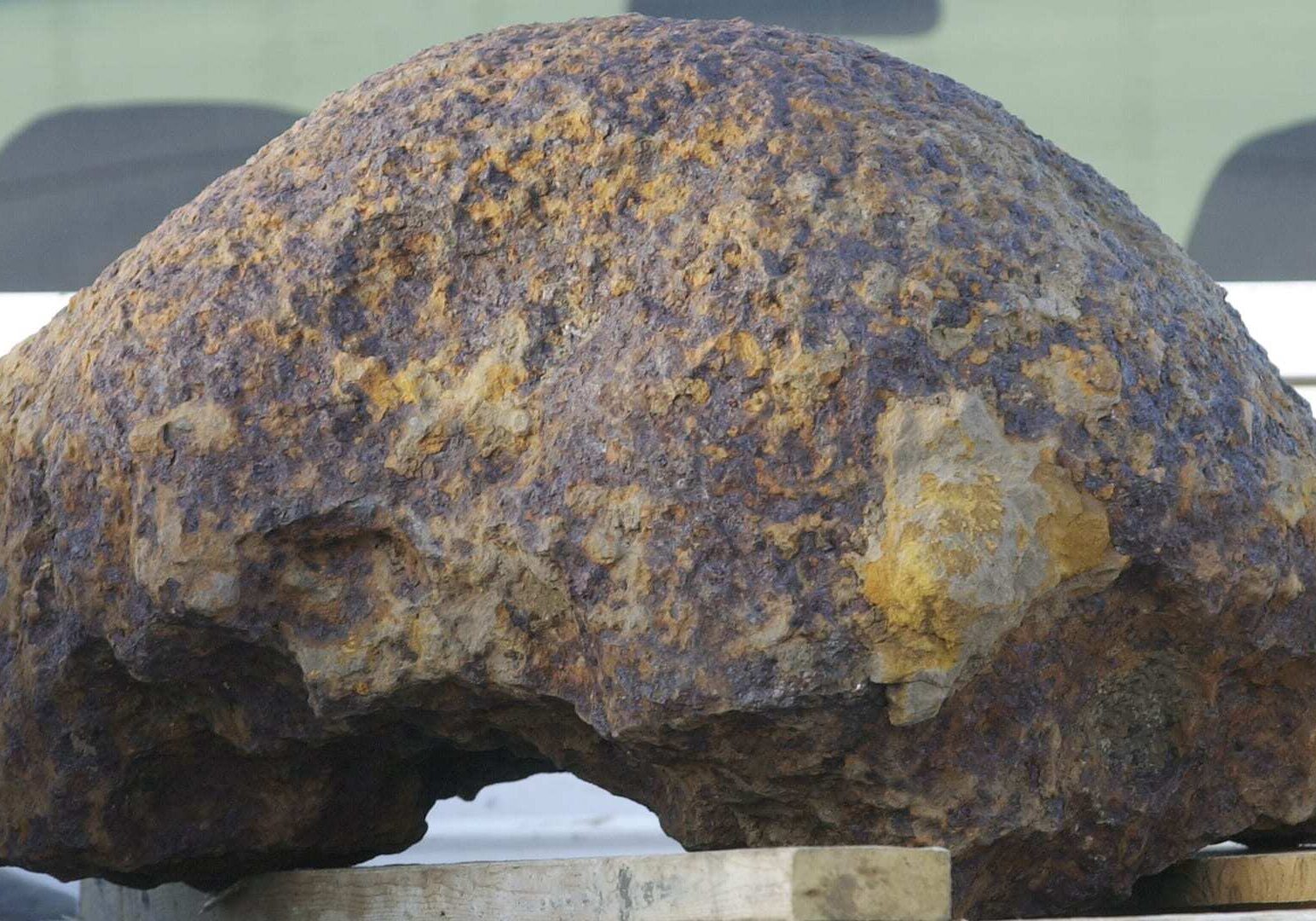
The largest known meteorite to land in either Kansas or Missouri was called Brenham, and weighed in at a hefty 4.3 tons, or 8,600 pounds. It fell to the Earth approximately 20,000 years ago, and was finally discovered in 1882 near Haviland, Kansas. It is made up of mostly nickel, a naturally-occurring metallic element with a silvery-white, shiny appearance.

—Brian Perlman is a summer intern for Kansas City PBS
n conjunction with PBS’ “Summer of Space,” Kansas City PBS is highlighting local stories about that historic time as well as other area celestial highlights.
Reading these stories is free, but telling them is not. Start your monthly gift now to support Flatland’s community-focused reporting.

Related Stories

Nick’s Picks | Rally, Debate, Data Center and More …
Election season is in full swing, with the U.S. Senate race in Kansas taking center stage, including President Donald Trump holding a rally in Wichita.

Kansas City Cooks as Site for National Anti-ICE Dinner Series
Celebrated chefs from throughout the metro collaborated for three nights on dinners that raised money for a local immigrant-rights nonprofit.

Nick’s Picks | Top Cop, Mission Mall, Lucas’ Travels and More …
Nick Haines also has the lowdown on information for the upcoming election, the arrival of fall and Kansas City's Day of the Dead celebration.