
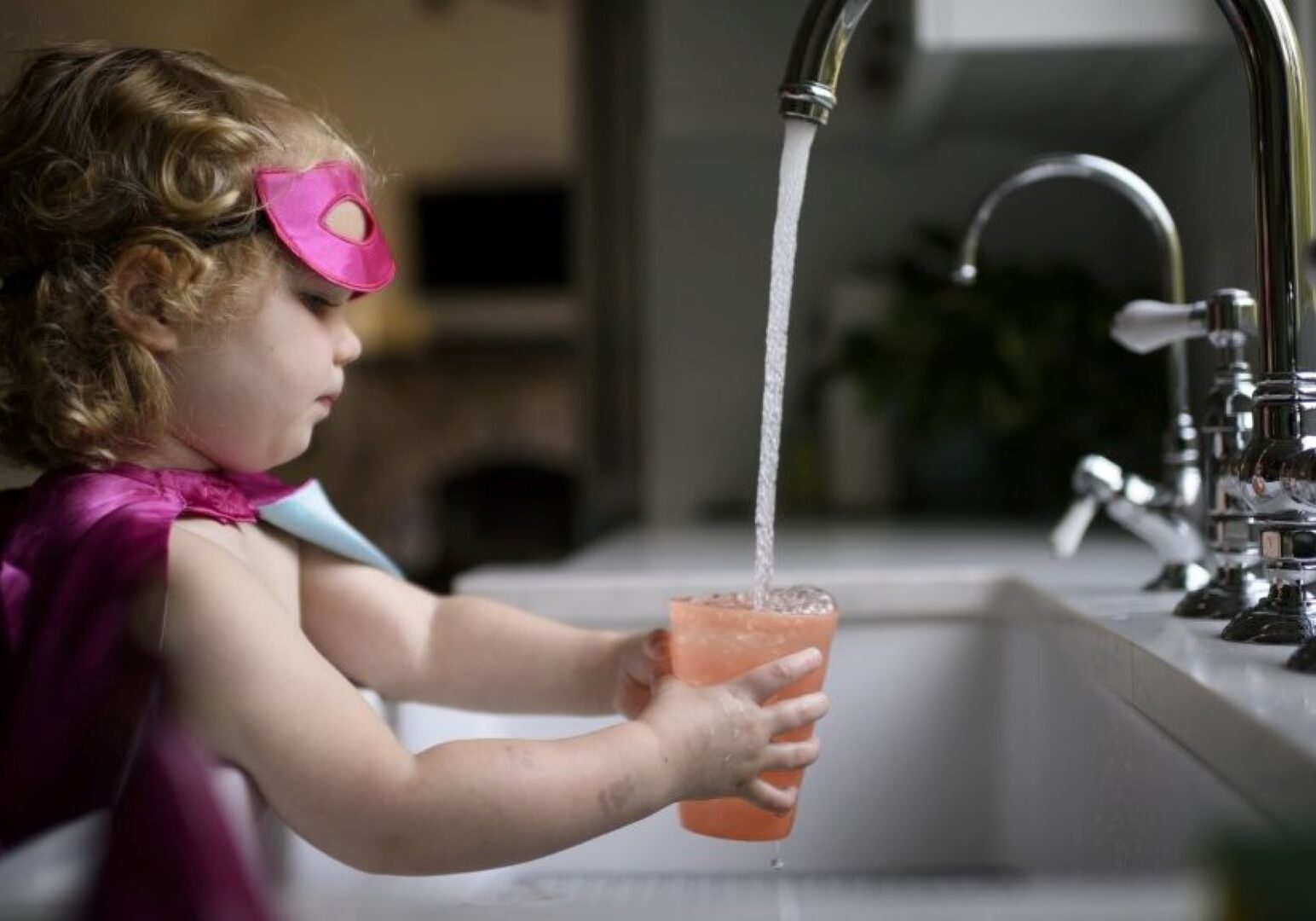
Report: Residents in Kansas, Missouri Get Drinking Water From Lead Pipes at High Rates
July 16, 2021 | Allison Kite | 3 min read
People in Missouri and Kansas risk lead exposure from drinking water at greater rates than almost any other state, a new report found.
The Natural Resources Defense Council (NRDC) released findings Thursday that as many as 12 million Americans may be receiving drinking water through lead pipes without realizing their water is contaminated.
“There is no safe level of lead, which causes irreversible harm to people’s health, particularly for children,” a release announcing the report says.
Missouri has the sixth most lead service lines, the pipes that carry water from water mains into residents’ homes, of any state in the United States, putting it above the far more populous Texas. Only Illinois, Ohio, Michigan, New York and New Jersey have more lead pipes than Missouri.
Adjusted for its population, Missouri has the fourth highest number of lead pipes per 100,000 residents. Kansas is third on that list.
“Drinking water won’t be safe until the country pulls the millions of lead pipes out of the ground found in every state,” said Erik D. Olson, the organization’s senior strategic director for health.
Lead pipes have been on the forefront of environmental concerns since Flint, Michigan, switched its water supply and failed to adequately treat the water, which led to residents drinking water contaminated with lead.
The NRDC released the report as Congress considers President Joe Biden’s infrastructure proposal, which includes spending to replace every lead pipe in the country. The organization backed that proposal in its release.
“President Biden’s American Jobs Plan is a historic opportunity to fix the nation’s lead pipe crisis,” Olson said. “Removing lead pipes will improve health and create jobs, starting in low-income communities and communities of color with the highest rates of lead exposure.”
The NRDC estimates the U.S. has between 9.7 million and 12.8 million lead pipes. The group estimates Kansas has 5,446 lead pipes per 100,000 residents. It estimates Missouri has 5,462.
Seven other states have more than 4,500 lead lines per 100,000 residents, all in the Great Plains and Upper Midwest. They are Wisconsin, Ohio, Illinois, Iowa, Nebraska, Michigan and Minnesota. The District of Columbia is also in that top 10.
Children who are exposed to lead can suffer damage to their brains and nervous systems. Exposure is also linked to learning disabilities, shorter height, hearing loss and harm to their blood cells. Adults can develop cardiovascular diseases, and their reproductive systems and kidneys can be impacted.
Allison Kite is a data reporter with a focus on the environment and agriculture. This story first appeared on the Kansas Reflector, a nonprofit news operation covering Kansas state government and politics as part of States Newsroom.
Reading these stories is free, but telling them is not. Start your monthly gift now to support Flatland’s community-focused reporting.
Related Stories

Nick’s Picks | Messi, Jail, Buses, and More …
World Cup Team(s) Arrive It’s starting to feel real. The first World Cup team has landed in Kansas City. Defending champions Argentina touched down at KCI airport on Sunday and will begin practicing today at Sporting KC’s training facility in Wyandotte County. Much of the attention, of course, is focused on Lionel Messi. The soccer…

World Cup ‘Statement Piece’ Evokes Best Version of Kansas City
Before I moved to Kansas City almost 56 years ago, I had been here only once — for a brief visit to the Kansas City Press Club when I was attending the University of Missouri School of Journalism. But because of that visit and the fact that I grew up in the Midwest (Woodstock, Illinois,…
KU Center Helps Women Gain Foothold After Incarceration
A flier from her probation officer was the turning point for Jodi Whitt, who had spent more than two decades in and out of the criminal justice system. The piece of paper introduced Whitt to the Technology Education Program offered by the University of Kansas’ Center for Digital Inclusion. Since 2019, Whitt has risen through…