
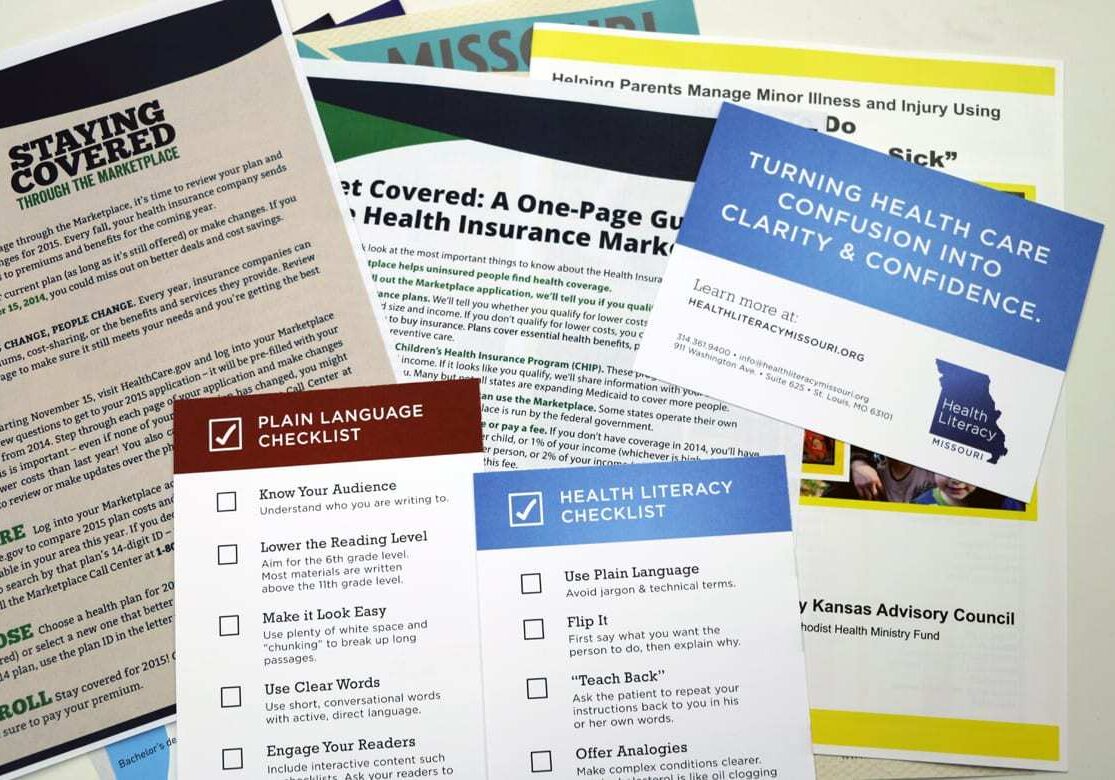
Kansas City conferees tackle language of health care
October 27, 2014 | | 3 min read
As reformers work on making the U.S. health care system more efficient, they’re also looking to improve communication with consumers – whether it’s ensuring they understand the nuances of insurance or grasping instructions from a doctor.
The concept is known as “health literacy,” and the notion extends beyond the written or spoken word, Dan Reus, a St. Louis business consultant, argued Friday at a health literacy summit in downtown Kansas City, Mo.
People also need to understand the ever-increasing electronic data that make up their medical records, he said.
Reus used himself as an example by detailing his three-decade-plus struggle with ventricular tachycardia, a type of irregular heartbeat that in his case is tied to a protein that does not work properly in the heart muscle. Reus, who was diagnosed when he was 12, said it’s a condition that could lead to a fatal heart attack at any time.
As the years have gone by, though, his interactions with his providers have diminished even as health technology has improved. Today, he said, his understanding of his condition and the things he can do to control it are no better than they were when he was first diagnosed.
“Data does very little for me,” he said.
Bottom line, Reus said: patients need actionable communication from their providers. For him, that means getting information on fitness and having all his specialists communicate with one another.
One of his projects is called Metronome, a software project “to assemble the least technology needed to synchronize the most health stakeholders,” as the website tellingly describes it.
Reus spoke at a two-day conference – the first time that health literacy organizations from Missouri and Kansas have combined to hold such a gathering – that drew about 160 people.
Dr. Bridget McCandless, president and chief executive of the Health Care Foundation of Greater Kansas City, one of the gathering’s sponsors, offered some lower-tech insights gleaned from running a free clinic in Independence, Mo.
McCandless said she had a telling moment when preparing her presentation and searching the Internet for examples of good post-surgical instructions. She found one that was straightforward with easy-to -understand graphics, only to realize that the instructions were for a dog.
In her experience, McCandless said, providers need to keep their instructions short and simple.
“Patients are going to forget 80 percent of what you said and 50 percent they are going to remember wrong,” she said.
If patients are bombarded with dozens of instruction items, she said, it’s likely they will be overwhelmed and do nothing.
McCandless said she always asked her patients to repeat her instructions.
She recounted how proud she was of an informational form that patients could fill out while waiting in the exam room. When patients didn’t fill it out, she asked one what the problem was.
She said, “Look lady, if I wanted to take a test, I would’ve stayed in school.”
Reading these stories is free, but telling them is not. Start your monthly gift now to support Flatland’s community-focused reporting.

Related Stories

The Checkered History of Bruce R. Watkins Drive
East Side residents have long complained that this stretch of U.S Highway 71 cleaved Black neighborhoods. The road is also considered unsafe for pedestrians and drivers.
Nick’s Picks | Courts, Roads, Music and More …
New Royals Ballpark Heading to Council Vote It could be a pivotal week for the Royals’ proposed new home. The $3 billion Crown Center ballpark plan could get a final council vote Thursday, after the Finance, Governance and Public Safety Committee takes up the funding and rezoning package Tuesday. Critics, including Councilmember Jonathan Duncan, say…

A sales tax reshaped KC’s East Side. Now voters to decide if it continues.
The Central City Economic Development sales tax is up for renewal on Aug. 4. The tax has generated nearly $100 million since voters approved it in 2017.