

Human life spans have been increasing for decades thanks to advances in treating and preventing diseases and improved social conditions.
In fact, longevity has increased so much in recent decades that some researchers began to wonder: What is the upper limit on human aging?
“We never had so many centenarians as we have now,” says Jan Vijg, who studies molecular genetics at the Albert Einstein College of Medicine in New York. “Maybe we can actually live much longer than 100. Maybe this goes on and on and on.”
So Vijg decided to try to find out if that’s the case. His conclusion, published online Wednesday in the journal Nature: The seemingly inexorable rise in the human life span may have hit a ceiling of about 115 years.
“We cannot break through that ceiling,” Vijg says. “The take-home message essentially is this whole ever-increasing life expectancy of humans cannot go on.”
Vijg and his colleagues are basing their conclusions on an analysis of decades of longevity records from around the world, including the Human Mortality Database and the International Database on Longevity.
“Every year we looked at who was the one who died in that year and was the oldest human in existence,” Vijg says.
The researchers found that the age of the oldest people dying had indeed increased steadily between the 1960s and 1990s, according to their report.
But beginning in the 1990s, “you no longer see that,” Vijg says. “You see that it stays the same.”
The absolute maximum human life span may be as high as 125, the researchers calculated. But the chances of anyone actually living that long are less than 1 in 10,000.
“If we would have 10,000 worlds like ours, only one individual across all these 10,000 worlds would reach 125 in any given year,” Vijg says.
But, he added, “the take-home lesson from what we found is that the human species most likely has a maximum life span of about 115 and we cannot break through that ceiling, at least not as far as we now know.”
Other experts say it’s not surprising that human longevity may have hit a ceiling.
“Right now, all we’re doing is we’re combating one disease at a time: heart disease, cancer, stroke,” says S. Jay Olshansky, who studies aging at the University of Illinois and wrote a commentary article accompanying the report
“It’s like a game of whack-a-mole. You know: One disease goes down another comes up,” he says.
Olshansky says the only way that could change is if scientists figure out a way to fight the underlying cause of aging, not just individual diseases.
“That would be a game changer,” he says.
Scientists are conducting a range of research to try to do that, including studying the genes of families that seem to have a lot of members who live unusually long lives. Some are also trying to identify beneficial substances in the blood of young people that might improve their chances of having a long life, he says.
But no one expects scientists to discover some kind of pharmaceutical Fountain of Youth any time soon.
9(MDA1MjcyMDE0MDEyNzUzOTU1NTMzNmE5NQ010))
Reading these stories is free, but telling them is not. Start your monthly gift now to support Flatland’s community-focused reporting.
Related Stories
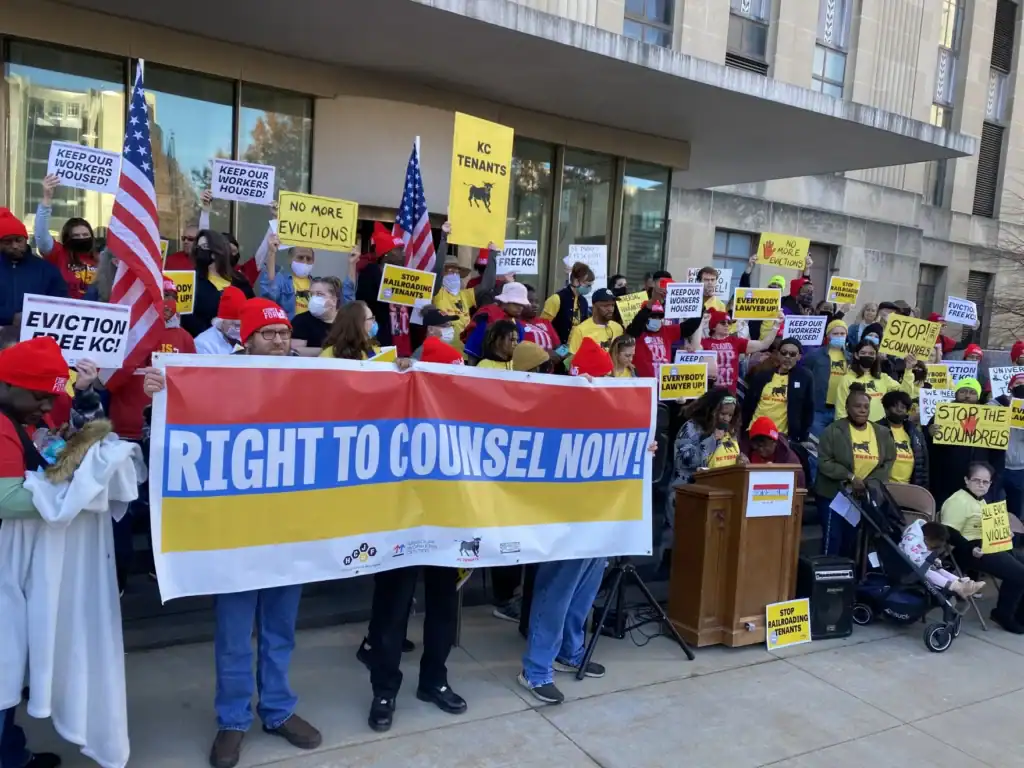
Kansas City Helping Renters Avoid Eviction
On any given Thursday, a small hallway in the Jackson County Courthouse crowds with tenants, landlords, and attorneys arriving for their scheduled hearings and trials. The scene unfolds on Floor 7M, which is half the height of the building’s other levels, and is where Associate Circuit Judge Mary Weir recently worked through 55 eviction cases…

Nick’s Picks | Costco, Homicides, Rain and More …
Is Missouri's congressional map saga over? It seems so, but who knows if there will be another twist or turn. That story and more ...

Nick’s Picks | Obama Visits KC, Debates and Fall’s Arrival
Obama in KC With Election Day just six weeks away, some of the nation’s top political names are now rolling through Kansas City. Last week, Vice President JD Vance was in town. This week, it’s Barack Obama. The former president takes the stage Saturday at the Overland Park Convention Center for a leadership event hosted…