
Local employers urged to help in the fight against cancer
February 12, 2014 | | 5 min read

Mike Sherry – The Hale Center for Journalism
Fighting the nation’s second leading cause of death is a smart move for companies to make when it comes to their workforces, a top U.S. health official told a local business audience during a Tuesday appearance at the Kauffman Foundation Conference Center.
The topic was cancer prevention, and Ned Holland, an assistant secretary with the U.S. Department of Health and Human Services, told the approximately 45 attendees that it makes fiscal sense to, for instance, rid workplaces even of outside smoking areas.
“I don’t mind the notion of enlightened self-interest,” he said. “If you can reduce the exposure of your employee group to smoking dangers — or any other danger, for that matter — you can make your workforce more productive.”
According to the U.S. Centers for Disease Control and Prevention, cancer is second only to heart disease in causes of death among Americans. The American Nonsmokers’ Rights Foundation in Berkeley, Calif., says that Kansas (but not Missouri) is among 36 states that have indoor smoking bans that include workplaces.
Prior to joining the department, Holland served as a top corporate executive in the Kansas City area, including at Sprint Corp. and its spin-off corporation, Embarq, which merged with Louisiana-based CenturyTel five years ago to form CenturyLink.
Holland also, at one time, served as the chairman of the Mid-America Coalition on Health Care, an Overland Park–based nonprofit business organization. The coalition organized the morning workshop on gaining accreditation as a CEO Cancer Gold Standard company.
The CEO Cancer Gold Standard is a program of the CEO Roundtable on Cancer, a North Carolina–based nonprofit formed more than a dozen years ago at the behest of former President George H.W. Bush. According to the group’s website, Bush challenged chief executives to combat cancer in their own families, as well as in their corporations.
Started as a pilot in 2006, the gold standard program now has 162 accredited organizations, according to Peggy Harrington, manager of the program. Participants include governmental agencies, such as the National Cancer Institute and the CDC. Many of the accredited organizations are pharmaceutical companies, health care systems and academic medical centers.
No Kansas-based organizations are accredited, and the four Missouri participants are all in the Kansas City area: American Century Investments, Cerner Corp., UMB Financial and the Stowers Institute for Medical Research. Accreditation is free, Harrington said.
Applicants must demonstrate a focus on three main areas for their workers:
· Reducing the risk of cancer by not using tobacco and by maintaining a healthy and active lifestyle.
· Detecting cancer at the earliest possible stage through age and gender-appropriate screenings.
· Ensuring access to the best available cancer treatment.
Establishing a completely tobacco-free workplace is a key priority of the accreditation program, Harrington said. Part of that anti-smoking effort, she said, is educating the workforce so that, for instance, parents can make sure their children don’t start smoking.
“If they are more educated, they will know how highly addictive tobacco is — and they can warn (their children) they should not start smoking when they are young teenagers,” Harrington said.
The Mid-America Coalition on Health Care issued a resource guide in 2012 on how to promote tobacco cessation in the workplace.
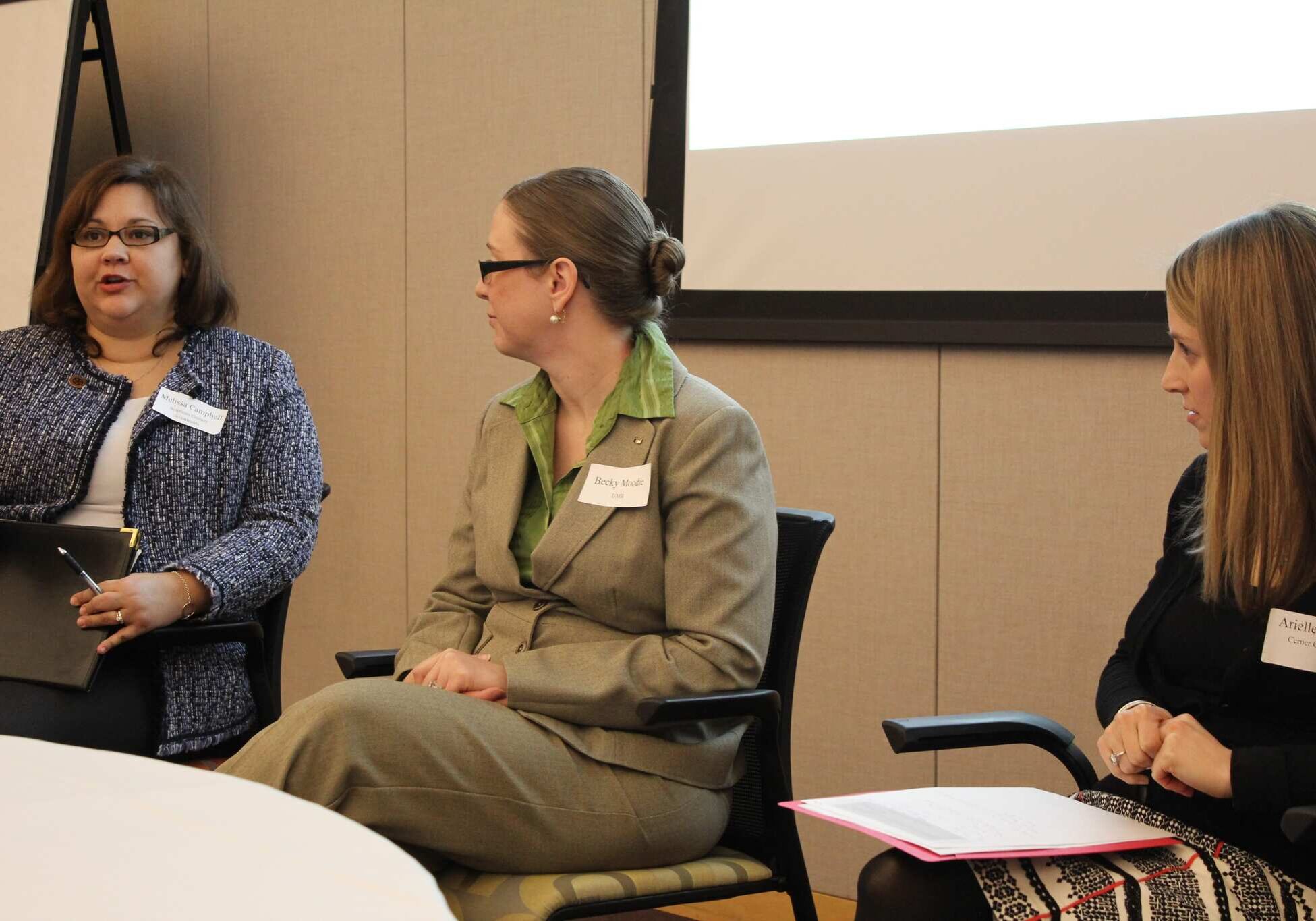
The workshop included a panel of benefits officials from American Century, UMB and Cerner. The panelists agreed that taking the leap to a fully tobacco-free campus was one of the hardest steps to take.
“It’s a journey for all of us — an evolution, if you will,” said Arielle Bogorad, director of worldwide benefits for Cerner.
By using incentives through its health insurance program, she said, Cerner has reduced the smoking rate among its domestic workforce from 12 percent in 2007 to 3 percent in 2012.
At American Century, Melissa Campbell said seeking the accreditation was the “little shove” the company needed to fully implement a tobacco-free environment. The company has a small smoking population, she said, so it had not been high on the priority list.
Campbell said American Century was probably already doing three-quarters of the activities required for accreditation.
Harrington also said a major focus of the accreditation program is ensuring more information for employees about participation in clinical trials for new cancer drugs.
Holland noted Kansas City–area companies now have a federally recognized treatment organization in the community through the University of Kansas Cancer Center, which achieved certification as an NCI-designated center in 2012.
Harrington also said it does not take huge initiatives to facilitate healthy choices for employees. One small employer in North Carolina that has achieved the gold standard, she said, simply installed a shower so that workers could clean up after biking to work.
Achieving the CEO Cancer Gold Standard is a good stretch goal for employers, said Craig Galvin, vice president of the health care coalition.
“I think that is what they are looking for,” he said. “They know they need to be focused on health, they know they need to support their employees with a healthy environment, but this provides them a good map.”
Major Funding for Health coverage on KCPT provided by Assurant Employee Benefits and the Health Care Foundation of Greater Kansas City.
Reading these stories is free, but telling them is not. Start your monthly gift now to support Flatland’s community-focused reporting.

Related Stories
Kansas City Helping Renters Avoid Eviction
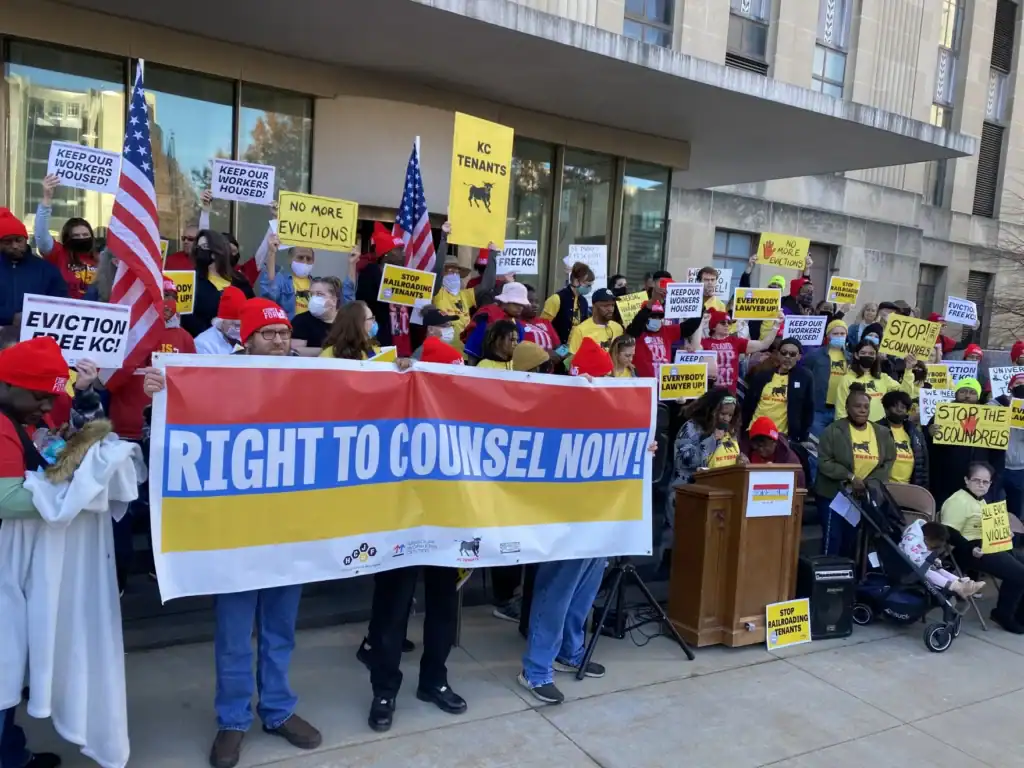
On any given Thursday, a small hallway in the Jackson County Courthouse crowds with tenants, landlords, and attorneys arriving for their scheduled hearings and trials. The scene unfolds on Floor 7M, which is half the height of the building’s other levels, and is where Associate Circuit Judge Mary Weir recently worked through 55 eviction cases…

Nick’s Picks | Costco, Homicides, Rain and More …
Is Missouri's congressional map saga over? It seems so, but who knows if there will be another twist or turn. That story and more ...

Nick’s Picks | Obama Visits KC, Debates and Fall’s Arrival
Obama in KC With Election Day just six weeks away, some of the nation’s top political names are now rolling through Kansas City. Last week, Vice President JD Vance was in town. This week, it’s Barack Obama. The former president takes the stage Saturday at the Overland Park Convention Center for a leadership event hosted…