
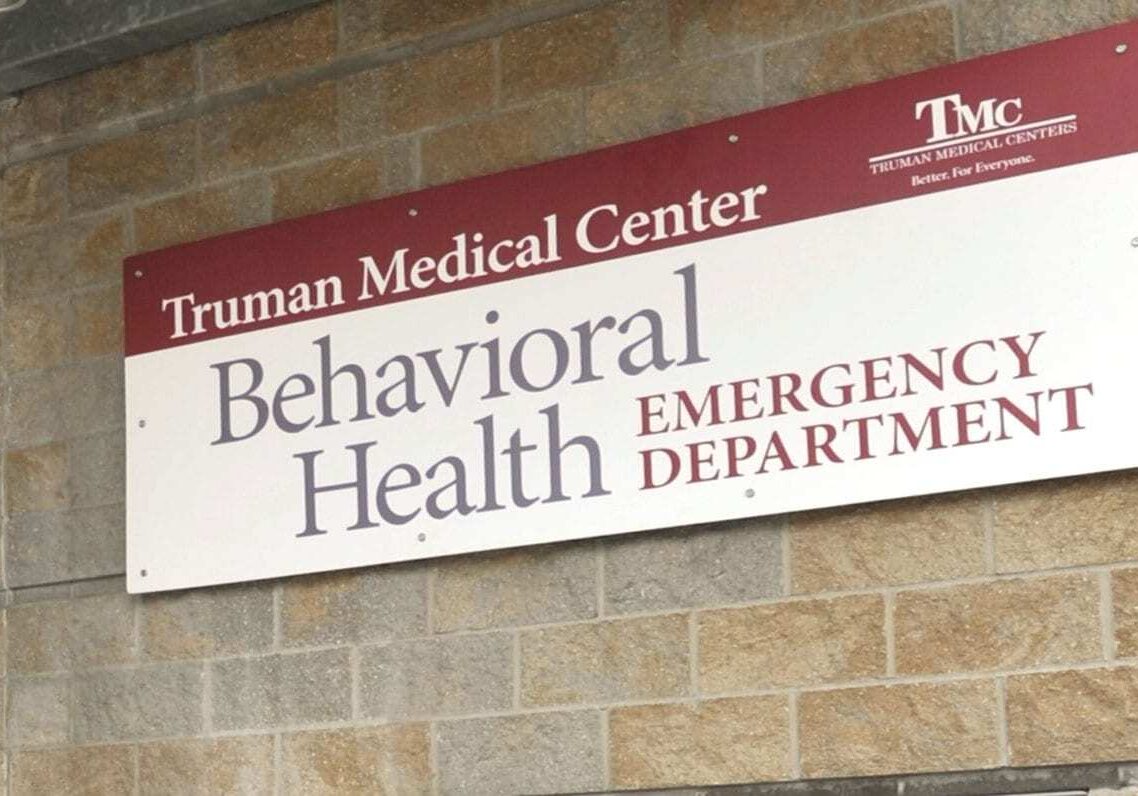
Truman Medical Centers Shutting Down Behavioral Health Emergency Department
September 16, 2015 | Dan Margolies, KCUR 89.3, Mike Sherry | 4 min read
Truman Medical Centers said it is closing its behavioral health emergency department effective immediately and will transfer current patients to the hospital’s inpatient facility or to another psychiatric facility.
Truman CEO Charlie Shields said in a telephone interview that the move came after state and federal regulators made it clear the department needed “to look and operate as if it’s an emergency department in a regular hospital, and that’s fairly challenging for us.”
“It’s challenging a little bit from a staffing side but it’s also very challenging from a physical location side,” he said. “And we just made a decision that we need to condense and move our behavioral health emergency department, which is two streets and 500 yards away (from the regular emergency department), and move all those services in our larger emergency department here at Hospital Hill.”
Shields was referring to the hospital’s main Hospital Hill campus, at East 24th Street and Holmes Road.
News of the closure prompted some concern among mental health advocates but was met with little worry from the Kansas City Fire Department (KCPD), which often transports patients requiring mental health attention.
The behavioral health unit provides mental health and substance abuse services to adults, adolescents and children. It has served approximately 30,000 patients in the last six years, Shields said.
He said that in order to continue operating the behavioral health emergency department as a standalone unit, Truman would have had to staff it 24/7 with physicians or nurse practitioners trained in emergency medicine.
“That,” he said, “is a fairly large hurdle in and of itself.”
Truman’s behavioral health emergency department has 12 beds. It was over-capacity with 14 patients when the hospital decided to shutter it, Shields said.
“Nothing really changes in the way they’re being treated,” he said. “We will assess them and they will either be admitted for inpatient psychiatric care if appropriate, or discharged for outpatient psychiatric care if that’s appropriate.”
The closure does not affect patients currently in the inpatient unit at Hospital Hill or the one at Truman’s Lakewood location in Kansas City.
Truman operates a combined 66 inpatient beds at the two locations, 50 at Hospital Hill and 16 at Lakewood. It also operates two community mental health centers.
“So we have the ability to take care of these patients, but new patients will be seen in our emergency department at Hospital Hill,” Shields said.
Truman began operating the behavioral health emergency department and 50 adult inpatient beds in June 2009, when it took over Western Missouri Mental Health Center. The center had been operated by the state of Missouri.
Shields said Truman would work with Missouri Department of Mental Health (DMH) and other community providers “to try to come up with a solution for folks that need that kind of care, people that are in crisis, to get them to the right level of care in something that’s fairly efficient.”
The closure of the behavioral health unit is “incredibly unfortunate,” said Susan Crain Lewis, co-chair of the Metropolitan Mental Health Stakeholders of Greater Kansas City, a planning and coordinating group that meets through the Mid-America Regional Council.
She said it would have a negative effect for patients with emergency medical conditions and those in acute psychiatric crisis to be mixed together in a single emergency room.
The burden of the closure will likely fall on other emergency rooms around the region, Lewis said, adding, “Unfortunately, area hospitals are just going to have step up.”
One silver lining to the development, she said, is that it might help catalyze discussions about opening a mental health crisis center in Kansas City.
“Maybe this will galvanize the community, galvanize the state, to make this happen,” Lewis said.
Shields agreed that the establishment of a crisis center would be beneficial.
“You could do something that is really innovative and do it as a whole community,” he said.
Tom Collins, Kansas City’s deputy fire chief, said the closure would have little effect on the fire department on a day-to-day basis. Instead of heading to the behavioral emergency department, known informally as the BHED, the department will now head the other way to Truman’s regular emergency room, he said.
Collins did say, however, that it could increase demand on the ambulance service for non-emergency medical calls in which patients are transported from the ER to a psychiatric facility if they have a mental health issue.
Dan Margolies, editor of the Heartland Health Monitor team, is based at KCUR.
Mike Sherry is a reporter for KCPT television in Kansas City, Mo., a partner in the Heartland Health Monitor team.
Reading these stories is free, but telling them is not. Start your monthly gift now to support Flatland’s community-focused reporting.

Related Stories

Kansas City Helping Renters Avoid Eviction
On any given Thursday, a small hallway in the Jackson County Courthouse crowds with tenants, landlords, and attorneys arriving for their scheduled hearings and trials. The scene unfolds on Floor 7M, which is half the height of the building’s other levels, and is where Associate Circuit Judge Mary Weir recently worked through 55 eviction cases…

Nick’s Picks | Costco, Homicides, Rain and More …
Is Missouri's congressional map saga over? It seems so, but who knows if there will be another twist or turn. That story and more ...

Nick’s Picks | Obama Visits KC, Debates and Fall’s Arrival
Obama in KC With Election Day just six weeks away, some of the nation’s top political names are now rolling through Kansas City. Last week, Vice President JD Vance was in town. This week, it’s Barack Obama. The former president takes the stage Saturday at the Overland Park Convention Center for a leadership event hosted…