
Bringing Out the Dead: The Great Stockyard Fire of 1917
October 14, 2019 | John G. McGrath | 1 min read
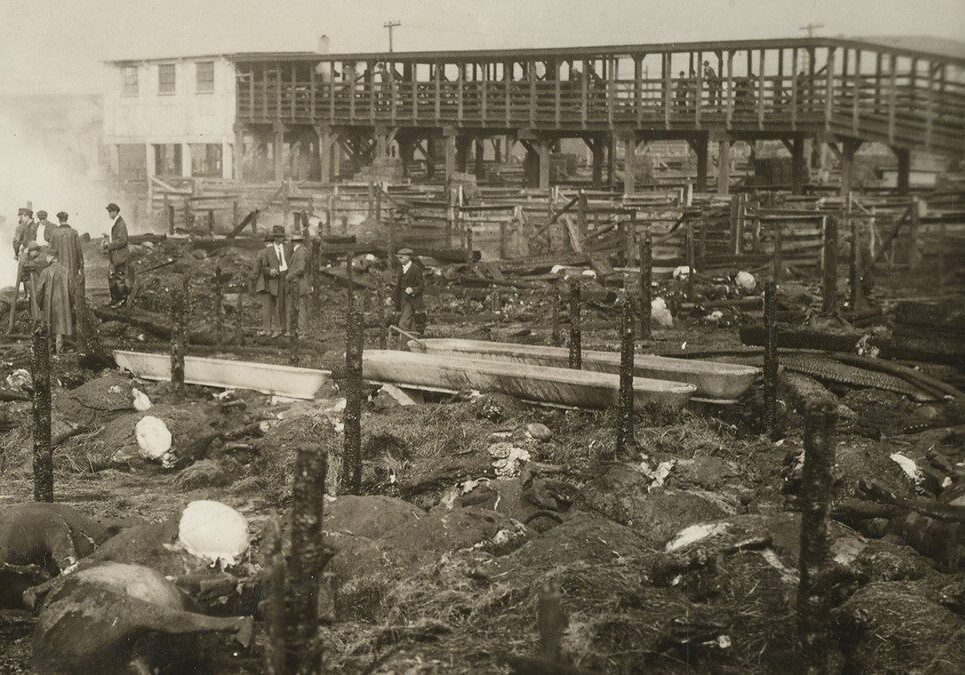
One of the biggest agricultural disasters in Kansas City history occurred in 1917, when a fire scorched the stockyard in the West Bottoms, leaving thousands of dead cattle and hogs charred in its wake.
Consider it an industrial-scale barbecue.
William Wheeler, a cattle farmer from near Grain Valley, saw a photo of the carnage caused by the fire on the wall of his local livestock auction house. The picture prompted Wheeler to ask the following question for curiousKC: “How did they handle that? How did they clean it up.”
No doubt, it was tough duty. Learn how they cleaned it up in this week’s curiousKC video.
Reading these stories is free, but telling them is not. Start your monthly gift now to support Flatland’s community-focused reporting.
Related Stories
Nick’s Picks | Costco, Homicides, Rain and More …
Is Missouri's congressional map saga over? It seems so, but who knows if there will be another twist or turn. That story and more ...

Nick’s Picks | Obama Visits KC, Debates and Fall’s Arrival
Obama in KC With Election Day just six weeks away, some of the nation’s top political names are now rolling through Kansas City. Last week, Vice President JD Vance was in town. This week, it’s Barack Obama. The former president takes the stage Saturday at the Overland Park Convention Center for a leadership event hosted…

Preparations Aside, KC World Cup was Quiet for Hospitals, Police
Officials said months of planning will serve them well in the year's to come through improved collaboration.