
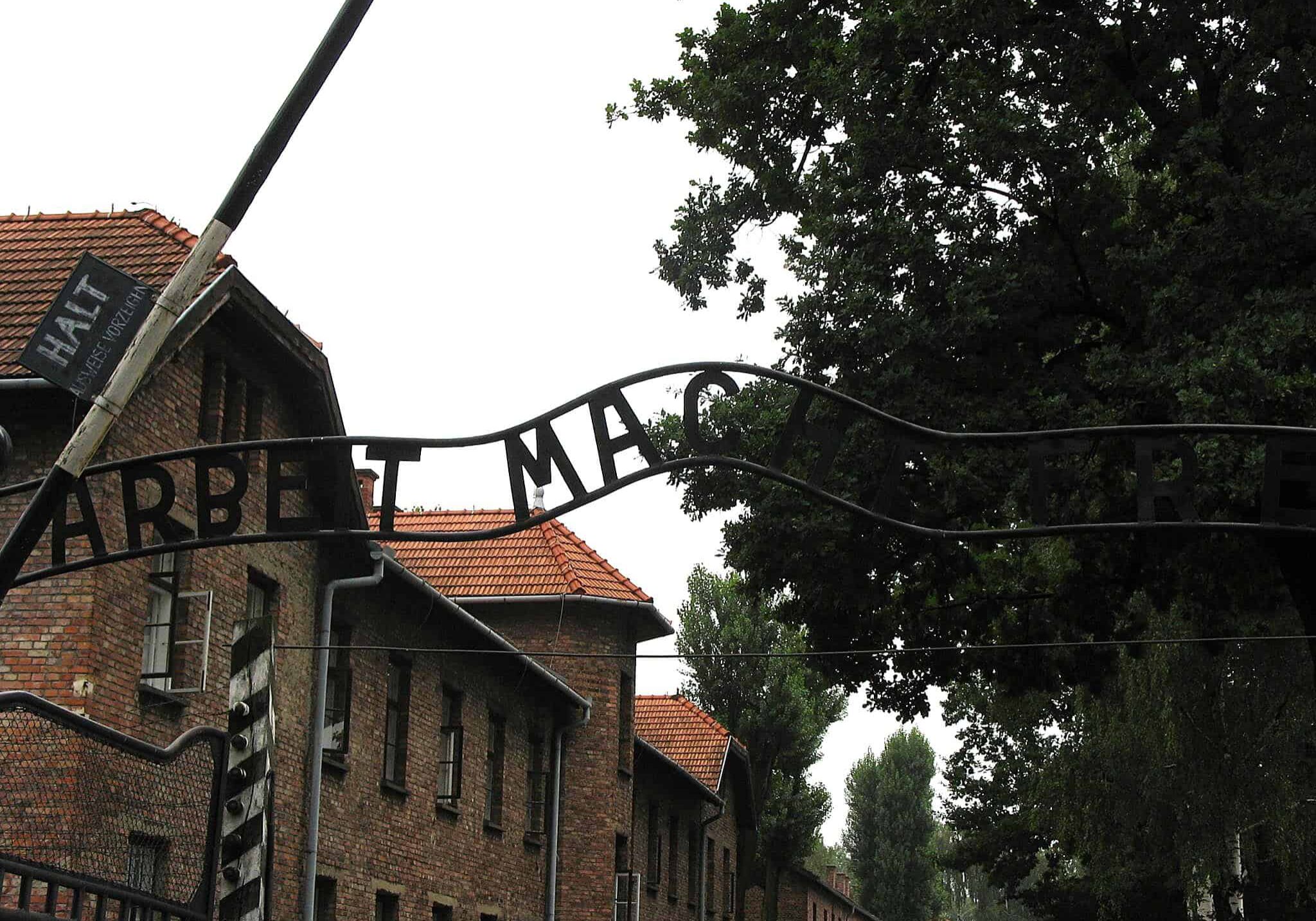
Midwest Center for Holocaust Education capturing memories of survivors’ children
Second Generation initiative aims to preserve ‘unique view’ kids had of their parents and contribute to the field of intergenerational trauma.
November 25, 2026 | Bill Tammeus | 8 min read
The children of Holocaust survivors tell many stories that contribute to a deeper understanding of the evil their families suffered at the hands of Nazi Germany’s government under Adolf Hitler.
That’s why the Midwest Center for Holocaust Education, which first collected stories from survivors, has begun gathering those revealing Second Generation stories. The center is based in Overland Park.
Jessica Rockhold, MCHE’s executive director, explains the project this way: “We realize now as we’re moving from this moment of lived experience to history that it’s time to capture that bridge memory. They have a unique view of their parents that nobody else has.”
For instance, Tom Isenberg, whose parents were born in Germany, has a survival story about his mother that runs through Holland, several concentration camps, including the Auschwitz death camp in Poland and eventually San Francisco.
In fact, he says that when his mother learned that her mother was being sent to Auschwitz, his mother chose to follow her to Auschwitz. Isenberg’s grandmother was murdered at Auschwitz, but his mother was sent from there to a work camp and survived.
And the family story that Joyce Hess, former MCHE board chair, tells about her parents begins in Vilna, Poland, (now Vilnius, Lithuania) and includes such places as the Bergen-Belsen concentration camp in Germany and, later, Cedar Rapids, Iowa.
These and other stories told by children of the few Jews who escaped the gas chambers and bullets in World War II 80-plus years ago eventually will be housed at MCHE and made available to scholars and researchers so they can tell a fuller history of some of the consequences of the Nazis murdering some six million Jews.
“We don’t have an end-product in mind,” says Rockhold, “but ultimately we will find a way to make this collection publicly accessible because this is a research collection.”
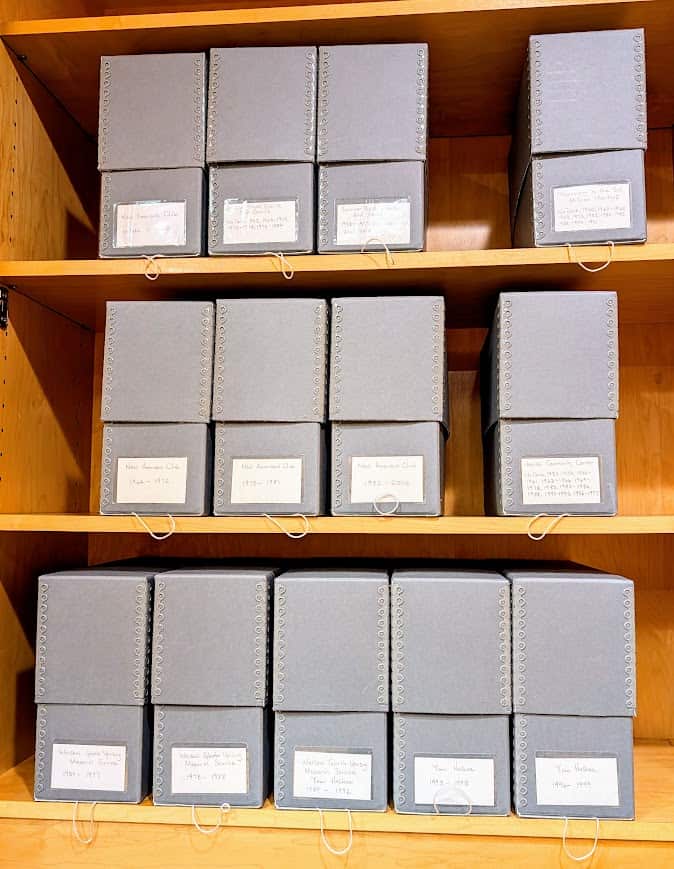
That accessibility is crucial. Stories never shared, after all, impoverish all of us because, untold, they can reveal nothing about our broader human story.
Hess was the first Second Generation member to record her family’s story for the center. One reason she agreed to do that is because “any type of trauma over world events that has a direct effect on victims doesn’t just stop with the victims. It carries on through generations to come.”
The transmission of trauma that Hess mentioned is called generational or intergenerational trauma. As author Christine J. Hong writes in her new book, “Waking Up Ghosts: Making Peace with Ancestors,” studies about this “teach us that one generation’s pain is etched onto the DNA of the next. Each generation works through and interprets that inherited anguish differently, but trauma refuses erasure.”
“We observe it,” Rockhold says of such trauma. “We see ways in which the trauma is evident, but this is a term without much definition. What we’re trying to do is create space to articulate this trauma if they have it.”
That kind of trauma, of course, affects each family in different ways.
Isenberg, for instance, says such trauma has “not been something that’s changed my life in a meaningful way.” Yes, he’s sometimes had what he calls “escape dreams.” And in “a big crowd my anxiety level goes up.” But he’s not sure what that has to do with his family’s Holocaust history.
Indeed, he adds this: “The United States has been a great country for our family. We’ve prospered here. We’ve been safe here. My mom from 1933 to 1947 lived through some incredibly difficult years. But the other 75 years of her life were actually quite good. She had an incredibly strong spirit and her motto — her life message — was ‘Forward.’ That’s how she chose to live.”
In Hess’s family, however, extended trauma played out differently. Traumatic reaction has seemed rare in her family, she says, because she’s always thought of hers as “an American family that just happened to have a Holocaust survivor in it.”
But once her mother finally began to open up about her experiences of serving as a maid to commandants of death camps and of the brief time she spent at Auschwitz, she began to show evidence of trauma — which the family watched and, in some ways, absorbed.
“What I saw as I grew older and my mother grew older,” she says, “was that her trauma was delayed because she had blocked out so many memories. When those memories started coming back, she started to have trauma and depression and guilt about why she survived when so many others didn’t.
“My mom was also very anxious and nervous. I wonder what her psyche would have been had she not gone through what she went through.”
With the stories the Second Generation is starting to tell to MCHE, sometimes the point may not be what it might at first seem to be.
For instance, Isenberg told me about his 2018 visit to his grandfather’s small hometown near Frankfurt, Germany. While there, he asked to see the Jewish cemetery, and the town’s mayor guided him to it.
Isenberg noticed a 2- or 3-foot fence around it. The mayor unlocked the gate but then said with firmness, “Be sure to lock it back up when you leave.”
Why such insistence? I assumed it was because of the scandal of people in Europe damaging or destroying Jewish cemeteries, evidence of which I saw in Poland when I was there in 2007 working on a Holocaust-related book. But no. Here’s the answer the mayor gave Isenberg: “Boars here will knock over all the headstones.”
It was a reminder that times and conditions change and what was broadly true in the 1930s may not be true today.
Another reason for society to keep such stories along with careful historical records is that it helps all of us understand our personal histories more clearly.
For instance, when Hess went to Europe a few years ago on an MCHE study trip, she spent time in Vilnius, where her mother grew up. And even though street names had changed, good records there allowed Hess to locate the apartment building in which her mother had lived long ago.
That building was on the border of what got created while her mother lived there — the ghetto. As Hess noted sadly: “She could see her building (from the ghetto) but never get to it again.”
As for her mother’s connection to Cedar Rapids, Hess says that on a weekend visit there from Chicago, her mother met the man who would become Joyce’s father, David Golag, a World War II U.S. Army veteran who had assisted in liberating some Nazi-run camps: “They fell in love but my mother said, ‘I’m not spending the rest of my life in Cedar Rapids, Iowa.’”
After marriage, they visited Kansas City, where Joyce’s aunt lived: “Mom found a kosher butcher and a synagogue here and said, ‘I’m in.’”
This is how Isenberg sums up what he hopes telling Second Generation stories accomplish: “It’s critical that these stories not die. It should be ‘never again’ for a much broader part of our humanity than just the Jews.” Exactly.
Bill Tammeus, an award-winning columnist formerly with The Kansas City Star, writes the “Faith Matters” blog (https://substack.com/@billtammeus429970) for The Star’s website. His latest book is Love, Loss and Endurance: A 9/11 Story of Resilience and Hope in an Age of Anxiety. Email him at wtammeus@gmail.com
Reading these stories is free, but telling them is not. Start your monthly gift now to support Flatland’s community-focused reporting.
Related Stories
Nick’s Picks | Votes, Taxes, Soccer and More …
This weeks topics include continued counting of votes from the Nov. 3 election, De Soto, Kansas, leaders considering unique offer from data center developer, and the KC Current playing for a championship.
Nick’s Picks | Counting, Courts, Attractions and More …
Topics include: Election Day drama continues, World War I Museum and Memorial celebrates 100 years, Steamboat Arabia leaves, and entertainment options.
How One Wyandot Artist Hopes to Bring His Native Language Back From Extinction
“To speak the language, you're actually creating the language as you go,” Richard Zane Smith said. “We're trying to come up with a kind of standardized writing system, and even that has its challenges.”