
Who is Taking KC Back? Behind the PAC Hoping to Oust Multiple Council Members
September 22, 2021 | Emily Wolf, The Beacon | 7 min read
A new political action committee in Kansas City, Missouri, is quietly raising its influence and aims to have a say in how City Hall conducts business — and who is in office to do it.
Taking KC Back was behind the push to recall Mayor Quinton Lucas and 4th District Councilman Eric Bunch. So far, it’s been unsuccessful.
But it has no intention of going away. The group filed affidavits with the Kansas City Clerk’s Office Wednesday to recall Lucas and multiple at-large council members, according to City Clerk Marilyn Sanders.
KC PAC Launched in Fall 2020
Taking KC Back’s former president, Jami Bailey, isn’t new to recall campaigns. She was one of several organizers who launched a petition to recall Lucas in August 2020. While the attempt failed, Bailey continued to advocate for changes to Kansas City’s government.
In October, Bailey and three others officially created Taking KC Back. The PAC spent $130 printing affidavits to recall Lucas, according to Missouri Ethics Commissions filings, an effort that was unsuccessful. A day before the 2020 general election, the PAC reported a $7,735 in-kind contribution from its secretary, Shannon Bjornlie. In addition, the PAC received another $801.14 in-kind contributions and a total of $47.50 in other contributions last year.
Taking KC Back, which also goes by the name Take KC Back on social media, remained quiet the rest of the year and into the beginning of 2021. After the Kansas City Council in May voted 9-4 in favor of reallocating about one-fifth of the police budget to fund a new “community services and prevention fund,” the PAC revived and its members set their sights on a new recall target: Bunch. In July, Bailey resigned, and Rita Olson-Stawicki became president.
While Bunch was not the only council member who voted for the ordinance, Taking KC Back focused on him because of the socioeconomic and political diversity across his district. The 4th District encompasses downtown KC, the Country Club Plaza and some of Clay County. A portion of the district sits north of the Missouri River. The council’s vote on the police budget reignited calls for the Northland to secede from Kansas City.
Bjornlie said the idea of trying to recall Bunch first was to get a feel for how people from all walks of life were thinking about the council’s vote and the potential for a recall.
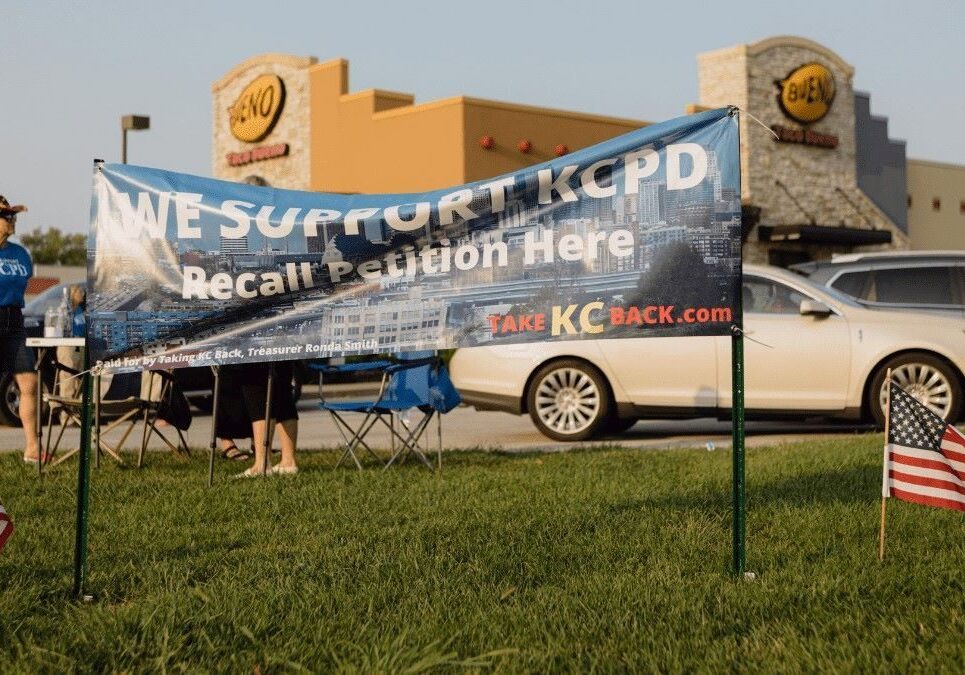
The group set up booths and sent volunteers door to door to collect signatures from 4th District residents in an effort to force a recall election. Ultimately, the effort failed, as organizers were only able to gather 2,453 signatures out of the required 2,673. Recall petitions are historically difficult to get approved — the last recall election in Kansas City was in 2005.

“It’s perplexing that a recall was their solution rather than just having a candidate run against me,” Bunch said. “This is what I was elected to do, make policy decisions. Sometimes people may disagree with those decisions, but disagreements shouldn’t be grounds for recall.”
To be recalled, officials must have committed either an act of misfeasance, malfeasance or nonfeasance. These acts have to directly affect the rights and interests of constituents and relate to the official’s administrative office. When trying to recall Lucas, organizers cited poor judgment and inadequate leadership during the pandemic and what they saw as his part in encouraging civic unrest.
PAC Members Have Ties with Law Enforcement
Some of the PAC’s members have close ties to the Kansas City Police Department. Its current president, Rita Olson-Stawicki, is a former KCPD officer who retired in April 2020. Olson-Stawicki was with the department for more than 30 years, according to the Northeast News.
At a booth collecting signatures in early September, Olson-Stawicki was one of several volunteers in “We Support KCPD” shirts. She didn’t mention her police career when she spoke with a reporter, but she asked who people expected to respond to emergencies if KCPD wasn’t adequately funded.
Bailey is married to a KCPD officer, and she told KCUR in September 2020 that she considered the chant “no justice, no peace” a direct threat toward officers.
Taking KC Back’s treasurer has changed since its inception. Initially, Heather Haberle acted as treasurer. Ronda Smith took over in July. Smith is married to Markus Smith, according to public marriage documents and other sources, a former KCPD officer who now works as a legislative aide to 1st District Councilwoman Heather Hall. When reached by phone, Markus and Ronda both told The Beacon they had no comment on the matter.
Hall has been outspoken about her disagreement with the budgeting ordinance. She and the other three “no” votes hosted a town hall meeting in the Northland to discuss what Hall called a “budget crisis.” She was among the council members who sent a letter to Gov. Mike Parson requesting a special session of the legislature to address the situation.
Bjornlie said she decided to get involved with the recall campaign after the protests in summer 2020 and the council’s 9-2 decision to give nonviolent protesters amnesty. Hall and Teresa Loar, a 2nd District at-large councilwoman, voted against the ordinance, while 2nd District Councilman Dan Fowler and 4th District At-Large Councilwoman Katheryn Shields did not vote.
“Here’s the thing, you don’t get to decide who’s guilty and who isn’t, that’s up to the court system,” Bjornlie said. “If these people went to court and they truly were innocent, then OK, that’s what the judge says, and that’s how that goes. That’s our judicial system, flawed as it may be, but the City Council is not judge and jury.”
‘Defund’ or ‘Reallocate’ the Police Budget?
The PAC has drawn the ire of some community members for its description of the police budget vote as one to “defund the police.”
Council members who voted for the ordinance are adamant the money will still go toward KCPD, so long as the department comes to the bargaining table. City officials have long been frustrated with their lack of control over department spending and policy. Even when the city audits the department, KCPD is able to ignore recommendations because of its state-controlled structure.
“The votes have been mischaracterized as an attempt to defund the police, despite the fact that the money is not going away, it’s simply being put into a different fund,” Bunch said. “We need to take every opportunity we possibly can to bring local control back. I want the police board to answer to the public here, and right now they answer to a governor who doesn’t live here.”
Bjornlie said the group’s members have received several death threats as a result of their organizing. More often, she said, they were greeted with hostile words when knocking on doors.
At the heart of the issue, according to the PAC’s members, is the way the police budget ordinance was passed. Generally, ordinances are read multiple times and sent to a committee before being voted on by the full council. The move to reallocate KCPD funding was passed using a same-day vote, catching Northland council members off guard. Bjornlie said she’d have an easier time accepting the decision if it had gone through the normal process.
Bunch said despite the backlash, the council made the right decision.
“I still very firmly stand behind that vote, and would do it again. Would I try to be more inclusive of some of my colleagues? Yes, but it wasn’t my ordinance,” Bunch said. “I think it’s unfortunate that some folks felt left out. In hindsight, I still believe it’s the right call to make.”
Clarification: This story has been updated to reflect that Rita Olson-Stawicki is the president of Taking Back KC. She assumed the position after the resignation of former president Jami Bailey in July 2021.
Emily Wolf covers local government for The Beacon, an online news outlet based in Kansas City focused on local, in-depth journalism in the public interest.
Reading these stories is free, but telling them is not. Start your monthly gift now to support Flatland’s community-focused reporting.
Related Stories
Nick’s Picks | Costco, Homicides, Rain and More …
Is Missouri's congressional map saga over? It seems so, but who knows if there will be another twist or turn. That story and more ...

Nick’s Picks | Obama Visits KC, Debates and Fall’s Arrival
Obama in KC With Election Day just six weeks away, some of the nation’s top political names are now rolling through Kansas City. Last week, Vice President JD Vance was in town. This week, it’s Barack Obama. The former president takes the stage Saturday at the Overland Park Convention Center for a leadership event hosted…
Preparations Aside, KC World Cup was Quiet for Hospitals, Police
Officials said months of planning will serve them well in the year's to come through improved collaboration.