
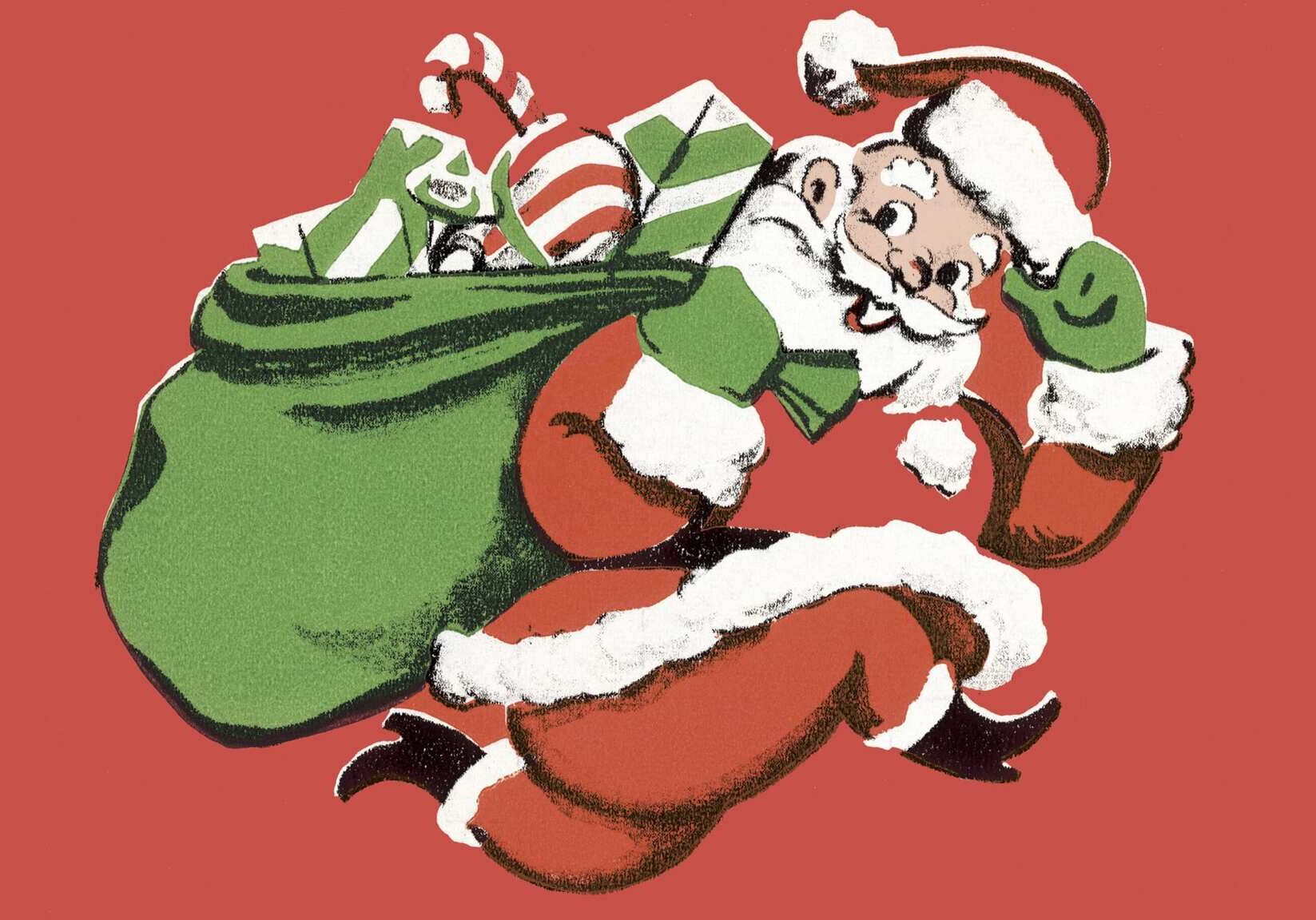
It’s hard to imagine a time when red and green weren’t synonymous with Christmas, but they haven’t always been the holiday’s go-to colors. Arielle Eckstut, co-author of Secret Language of Color, attributes the palette’s rise to two things: holly and Coca-Cola.
“Holly has played a huge part in this red and green association,” Eckstut tells NPR’s Ari Shapiro. “And it dates back to winter solstice celebrations with the Romans, and maybe beyond. … And also, holly is associated with the crown of thorns of Jesus. And just those beautiful bright red berries and those deep green leaves are the exact colors that we really come to think about when we think about Christmas”
But it took a while for red and green to rise to the top. Eckstut says Victorian Christmas cards used a lot of different palettes (red and green, red and blue, blue and green, blue and white) and they often put Santa in blue, green or red robes. All that changed in 1931.
“Coca-Cola hired an artist to create a Santa Claus,” Eckstut says. “They had done this before, but this particular artist created a Santa Claus that we associate with the Santa Claus today in many ways: He was fat and jolly — whereas before he was often thin and elf-like — and he had red robes. … And so the fact that all these things came together — this friendly, fat Santa in these bright red robes, which, I don’t think is a coincidence, match the color of the Coke logo — this really took hold in American culture.”
The artist was Haddon Sundblom, and his ads were such a hit that Coke continued working with him for decades.
Eckstut says, “It solidified in our collective imaginations the red of Santa’s robes with the green of fir trees and holly and pointsettia that we already had in our minds. … This particular shade of red and green came to signify Christmas.”
9(MDA1MjcyMDE0MDEyNzUzOTU1NTMzNmE5NQ010))
Reading these stories is free, but telling them is not. Start your monthly gift now to support Flatland’s community-focused reporting.

Related Stories
Nick’s Picks | Rally, Debate, Data Center and More …
Election season is in full swing, with the U.S. Senate race in Kansas taking center stage, including President Donald Trump holding a rally in Wichita.
Kansas City Cooks as Site for National Anti-ICE Dinner Series
Celebrated chefs from throughout the metro collaborated for three nights on dinners that raised money for a local immigrant-rights nonprofit.

Nick’s Picks | Top Cop, Mission Mall, Lucas’ Travels and More …
Nick Haines also has the lowdown on information for the upcoming election, the arrival of fall and Kansas City's Day of the Dead celebration.