
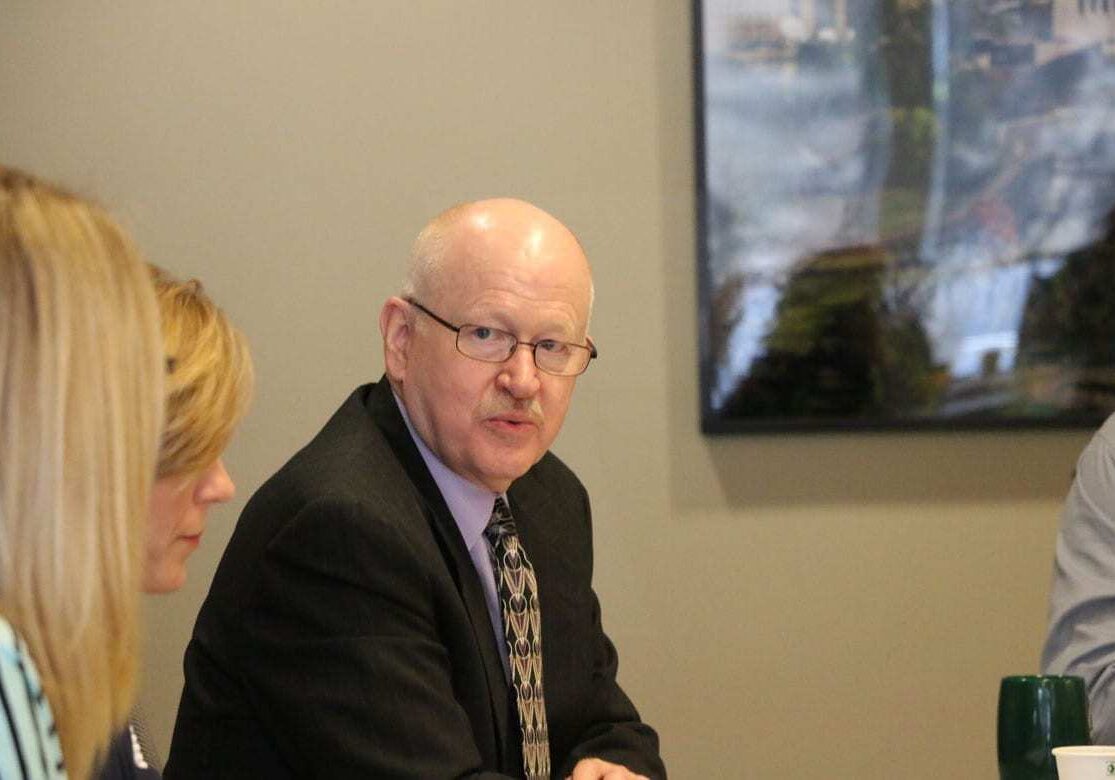
MO state dental director briefs oral health advocates in Kansas City
May 29, 2014 | | 5 min read
Missouri’s new state dental director has been on board for about half a year, and during a visit to Kansas City on Wednesday, he outlined a number of initiatives aimed at making the state a national leader in oral health.
“I want (other states) to come to us,” Dr. B. Ray Storm said at a meeting of the Oral Health Access Committee, which is part of a regional health initiative through the Mid-America Regional Council. “Let us be the guiding light for the rest of the country.”
His plans include improving care for nursing home residents and a rural health initiative. Storm also discussed a budget measure, pending before Gov. Jay Nixon, that would reinstate dental benefits for adult Medicaid recipients.
Missouri has traditionally fared poorly in state rankings on dental health, including a January 2013 report from The Pew Charitable Trusts that gave Missouri a “D” for its efforts to prevent tooth decay among children by providing sealants.
In addition, a report commissioned in 2012 by three Kansas and Missouri health foundations outlined a list of areas where Missouri lagged in serving the dental needs of old and young alike.
Position had been vacant for decade
Oral health advocates blame some of the problems on the fact that, before Storm started in mid-December, the dental director position had been vacant for a decade.
Storm’s hiring only came after a few health care philanthropies pledged $330,000 to fund the position until, as hoped, the state can fund it through federal grants.
Storm’s counterpart in Kansas, Dr. Cathy Taylor-Osborne, is also new.
She came on in March to replace Dr. Kathy Weno, who became director of oral health at the National Center for Chronic Disease Prevention and Health Promotion.
Storm splits his time between the departments of Social Services and Health and Senior Services. His key focuses, he said, are children, senior citizens and the disabled.
Storm outlined some of the programs he would like to get off the ground:
- A pilot program through which he wants to demonstrate the effectiveness of Internet-based technology to help provide dental treatment from afar. The idea would be for nursing home staff to transmit photos of residents’ mouths to a local dentist, who could then determine a treatment plan.
- The planned launch of a $1.3 million program to coordinate medical and dental care at a dozen rural health clinics around the state. Storm said the state is awaiting some federal approval before it can select the sites and move forward.
Other initiatives include putting together a five-year state dental plan and pinpointing the geographical distribution of dental hygienists around the state. Storm said the hygienists are critical in providing underserved populations with access to dental care.
Medicaid benefit
According to the Kaiser Family Foundation, as of 2012, only four states (Alabama, Delaware, South Carolina and Tennessee) provided no dental benefits for adult Medicaid recipients.
Missouri and Kansas were among states that provided adult dental benefits only in cases of emergency or trauma.
The Missouri budget awaiting Nixon’s signature includes $48 million to restore dental benefits to adult Medicaid beneficiaries in fiscal year 2015, which begins July 1. The benefits were among controversial Medicaid cuts made in 2005.
Storm called the restoration a “very big positive” for the state. He was unable to say how many people the funding would cover.
The appropriation would also increase rates for Medicaid providers, he said.
Storm said the budget language authorizes tiers of service, including emergency, preventive and restorative care, but would not restore funding for prosthetics like crowns and bridges.
“Maybe that is next year’s project,” he said.
More dentists
Gary Harbison, executive director of the Missouri Coalition for Oral Health, said he hoped the rate increases would entice more participation in the program. Harbison said only about 11 percent of the dentists in the state take Medicaid patients.
Harbison said dental health advocates were able to convince lawmakers that it makes fiscal sense to fund dental benefits for the Medicaid population to avoid costly emergency problems down the road.
It’s also helpful to have adult dental benefits in the state Medicaid program, Harbison said, as lawmakers continue discussing expanding eligibility for the program through the Affordable Care Act.
As those talks progress, he said, lawmakers might have left adult dental benefits off the table if they were not part of the program already.
Applause from Kansas
Dental health advocates in Kansas cheered the move next door.
“We are inspired by their ability to get those services in place,” said Tanya Dorf Brunner, executive director of Oral Health Kansas, adding she hoped it would build momentum for the efforts in Kansas.
The Kansas Medicaid program, which the state has contracted out to three managed-care organizations, does not have adult dental benefits.
However, Brunner said, the managed care organizations do provide preventive dental treatment to adults as part of some services they offer above and beyond the state’s basic Medicaid program.
Between 2007 and 2010, she said, the state provided basic dental services to adult Medicaid recipients in some specific populations, such as persons with developmental disabilities or traumatic brain injuries who were receiving community-based services.
Brunner said budget problems ended that program.
In testimony she provided to the state Legislature earlier this year, Brunner said Kansas spent about $1.4 million in state funds in 2011 on emergency dental services for approximately 12,000 adults on Medicaid.
Also in 2011, she said, state Medicaid officials estimated it would cost about $4.3 million in general revenues to offer a full dental benefit to nearly 200,000 adult Medicaid beneficiaries.
Major Funding for Health coverage on KCPT provided by Assurant Employee Benefits and the Health Care Foundation of Greater Kansas City.
Reading these stories is free, but telling them is not. Start your monthly gift now to support Flatland’s community-focused reporting.

Related Stories
Nick’s Picks | Messi, Jail, Buses, and More …
World Cup Team(s) Arrive It’s starting to feel real. The first World Cup team has landed in Kansas City. Defending champions Argentina touched down at KCI airport on Sunday and will begin practicing today at Sporting KC’s training facility in Wyandotte County. Much of the attention, of course, is focused on Lionel Messi. The soccer…

World Cup ‘Statement Piece’ Evokes Best Version of Kansas City
Before I moved to Kansas City almost 56 years ago, I had been here only once — for a brief visit to the Kansas City Press Club when I was attending the University of Missouri School of Journalism. But because of that visit and the fact that I grew up in the Midwest (Woodstock, Illinois,…
KU Center Helps Women Gain Foothold After Incarceration
A flier from her probation officer was the turning point for Jodi Whitt, who had spent more than two decades in and out of the criminal justice system. The piece of paper introduced Whitt to the Technology Education Program offered by the University of Kansas’ Center for Digital Inclusion. Since 2019, Whitt has risen through…