
If Voters OK Ballpark Sales Tax, Royals Will Ask KC and Missouri for More
March 5, 2024 | Josh Merchant, The Beacon | 4 min read
The proposed extension of Jackson County’s sales tax won’t be enough to pay for a new downtown Kansas City Royals stadium.
So the team is in conversation with Kansas City officials and Missouri Gov. Mike Parson to fill a $700 million funding gap with taxpayer dollars from the city and the state.
On April 2, Jackson County voters will be asked to commit upward of $1 billion to a proposed baseball stadium in the Crossroads Arts District. Dozens of absentee ballots have already been cast, but the financial details of the project remain unclear.
Voters had that kind of detail in 2006 when Jackson County last cast ballots on a sales tax to subsidize the Chiefs and Royals. But this time, those details won’t be made public until after the vote is complete.
“We don’t have the same level of detail as we had in 2006,” Jackson County Administrator Troy Schulte told The Beacon.
Royals Will Likely Seek Another $700 Million After the Sales Tax Vote
If approved, the 3/8-cent sales tax would generate more than $2 billion over 40 years. The Chiefs and Royals would split the money 50-50, giving each team $27 million a year.
The Chiefs money will pay for debt obligations, maintenance and repairs for Arrowhead Stadium. The proposed renovation of that existing stadium will be paid for with $300 million from the team, as well as $500 million split between Missouri tax dollars and, possibly, other public sources.
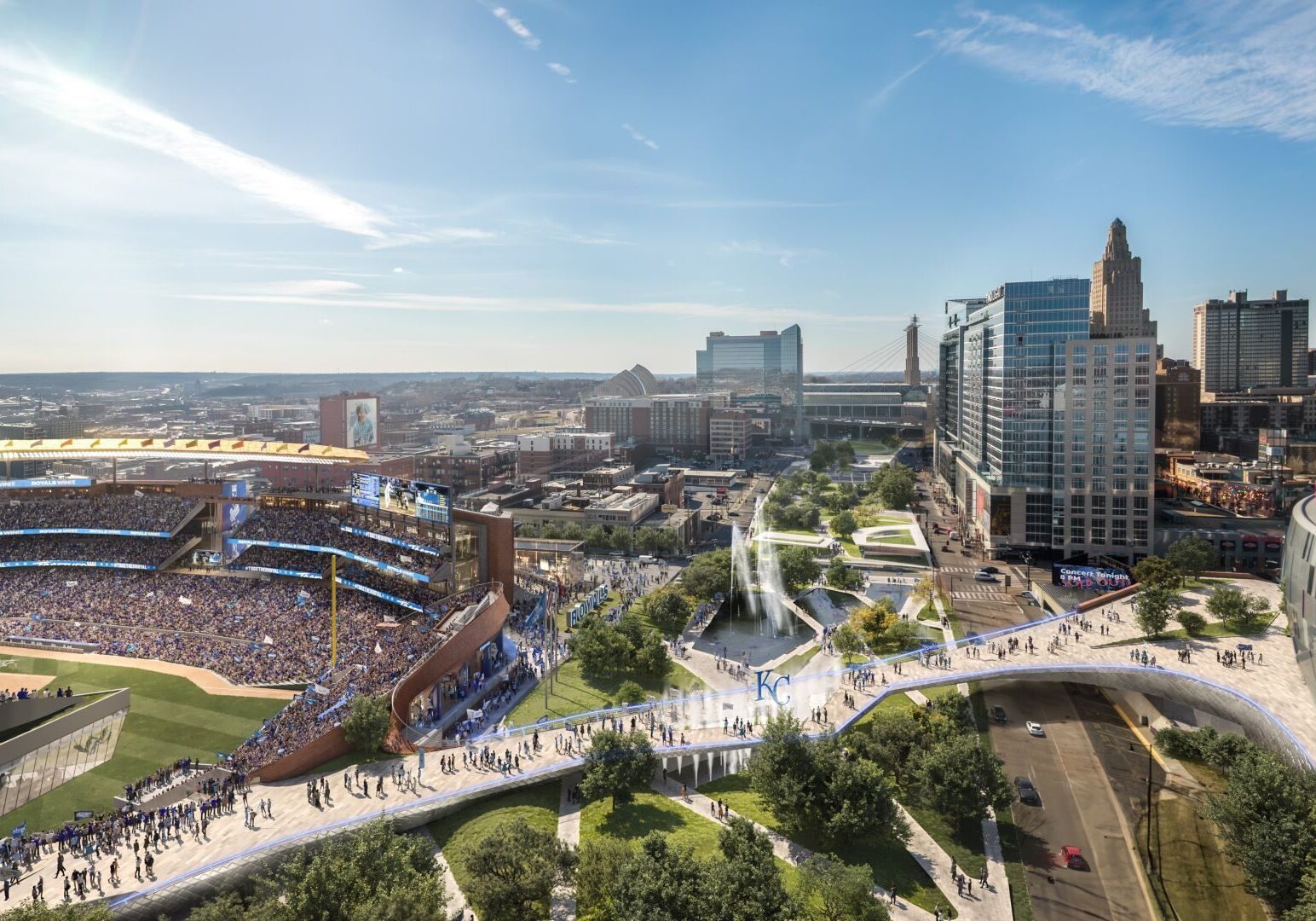
As for the Royals, the $1 billion in sales tax money would go toward the new stadium. The team would be on its own to raise money for its surrounding ballpark district.
But that $1 billion will only cover a third of the stadium’s costs.
Before the Royals can use the county sales tax money, the county must still pay off nearly $200 million in debt on the Truman Sports Complex. Plus, because the Royals plan to take out a loan to finance construction costs up front, much of the sales tax revenue will have to pay for interest.
That leaves somewhere between $250 million and $350 million that can actually be used to cover stadium expenses — and leaves more than two-thirds of the stadium’s cost unaccounted for.
Who Will Pay for the New Royals Stadium?
The last time that Jackson County voters OK’d a sales tax to fund the Chiefs and Royals in 2006, local officials had a financial document called a “sources and uses statement.”
That financial plan outlined how much money would come from the teams and how much would come from the state, the city and the county.
A spokesperson for Kansas City said that the city manager and finance director do not have a copy of a comparable document for the 2024 measure. Neither do Mayor Quinton Lucas, Jackson County Executive Frank White Jr., county legislators or the Jackson County Sports Complex Authority.
That, Schulte told The Beacon, marks one of the main reasons why White does not support the 2024 sales tax measure.
Schulte said the Royals plan to fill that gap with money from Kansas City and Missouri, but without this document, the specifics remain unclear.
When the Royals were considering a stadium north of the Missouri River, their sources and uses statement listed an expected $350 million contribution from North Kansas City, $580 million from Clay County and $350 million from Missouri.
Parson said in a statement that Missouri will not finalize any financial commitment until after the April 2 vote.
The team confirmed to The Beacon that conversations with Kansas City officials are ongoing.
When asked how much money the city was planning to contribute and how it would be funded in the budget, a representative from Lucas’ office said the city hadn’t received any requests from the Royals.
Josh Merchant is a local government reporter with The Kansas City Beacon, where this story first appeared. The Beacon is a member of the KC Media Collective.

Reading these stories is free, but telling them is not. Start your monthly gift now to support Flatland’s community-focused reporting.
Related Stories
United in Opposition: The Bipartisan Response to Data Centers
From Independence, Missouri, to Osawatomie, Kansas, data centers are angering residents and spurring bipartisan opposition.
Nick’s Picks | Map, Recall, Trial and More …
The Missouri Supreme Court takes up a question about a local congressional district, an Independence councilman fights to keep his seat, and a long-delayed murder trial is set to get underway.
Advocates Look to Make KCK Next Abandoned Housing Success Story
The Kansas Abandoned Housing Act is working in Leavenworth, and proponents are hopeful it will prove successful in Kansas City, Kansas, too.