
With next Obamacare enrollment period set to start, navigators share successful strategies
October 10, 2014 | | 4 min read
Meridith Berry and her team learned a valuable lesson at an event where they were encouraging Hispanics to purchase coverage through the health insurance marketplace established by the Affordable Care Act: don’t use green card stock.
Berry, a family financial education specialist with the University of Missouri Extension in Trenton, Mo., said the slip-up occurred at a health fair a couple years ago as part of an effort to get attendees to visit a number of tables. After participants went around the room, Berry said, workers checked to see if the people had recorded enough visits to qualify for a free lunch.
Berry recalled the look of panic among some attendees when workers asked to see their “green card” – which is also the common form of identification the government issues to immigrants when they become permanent residents, signifying they’re not in the country illegally.
“We did not know nor did we want to know who was documented. We were just trying to provide information about health resources,” Berry said in an email, amplifying an anecdote she shared at a forum in Kansas City, Mo., on Thursday. “The green card comment was misinterpreted. Lesson learned.”
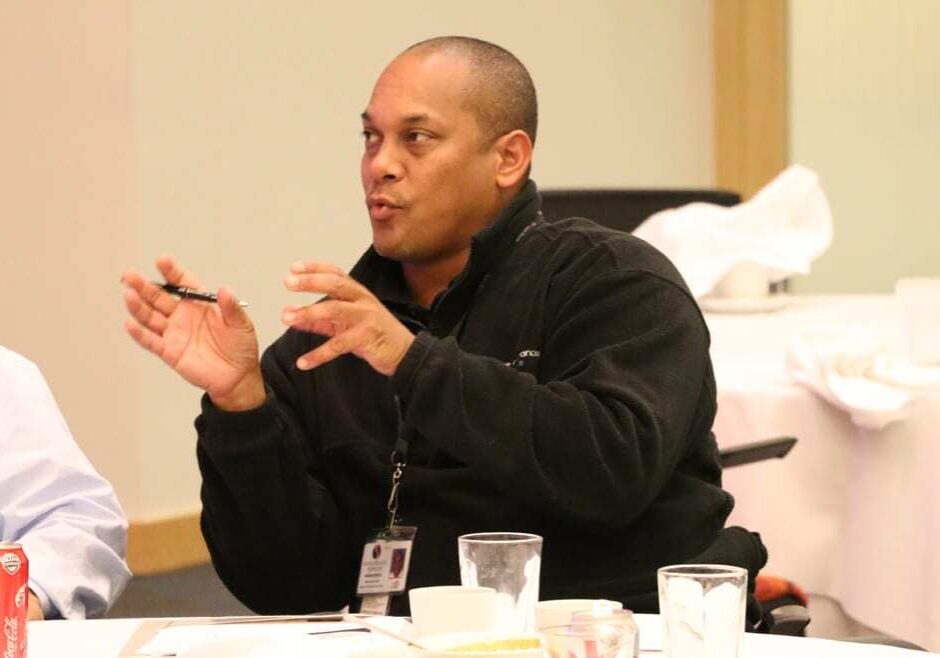
Berry was one of about 50 attendees at a day-long forum at the Kauffman Foundation Conference Center, where health care outreach workers shared best practices developed during the initial roll-out of the health insurance marketplace.
That enrollment period stretched from October 2013 through March, and as of mid-August, according to federal data, the exchange had 7.3 million paying customers.
The forum – hosted by the Missouri Foundation for Health’s Cover Missouri Coalition – came as the second enrollment period is set to begin Nov. 15 and run through mid-February. Audience members consisted of enrollment specialists known as “navigators” and “certified application counselors.”
One major takeaway from the first sign-up period is to have a presence at as many events as possible, said Dara Taylor of the St. Louis office of Community Catalyst, a national consumer health advocacy organization. Taylor led a session on promising outreach and enrollment strategies.
Taylor said she has even heard of successful efforts at gun shows and encouraged attendees to be creative – by gaining entry to cattle sales in rural areas, for example.
She also encouraged discussions within organizations to find out what events are attended by co-workers.
“Most people don’t realize all the events that happen within their community,” she said.
Other efforts she mentioned:
- Super Saturday events in collaboration with tax preparers at libraries, enabling consumers to learn about the marketplace while getting tax-filing assistance
- Phone banks in partnership with local TV stations
- Participation at parent teacher nights
- Distribution of fliers with information about the marketplace in grocery store bags
Other successful strategies mentioned by attendees included convincing taxi drivers to carry informational literature in their cars and flashing enrollment messages on public busses.
It works better to have a spot at an event like an art fair or cultural festival than trying to get people to attend a health fair, said Karimah Baptiste, outreach and enrollment program manager at Swope Health Services.
Berry suggested another approach.
To overcome distrust of the Affordable Care Act in rural areas, she said, her office enlisted the assistance of local insurance agents because they were known in the community.
“This is somebody who is at the football games on Friday nights,” Berry said.
Mike Sherry is a health reporter with Heartland Health Monitor, a reporting collaboration among KCUR Public Radio, KCPT Public Television, KHI News Service and Kansas Public Radio. He is based at KCPT’s Hale Center for Journalism.
Major Funding for Health coverage on KCPT provided by Assurant Employee Benefits and the Health Care Foundation of Greater Kansas City.
Reading these stories is free, but telling them is not. Start your monthly gift now to support Flatland’s community-focused reporting.
Related Stories
Nick’s Picks | Votes, Taxes, Soccer and More …
This weeks topics include continued counting of votes from the Nov. 3 election, De Soto, Kansas, leaders considering unique offer from data center developer, and the KC Current playing for a championship.

Nick’s Picks | Counting, Courts, Attractions and More …
Topics include: Election Day drama continues, World War I Museum and Memorial celebrates 100 years, Steamboat Arabia leaves, and entertainment options.
How One Wyandot Artist Hopes to Bring His Native Language Back From Extinction
“To speak the language, you're actually creating the language as you go,” Richard Zane Smith said. “We're trying to come up with a kind of standardized writing system, and even that has its challenges.”