
Decades have passed since a Peruvian-born professor at the University of Missouri-Columbia eloquently spoke about the struggles of new Americans, addressing the often negative reactions to the changing demographics inherent with immigration.
He did so as the university launched an initiative to research the expanding role of Latinos in Missouri specifically, and the Midwest in general.
The Cambio Center’s founding director, Domingo Martínez Castilla, said the new center would focus on “the tendency we human beings have to forget that change is what drives the world, or, worse, to refuse to accept that change is happening.”
Some of that work will be showcased this week during the annual Cambio de Colores Conference (Change of Colors), now in its 22nd year. Martínez, an agricultural economist, has since retired.
The conference will be June 5-7 at the Kansas City Marriott Country Club Plaza, 4445 Main St.
The sessions will explore how Latinos are integrated into U.S. society through employment, education, language access, civil rights and political representation. The theme is “Sparking Change, Integration and Deep Connections.”
Wednesday’s keynote will be given by Montserrat Garibay: “Raise the Bar – Creating Pathways for Global Engagement and Multilingualism for All.”
Garibay is acting assistant deputy secretary and director for the Office of English Language Acquisition and Senior Advisor for Labor Relations, Office of Secretary, U.S. Department of Education.
She came to the U.S. from Mexico City, initially entering the country undocumented. Twenty years later, Garibay became a U.S. citizen.
Attendees will also have the opportunity to learn more about resources aiding Latinos in the Greater Kansas City area through tours of the Guadalupe Centers, El Centro and the Latinx Education Collaborative.
U.S. Census data counted Latinos at about 120,000 in Missouri when Cambio began in 2004, although Census figures are often considered an undercount of people of color. Still, that count was a more than 90% increase from the decade prior.
Today, the state’s Latino population is more than 303,000 people, also considered an undercount.
When the Cambio Center began, Mexico was the U.S.’s second largest trading partner after China.
Mexico moved into the top position in 2023, with the U.S. importing more than $475.6 billion in goods, including auto parts, electronics and medical equipment.
Presidential election years historically have drawn extra attention to immigrants, and 2024 is not an exception, with newcomers being demonized, glorified and misunderstood.
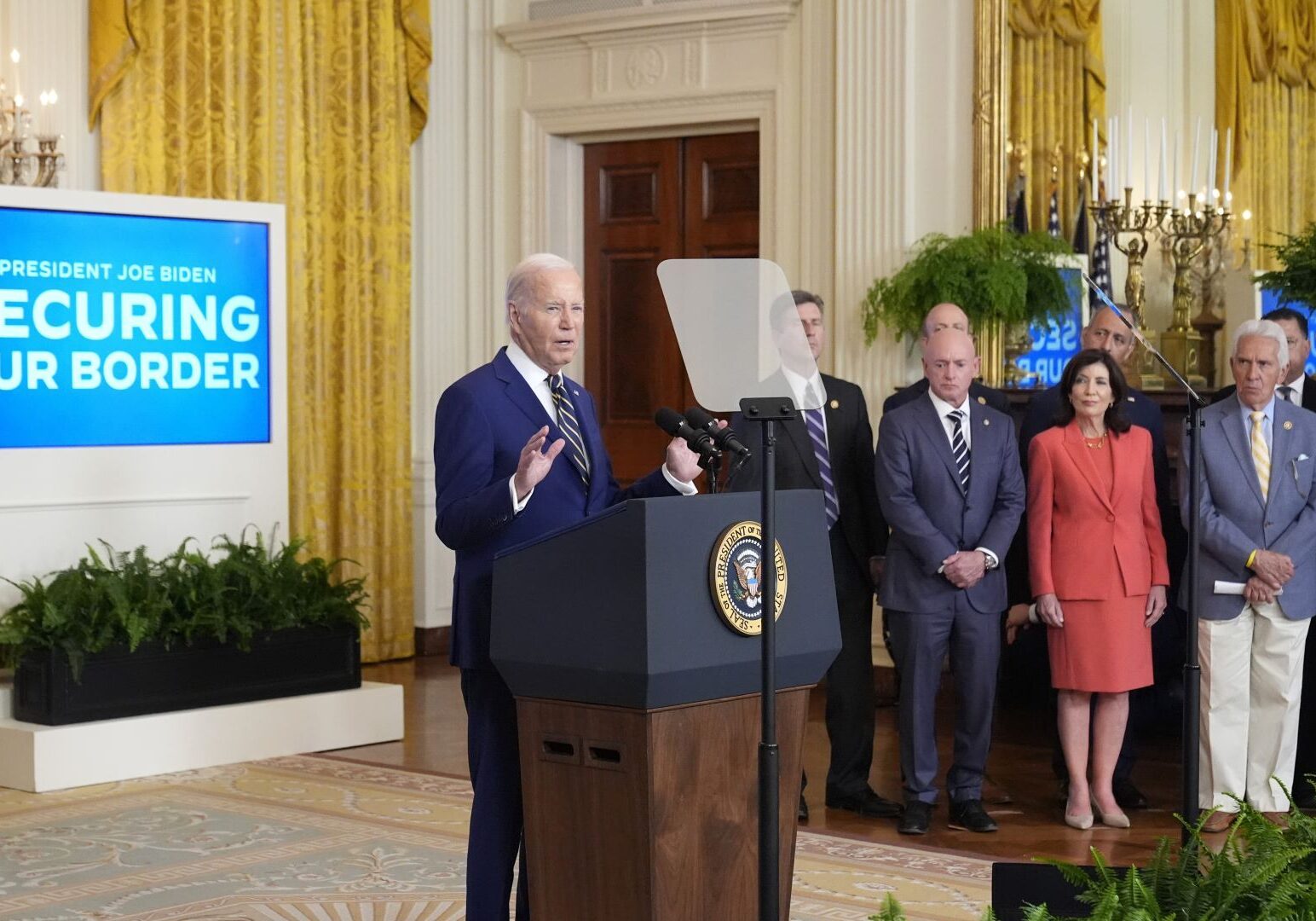
On Tuesday, President Joe Biden signed an executive order shutting down access to asylum claims at the U.S.-Mexico border when the seven-day average of people trying to cross reaches 2,500 per day.

A backlog in current claims means that people are being allowed into the country to wait possibly years before their cases are adjudicated. People given this temporary entry have passed an initial screening to show a credible fear of returning to their homeland.
Political, constitutional and immigration experts have cast a wary eye on Biden’s move, suspecting that it’s the administration’s reply to the tough talk and anti-immigrant sentiments generated by Donald J. Trump, Biden’s presumed GOP challenger in the upcoming presidential election.
Biden doesn’t want to appear politically vulnerable to the charge that he’s lenient on immigration or not protecting the border during surges in migrants arriving at the southern border in recent years.
The effort to curb people’s right to apply for asylum is expected to be challenged legally, as it was when then-President Trump tried a similar move in 2018. Federal courts blocked the Trump administration’s plan.
Biden’s action will likely be discussed during Cambio sessions this week about the migration patterns of Central Americans, including a presentation about the controversial use of ankle monitors and forms of detention affecting some asylum seekers.
Sunday, Mexico elected its first female president, climate scientist Claudia Sheinbaum Pardo, the former mayor of Mexico City.
The election was also the first where Mexican citizens living abroad were allowed to vote, a fact that created long lines of people waiting to do so at U.S. consul offices in cities with large immigrant populations, many of whom hold dual citizenship.
Sheinbaum faces daunting challenges, including Mexico’s high homicide rate, the violence and extortion of drug cartels and climate issues like drought and the depletion of aqueducts affecting the 22 million people of Mexico City.
Each of those factors plays a role in why people migrate, along with the conditions that immigrants from other nation’s encounter as they travel through Mexico, trying to reach the U.S.
A conversation about resilience, the importance of role models and creating pathways to higher education will be part of the presentation by University of Missouri-Kansas City Associate Professor of Latinx Studies Theresa Torres.
Torres will highlight the impact of her uncle, Bruno Robert Torres, whose career as a photographer greatly influenced her own desire to pursue not only a college degree, but eventually her doctorate.
Bruno Torres was born in tiny Avoca, Iowa, in 1934. His parents immigrated from Mexico. Retired now, he lives near Seattle.
But as a photographer for United Press International (UPI), Torres photographed events of the civil rights movement, civil rights marches from Selma to Montgomery, Alabama, the funeral of Martin Luther King, Jr., national political conventions, four Olympics and the boxing matches of Muhammad Ali, Sonny Liston and Joe Frazier.
He’d always share behind-the-scenes stories with family, inspiring them to pursue their dreams.
Torres said that she did not fully grasp the extent of her uncle’s impact until she began teaching at the university level and gathering data showing that many Mexican immigrants do not access higher education and all of the reasons why.
“Bruno’s story is really about the importance of storytelling and helping young people to understand that other people like them, with similar backgrounds have done great things.”
– Theresa Torres, University of Missouri-Kansas City Associate Professor of Latinx Studies
“I grew up in poverty,” she said. “And yes, I knew that we were poorer than everybody else. But I didn’t feel like it, nor did I ever doubt that I wouldn’t go to college.”
The reason, she said, was her uncle, his accomplishments and the many stories that he told of his work.
“Bruno’s story is really about the importance of storytelling and helping young people to understand that other people like them, with similar backgrounds have done great things.”
Mary Sanchez is a senior reporter for Kansas City PBS.
Reading these stories is free, but telling them is not. Start your monthly gift now to support Flatland’s community-focused reporting.
Related Stories
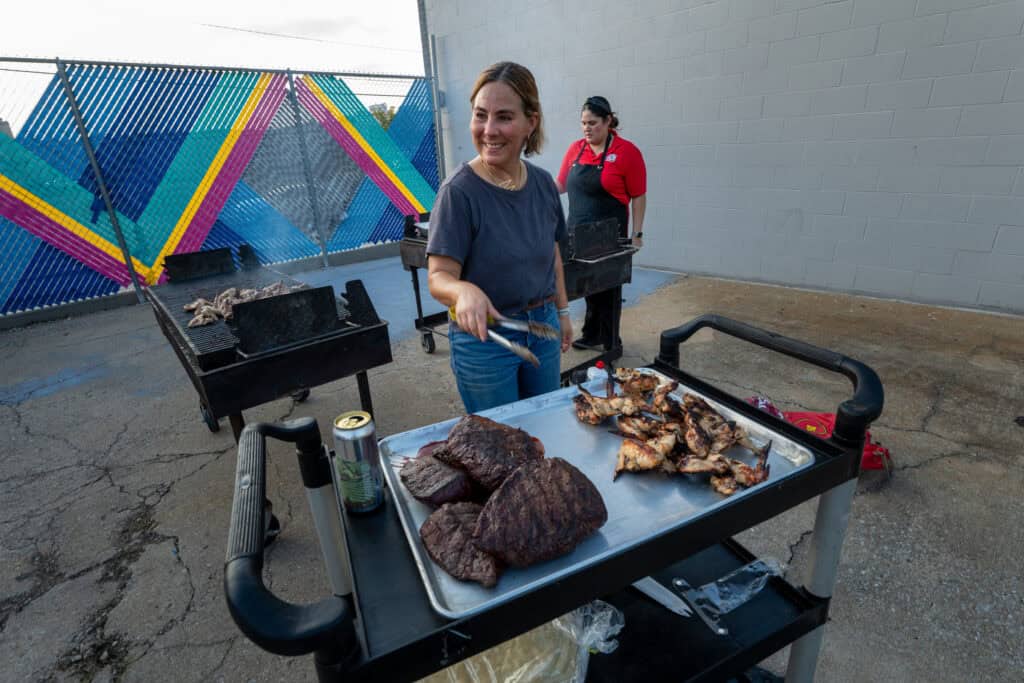
Kansas City Cooks as Site for National Anti-ICE Dinner Series
Celebrated chefs from throughout the metro collaborated for three nights on dinners that raised money for a local immigrant-rights nonprofit.
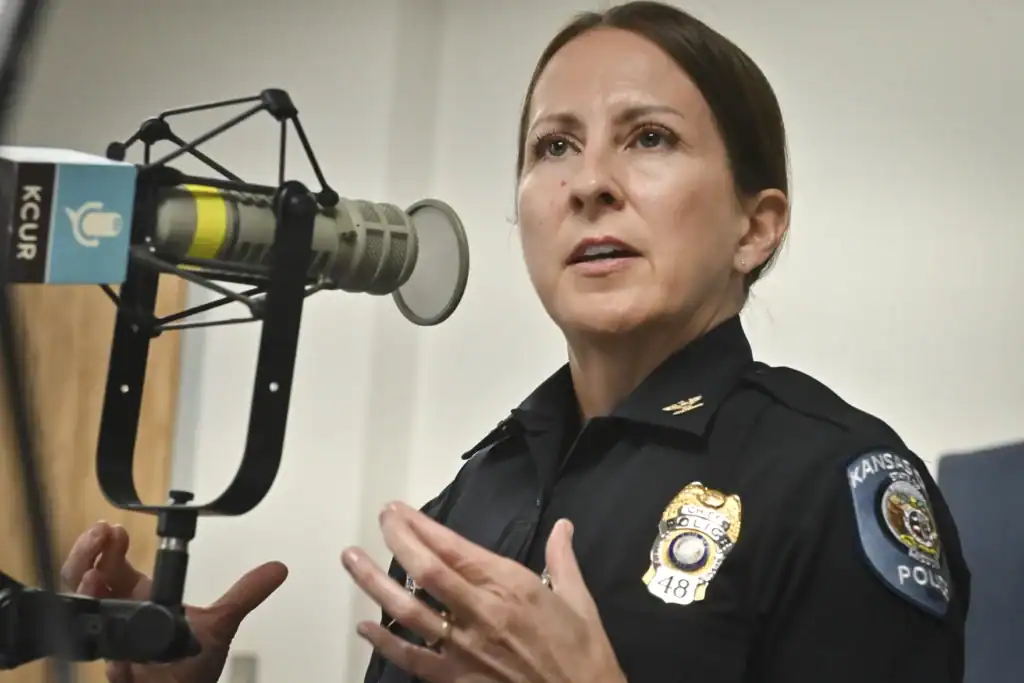
Nick’s Picks | Top Cop, Mission Mall, Lucas’ Travels and More …
Nick Haines also has the lowdown on information for the upcoming election, the arrival of fall and Kansas City's Day of the Dead celebration.
Nick’s Picks | I-70, Tax Break, School Petition, and More …
An Interstate 70 closure, a tax rebate for Jackson County property owners, a school closure petition, and more ...