
Volunteer Green Team Battles Stormwater Runoff in Neighborhoods
May 26, 2021 | Cody Boston | 3 min read
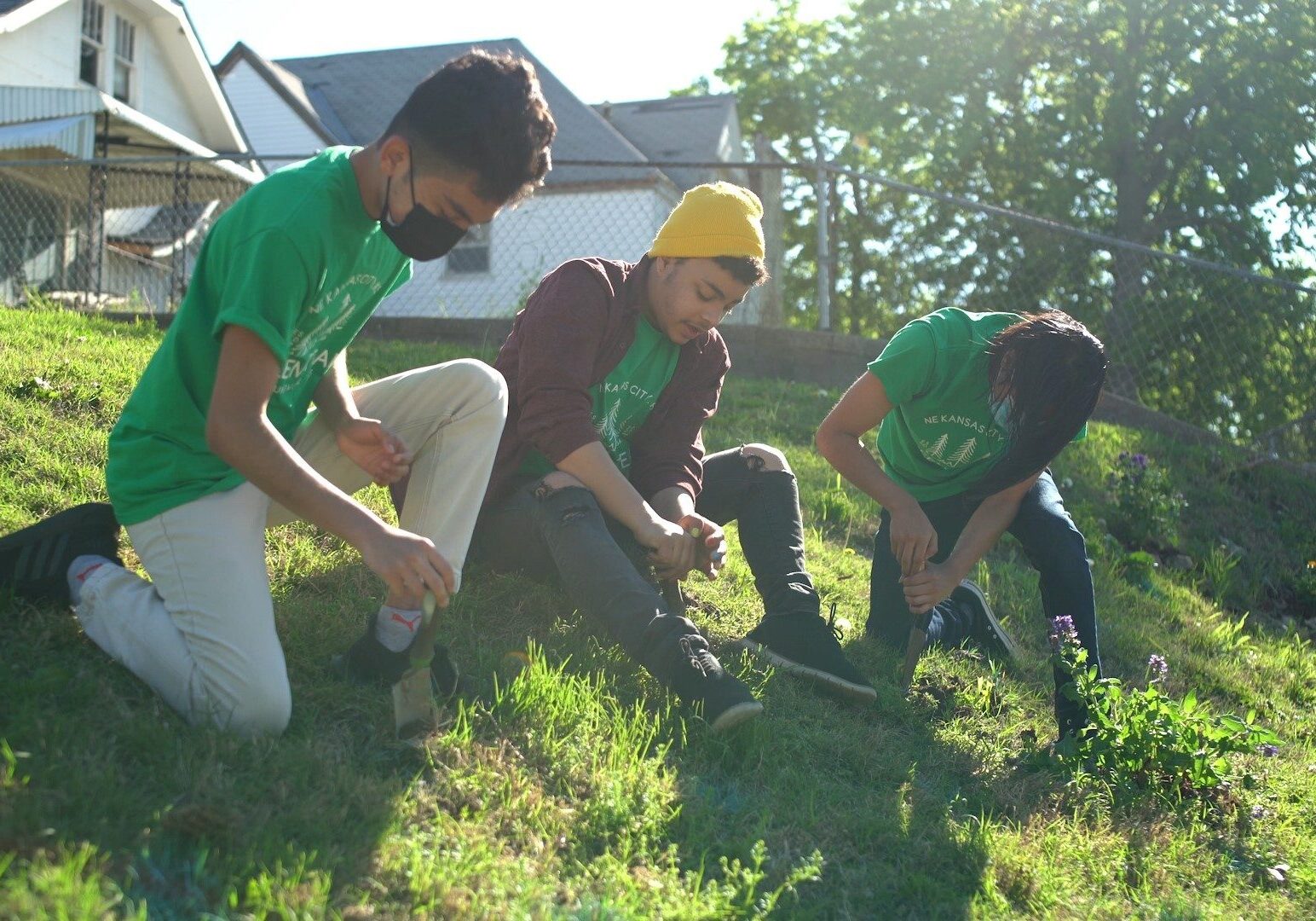
It’s not every day that a stroll around the block ends with you becoming the architect of your own neighborhood. But for many residents of the Douglas-Sumner neighborhood in northeast Kansas City, Kansas, that’s exactly what happened a couple of weeks ago.
In front of a vacant lot, a group of local students invited folks over to a table to help them redesign the space. Laid out in front of them was a large map of the lot with cards depicting examples of green infrastructure ideas that could be built into the space.
“Use all these cards and place them wherever you’d want them,” Gerardo Zapata told passersby. “We want your community input before we start building.”

Zapata is one of five members of the Green Team, a program within Groundwork Northeast Revitalization Group that empowers youth to redesign green spaces in cooperation with local neighborhood associations.
This year marks the first time that members of the Green Team are getting their hands dirty. But so far they’ve established 20 trees along Jersey Creek to combat noise and air pollution.
They also have their eyes on several other vacant lots to enhance what is known as green infrastructure, the practice of using a variety of natural plant and soil systems to filter out pollutants, particularly from excess stormwater.
“In northeast Kansas City, Kansas, there are consent decrees about stormwater overflow and how Jersey Creek gets polluted from raw sewage,” said Matt Kleinman, a research assistant at Children’s Mercy Weighing In Program. “There are a lot of initiatives going on but this is one that neighbors can actually get out to feel and touch.”
Green Infrastructure Strategies


Green Team coordinator Brenda Brinkhaus-Hatch sees this type of pollution easily increasing as climate change makes heavy rainfalls more frequent and intense.
“When we have those storm events when that water is running through gutters, sidewalks and streets and picking up all that pollution along the way,” said Brinhaus-Hatch. “That’s all running into our stormwater system and affecting our waterways as well.”
The deep roots of native plants can combat this polluting effect by storing and filtering excess stormwater. Planting such aesthetically pleasing green spaces provides the added benefit of positively affecting the mental health of residents.
In collaboration with the Unified Government of Wyandotte County and Kansas City, Kansas, Groundwork NRG (formerly known as Historic Northeast Midtown Association) takes its responsibility to reflect the desires of the community very seriously.
“Northeast KCK is an area that has experienced structural racism, discriminatory practices and policies like redlining,” said Groundwork Executive Director Rachel Jefferson, “We center the community in actionable projects that hopefully lead to better policy.”
Historically redlined communities tend to be at the forefront of the climate crisis, experiencing the intensifying effects of a warming climate first. In fact, a recent study on the Urban Heat Island effect across US cities concluded that formerly redlined neighborhoods were significantly hotter than other parts of the metro, some by as much as 7º C.
Green spaces in formerly redlined neighborhoods are still lacking. But they could combat this heating effect if expanded on a large scale.
“We need to encourage people to either move here or to stay here,” said Green Team member and Douglas-Sumner resident Salvador Estrada. “I really want to see this neighborhood thrive.”
For more information on Green Team and Groundwork NRG’s range of other programs for local youth, visit https://www.northeastkck.org/
Cody Boston is a video producer for Kansas City PBS.
Reading these stories is free, but telling them is not. Start your monthly gift now to support Flatland’s community-focused reporting.
Related Stories

Nick’s Picks | Rally, Debate, Data Center and More …
Election season is in full swing, with the U.S. Senate race in Kansas taking center stage, including President Donald Trump holding a rally in Wichita.
Kansas City Cooks as Site for National Anti-ICE Dinner Series
Celebrated chefs from throughout the metro collaborated for three nights on dinners that raised money for a local immigrant-rights nonprofit.
Nick’s Picks | Top Cop, Mission Mall, Lucas’ Travels and More …
Nick Haines also has the lowdown on information for the upcoming election, the arrival of fall and Kansas City's Day of the Dead celebration.