
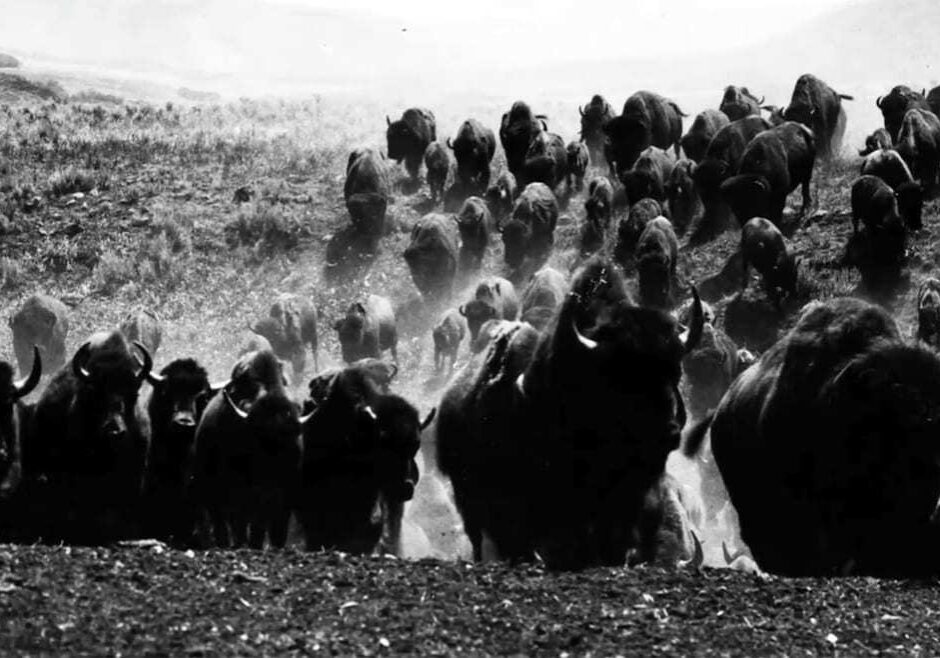
North America’s largest mammal, the American bison, is an enduring symbol of the Great Plains. Bison once ranged from Canada to New Mexico and from Nevada to the Appalachian Mountains. By 1889, their populations were reduced from 30 to 60 million animals to fewer than 1000. Bison were pushed to the brink of extinction by a number of factors, including over hunting by hide hunters, trains, competition with cattle and horses, and disease.
Bison survived near extinction with the help of prescient Native Americans and early conservationists who worked to protect the species through effective federal wildlife management policy.
In 2016, President Obama signed a law, making bison the country’s first national mammal. Today, bison are considered a conservation success story. More than 500,000 bison now live on the Great Plains in protected herds that range on national, state, local, and private lands.
This video is from our public media partners at NETNebraska.
Reading these stories is free, but telling them is not. Start your monthly gift now to support Flatland’s community-focused reporting.

Related Stories
Catholic schism with local ties raises question about religious factionalism
Religious splits are as old as Adam and Eve, but does it really have to be that way?

Nick’s Picks | Costco, Homicides, Rain and More …
Is Missouri's congressional map saga over? It seems so, but who knows if there will be another twist or turn. That story and more ...

Nick’s Picks | Obama Visits KC, Debates and Fall’s Arrival
Obama in KC With Election Day just six weeks away, some of the nation’s top political names are now rolling through Kansas City. Last week, Vice President JD Vance was in town. This week, it’s Barack Obama. The former president takes the stage Saturday at the Overland Park Convention Center for a leadership event hosted…