
Missouri’s Execution of Ernest Johnson Merely Adds to Body Count
October 10, 2021 | Bill Tammeus | 5 min read
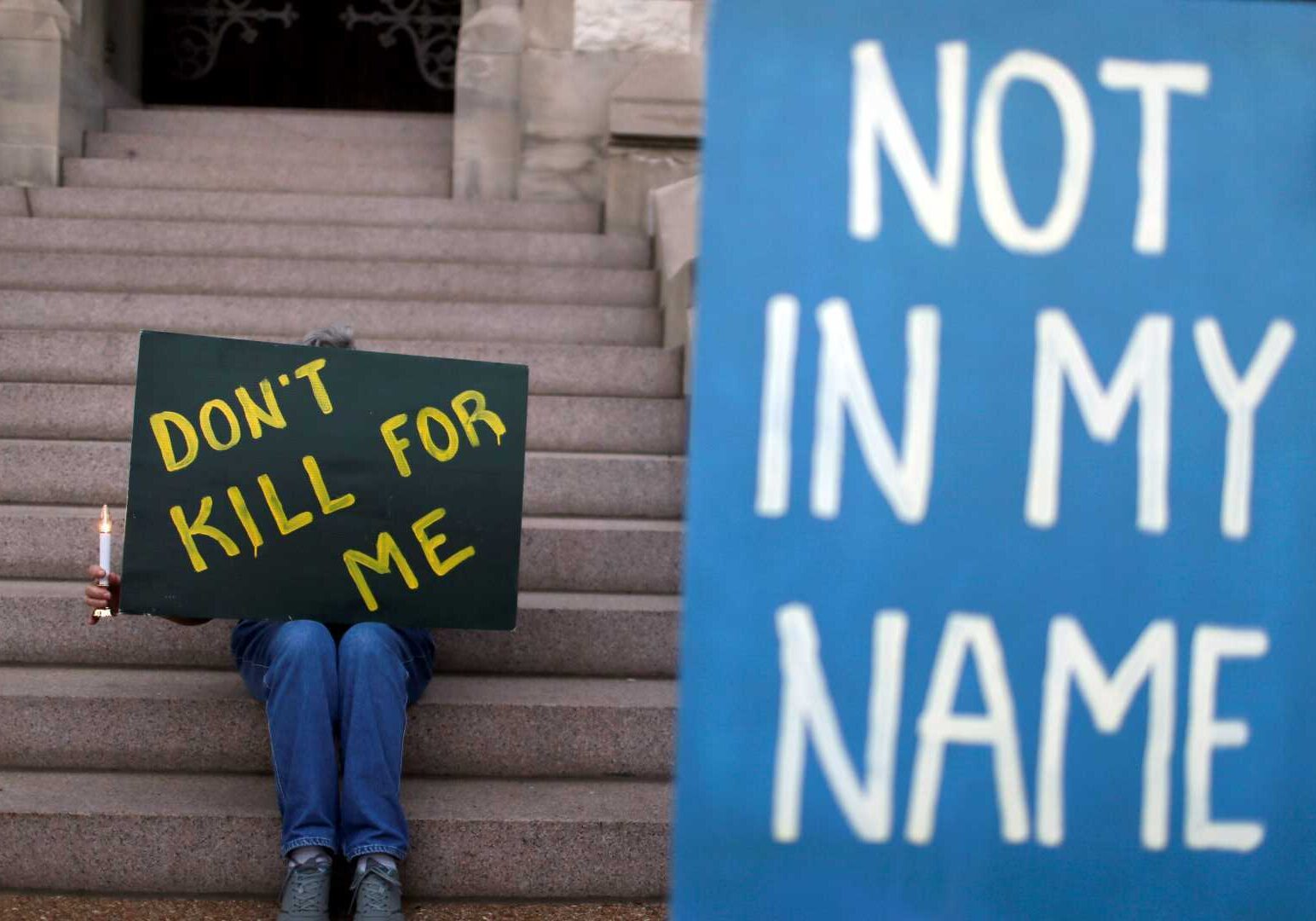
When the state of Missouri executed an intellectually disabled man on Oct. 5, it brought shame, disgrace and infamy on its citizens, in whose name it acted.
U.S. Rep. Emanuel Cleaver of Missouri, just prior to Ernest Johnson’s death by injection at a state prison in Bonne Terre, said it well in a tweet: “State-sanctioned execution of the intellectually disabled is both morally reprehensible and egregiously unconstitutional.”
But that didn’t matter to Gov. Mike Parson. Nor did the many other pleas on Johnson’s behalf, including one from Pope Francis. Faced with the life-or-death choice described by God’s voice in Deuteronomy 30:19, Parson chose death.
The reason Johnson was on death row, of course, was that he had been convicted of murdering three people with a hammer in a 1994 robbery at a gas station in Columbia. There’s no doubt of his guilt. The victims were store employees: Mary Bratcher, Fred Jones and Mabel Scruggs.

Their names should be remembered, too. They did nothing to deserve to die that way.
But by all official accounts, whatever Johnson’s mental state was on the day he killed those three, by the time he was killed he was a harmless man with a diseased brain. Killing him did nothing to improve the safety of Missourians. It did nothing to bring Bratcher, Jones or Scruggs back to life. It did nothing to rehabilitate Johnson. It did nothing but make Missouri look vengeful and murderous.
Revenge doesn’t produce such desired results. Revenge produces darkness, anger and, almost inevitably, more violence and revenge.
If there is any good news in this wretched story it is that the death penalty is legal now in fewer and fewer states. People who have been fighting against capital punishment since the U.S. Supreme Court reinstated it in 1976 have had some success, though not enough.
As the Pew Research Center reports: “As of July 2021, the death penalty is authorized by 27 states and the federal government — including the U.S. Department of Justice and the U.S. military — and prohibited in 23 states and the District of Columbia, according to the Death Penalty Information Center. But even in many of the jurisdictions that authorize the death penalty, executions are rare: 13 of these states, along with the U.S. military, haven’t carried out an execution in a decade or more. That includes three states — California, Oregon and Pennsylvania — where governors have imposed formal moratoriums on executions.”
That’s the good news. The bad news is that the active executioners sometimes kill innocent people. And sometimes they barely avoid that catastrophe when, after a long legal fight, someone gets exonerated because he or she was wrongly convicted of murder.
I wrote about one of the exonerees in my Flatland column in 2018. Darryl Burton, who now helps to lead an advocacy group called the Miracle of Innocence, spent 24 years behind bars before being freed.
The national organization that worked a long time to get Burton exonerated, Centurion Ministries, based in Princeton, New Jersey, has helped to free dozens — not just one or two but dozens and dozens — of innocent people on death row. And as the Death Penalty Information Center notes, since 1973 “more than 185 people have been released from death row with evidence of their innocence.” Beyond that, it says, “an average of 3.94 wrongly convicted death-row prisoners have been exonerated each year since 1973.”
Doesn’t it make you wonder how many other innocent death row prisoners lost their lives because of flaws in our criminal justice system? I don’t know how many died that way, but I’m willing to bet the answer is not zero. And if it’s any number above zero we need to abolish capital punishment.
Does that mean that anybody can get away with murder? Of course not. There are good (and even cheaper) alternatives to the death penalty as such groups as Missourians for Alternatives to the Death Penalty can tell you.
Theologian Stanley Hauerwas of Duke Divinity School once told me he has a sign on his office door with this modest proposal: “Christians should stop killing Christians.” Every American should adapt that slogan and display such signs as “Missouri should stop killing Missourians” or “Texas should stop killing Texans.”
In the case of Ernest Johnson, maybe we need this sign: “Gov. Parson should stop authorizing the execution of intellectually disabled people — and everyone else.”
Bill Tammeus, a former award-winning columnist for The Kansas City Star, writes the “Faith Matters” blog for The Star’s website and columns for The Presbyterian Outlook and formerly for The National Catholic Reporter. His latest book is Love, Loss and Endurance: A 9/11 Story of Resilience and Hope in an Age of Anxiety. Email him at wtammeus@gmail.com.

Reading these stories is free, but telling them is not. Start your monthly gift now to support Flatland’s community-focused reporting.
Related Stories

Nick’s Picks | I-70, Tax Break, School Petition, and More …
An Interstate 70 closure, a tax rebate for Jackson County property owners, a school closure petition, and more ...
Kansas City Helping Renters Avoid Eviction
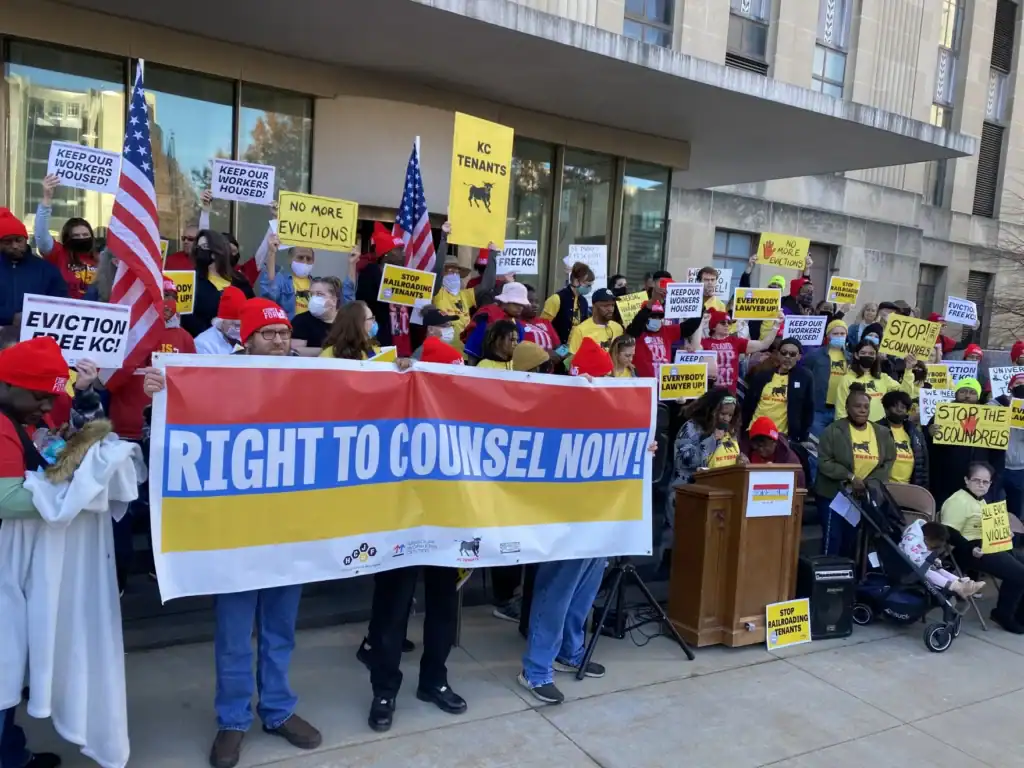
On any given Thursday, a small hallway in the Jackson County Courthouse crowds with tenants, landlords, and attorneys arriving for their scheduled hearings and trials. The scene unfolds on Floor 7M, which is half the height of the building’s other levels, and is where Associate Circuit Judge Mary Weir recently worked through 55 eviction cases…

Nick’s Picks | Costco, Homicides, Rain and More …
Is Missouri's congressional map saga over? It seems so, but who knows if there will be another twist or turn. That story and more ...