
Streetcar Riverfront Plan Downsized, Backers Seek $14.2M from Feds
May 28, 2020 | Kevin Collison | 4 min read
(Editor’s note: Updated Sept. 10, 2020. The KC Streetcar Authority announced it received $14.2 million in federal funding to expand the line to the riverfront)
By Kevin Collison
Supporters of the planned streetcar extension to the riverfront have shortened the route and dropped one of its stations in a bid to obtain $14.2 million in federal funding.
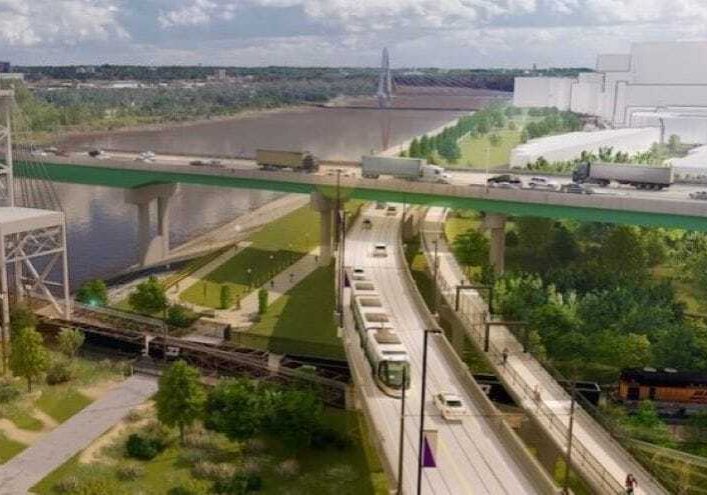
The revised $20.2 million proposal, which calls for $6 million in local funding and $14.2 million from the U.S. Department of Transportation BUILD program, calls for the line to end near the foot of the Grand Viaduct and would build a single “West Station.”
It’s about a half-mile long compared to the original three-quarters mile proposal that would have taken riders close to the center of Berkley Riverfront Park where a second station would have been located.
It’s also the second effort by local agencies to obtain federal funding.
An application for $25 million was rejected by the U.S. DOT in late 2018. At that time, local backers believed they could still pursue the riverfront project without help from Washington.
But Tom Gerend, executive director of the KC Streetcar Authority, said his agency and the others involved with the project, the KC Area Transportation Authority and Port KC, have recognized the project needs significant federal help to proceed.

The revised streetcar extension route is about one-quarter mile shorter and would end at base of Grand Viaduct near Bar K. (Image from U.S. DOT funding application)
“We’ve shortened the route and reduced the cost of the project, and left open the potential for an extension to the east and another stop,” he said.
“It’s an opportunity to lower the public expense on the project and seek potential federal resources…we didn’t have anything to lose and everything to gain.
“Without the federal grant, our local funding would not be sufficient. We’d need to find $15 million in local money to build it and that’s not really accessible right now.”
Gerend said an answer from Washington could come as early as this fall. If successful, construction would begin next year with completion anticipated by the winter of 2023.

About 70 percent of the project’s funding is being sought from the U.S. Department of Transportation. (Chart from U.S. DOT application)
The local funding, about 30 percent of the cost, calls for $5 million from Port KC, $500,000 from the Streetcar Authority and $500,000 from the KCATA.
Port KC also would cover the annual operation costs, estimated at $500,000, using revenues generated by development along the riverfront similar to the transportation development district (TDD) used for the downtown streetcar.
In addition to the streetcar extension plan, there is a companion $6 million proposal to build a pedestrian and bicycle bridge parallel to the Grand Viaduct.
Gerend said the design for that bridge project has been funded and the city is looking at sources, potentially other federal programs, for construction funding.
The federal application also states the proposed riverfront streetcar extension would allow a park-and-ride opportunity “providing convenient access for those commuting from the Northland metro to downtown for work and play.”
The extension would boost the economic development value of riverfront property controlled by Port KC by $320 million and accelerate its build out by two years, according to the application.

The federal funding application estimates the economic development value of the riverfront would increase substantially if the streetcar extension is built. (Chart from U.S. DOT application)
Significant development on Port KC land already has occurred the past couple years. The $72 million, 410-unit Union Berkley Riverfront apartment project and the Bar K restaurant, bar and dog park opened in 2018.
Port KC also recently approved a $60 million, 353-unit NorthPoint apartment project.
“The addition of residential units, retail spaces and recreational amenities are breathing new life into this once dormant area, and Kansas City’s Riverfront is emerging as a destination,” the agencies wrote in the application to the DOT.
“After decades of being known only as a long-forgotten site, developers are seeing the value of this regional resource.”
The plan to extend the streetcar to the riverfront is independent of the larger proposal to extend the route from downtown to the University of Missouri-Kansas City along Main Street which is currently pursuing federal funding as well.
(Editor’s note: CityScene KC is now a paid subscription publication, please consider subscribing.)
Reading these stories is free, but telling them is not. Start your monthly gift now to support Flatland’s community-focused reporting.
Related Stories
United in Opposition: The Bipartisan Response to Data Centers
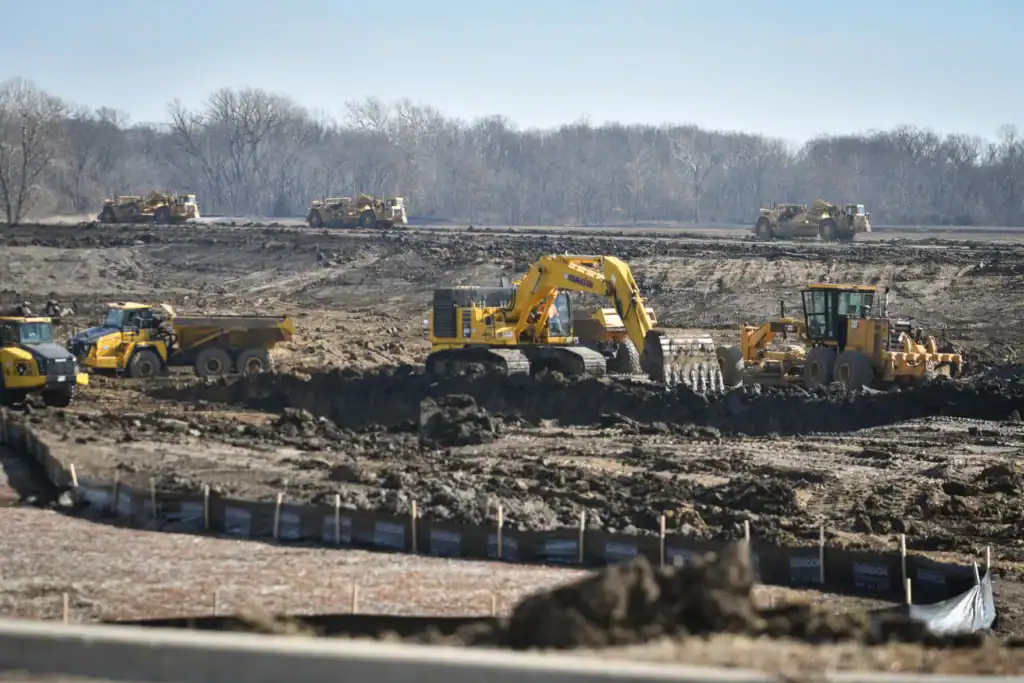
From Independence, Missouri, to Osawatomie, Kansas, data centers are angering residents and spurring bipartisan opposition.
Nick’s Picks | Map, Recall, Trial and More …
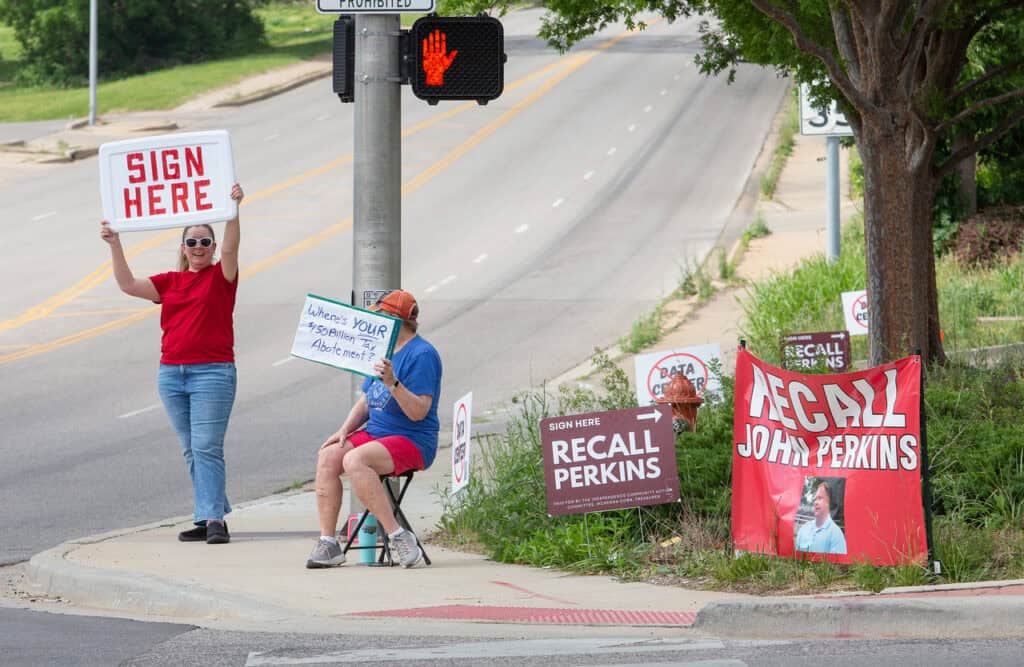
The Missouri Supreme Court takes up a question about a local congressional district, an Independence councilman fights to keep his seat, and a long-delayed murder trial is set to get underway.

Advocates Look to Make KCK Next Abandoned Housing Success Story
The Kansas Abandoned Housing Act is working in Leavenworth, and proponents are hopeful it will prove successful in Kansas City, Kansas, too.